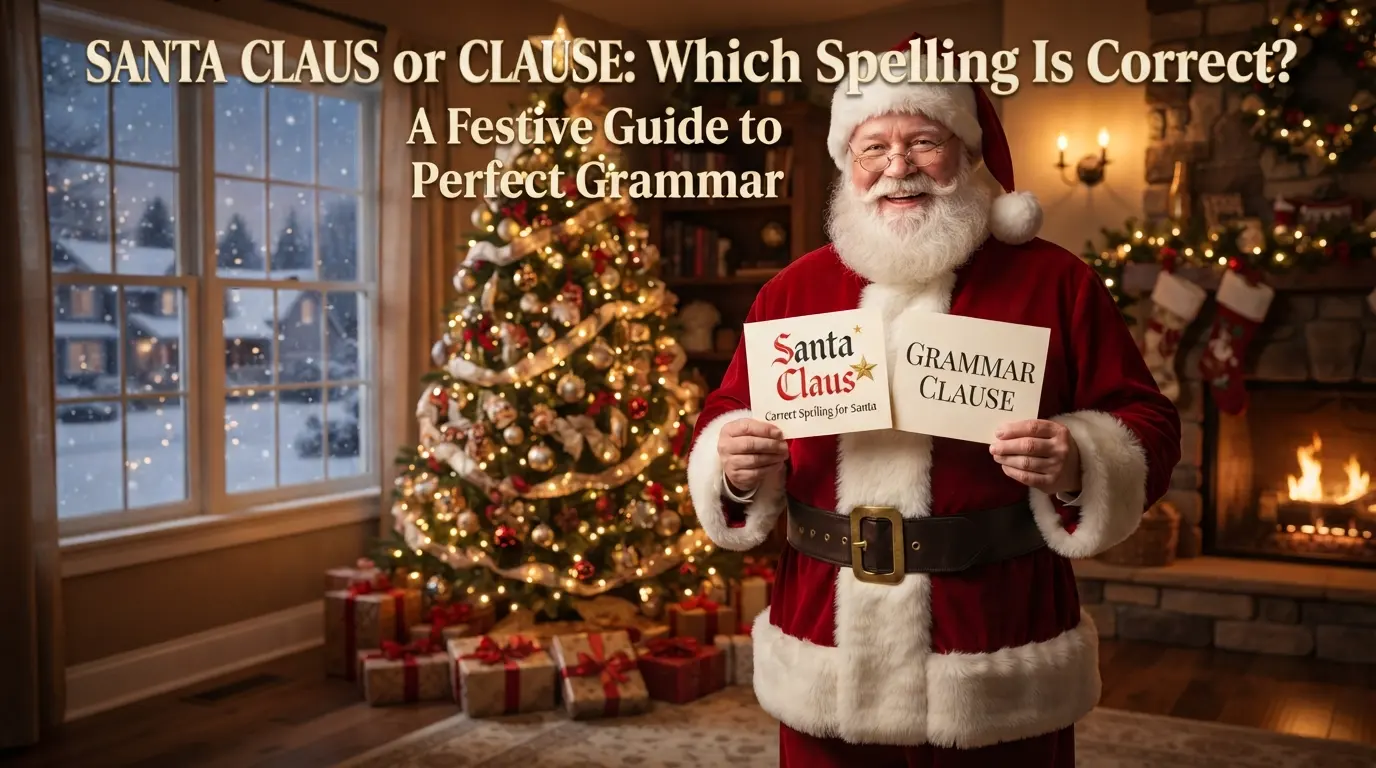
If you are wondering about Santa Claus or clause, the correct spelling for the Christmas gift-giver is Santa Claus.
Clause is a different English word used in grammar and legal writing. The two words sound similar, which makes this spelling mistake common.
In this guide, you will learn the meaning, pronunciation, history, correct usage, examples, and easy ways to remember the difference.
Quick Answer: Santa Claus or Clause?
The correct spelling for the Christmas character is Santa Claus.
Santa Claus is the traditional name for the fictional Christmas gift-giver associated with Christmas Eve, presents, reindeer, a sleigh, and the North Pole. The word clause, however, has nothing to do with Christmas. It is a grammar or legal term. In grammar, a clause is a group of words containing a subject and a verb. In law, a clause is a specific part of a contract or other formal document.
| Word | Meaning | Example |
| Santa Claus | Christmas gift-giver | Santa Claus visits children on Christmas Eve. |
| clause | Part of a sentence or legal document | This sentence has two clauses. |
| Santa Clause | Incorrect spelling for the Christmas character | ❌ Santa Clause is coming tonight. |
So, if you are writing about Christmas, presents, reindeer, or Christmas Eve, use Santa Claus.
If you are talking about sentence structure or a contract, use clause.
What Does Santa Claus Mean?
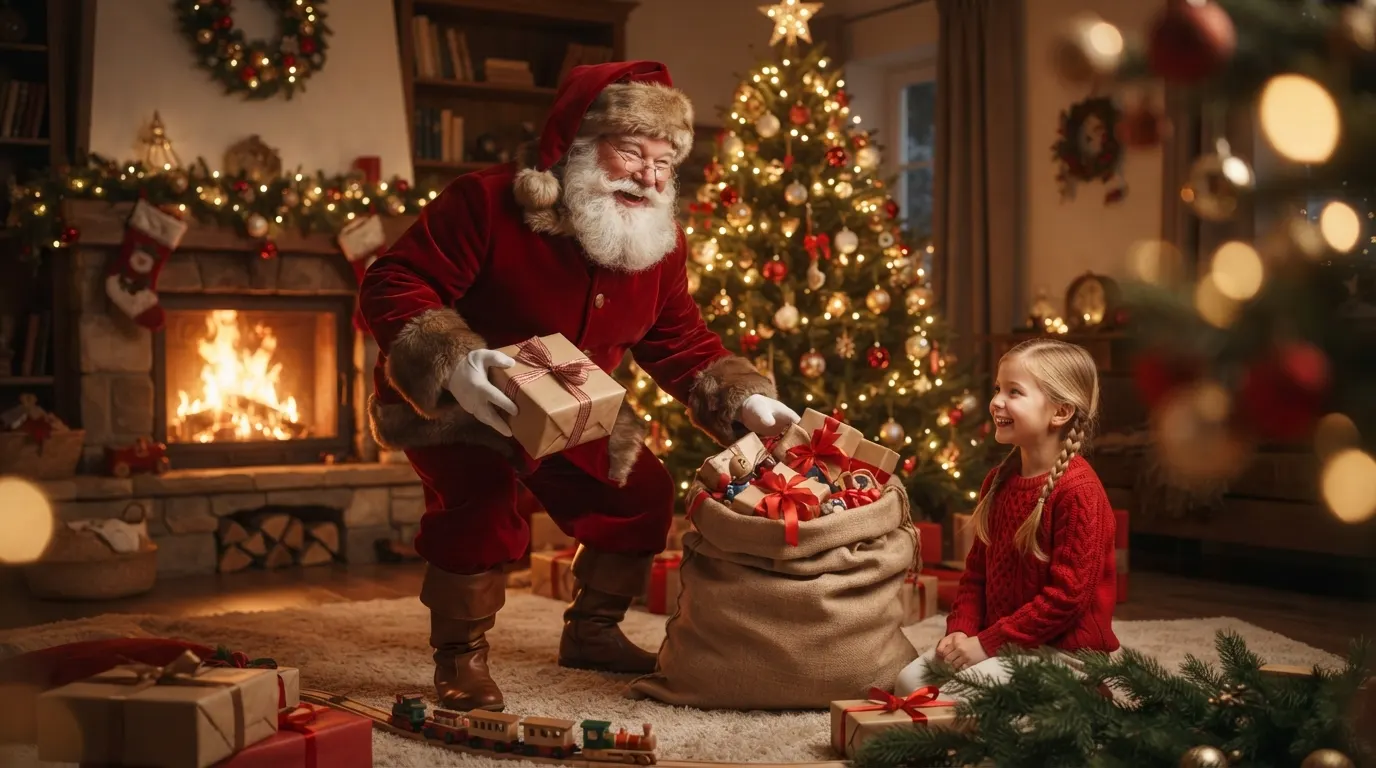
Santa Claus is the traditional Christmas character who is said to bring gifts to children on Christmas Eve. He is commonly pictured as a cheerful older man with a white beard, a red suit, black boots, and a large sack of presents.
The character is strongly connected with Christmas traditions in the United States and many other countries. Stories about Santa Claus often include a sleigh, flying reindeer, a workshop, elves, and a home at the North Pole.
The name Santa Claus developed from the Dutch name Sinterklaas, which comes from Sint Nicolaas, or Saint Nicholas. The Library of Congress explains that Dutch settlers brought traditions connected with Saint Nicholas to what became New York, and the name eventually changed into Santa Claus.
The spelling is important because Claus is part of the character’s name.
For example:
- Santa Claus is coming to town.
- The children are excited to see Santa Claus.
- We left cookies for Santa Claus.
- Santa Claus brought several presents.
- The mall has a Santa Claus display.
In each example, Claus is spelled with au.
What Does Clause Mean?
The word clause has a completely different meaning from Santa Claus.
In grammar, a clause is a group of words that contains a subject and a verb. A sentence can contain one clause or several clauses. Cambridge Dictionary describes a clause as a group of words containing a subject and a finite verb.
For example:
She smiled.
This is a clause because it has:
- She = subject
- smiled = verb
Here is another example:
Because she was tired
This also contains a subject and verb:
- she = subject
- was = verb
However, it does not express a complete thought by itself. It is a dependent clause.
The word clause is also common in legal and formal writing. A clause can be a particular part of a contract, law, agreement, or other formal document.
For example:
The contract contains a cancellation clause.
Here, clause has nothing to do with Santa or Christmas. It means a specific provision in the contract.
| Use | Correct Word | Example |
| Christmas character | Claus | Santa Claus loves Christmas. |
| Grammar | clause | The sentence contains two clauses. |
| Contract | clause | Read the payment clause carefully. |
| Legal document | clause | The agreement has a penalty clause. |
Santa Claus vs Clause: What’s the Difference?
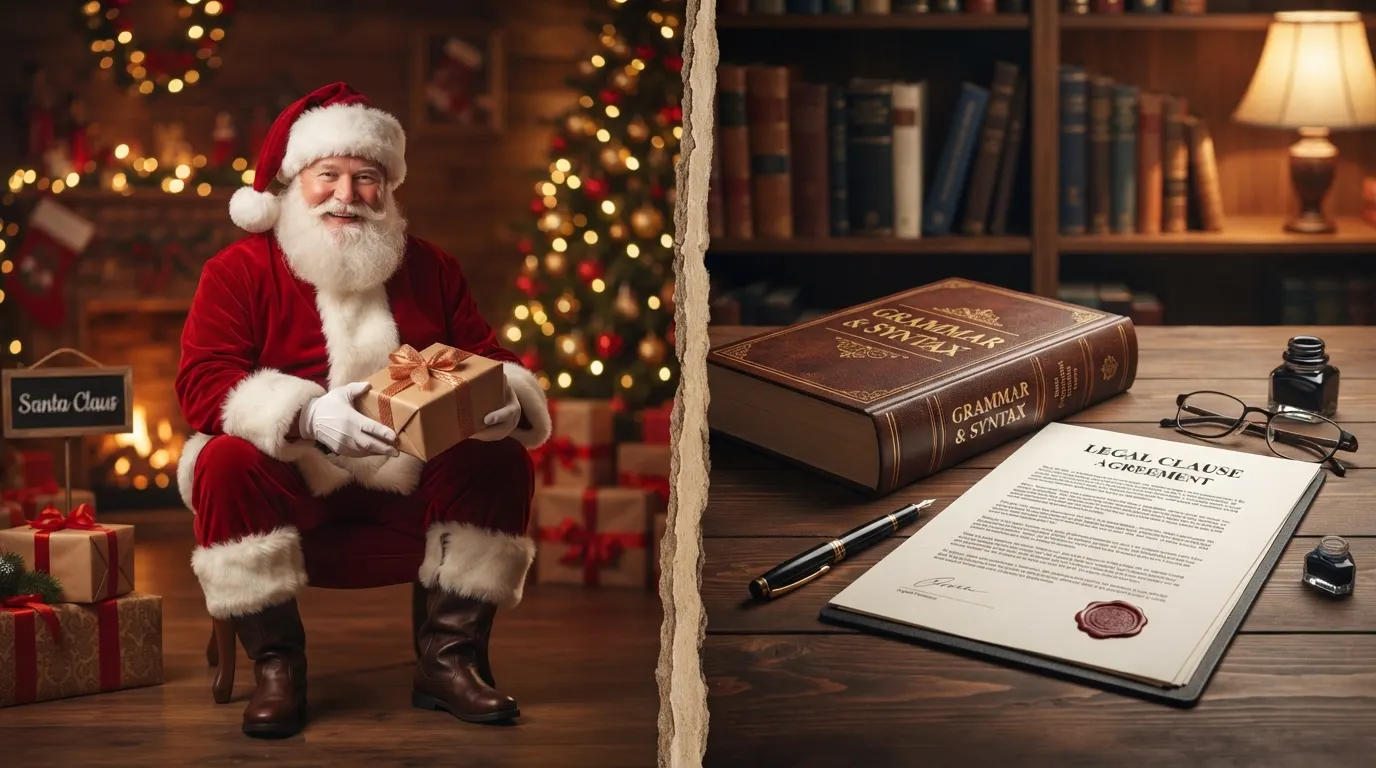
The easiest way to understand Santa Claus or clause is to remember that they belong to completely different topics.
Santa Claus is a name.
Clause is a common noun.
Santa Claus is connected with Christmas. Clause is connected with grammar, contracts, laws, and formal documents.
They also have different spellings:
Claus → C-L-A-U-S
clause → C-L-A-U-S-E
Notice the final e in clause.
That small difference changes the word.
| Feature | Santa Claus | Clause |
| Type | Proper name | Common noun |
| Meaning | Christmas character | Grammar or legal term |
| Christmas connection | Yes | No |
| Spelling | Claus | clause |
| Capitalization | Usually capitalized | Usually lowercase |
| Example | Santa Claus arrived. | The contract has a clause. |
One useful trick is to look at the context before choosing the spelling.
If the sentence talks about Christmas, presents, reindeer, elves, a sleigh, or the North Pole, you probably need Santa Claus.
If it talks about sentences, subjects, verbs, contracts, agreements, laws, or rules, you probably need clause.
Why Do People Confuse Santa Claus and Clause?
The main reason is pronunciation.
In American English, Claus and clause are pronounced very similarly. Because they sound alike, it is easy to write the wrong word.
When people hear someone say:
Santa Claus
they may think of the spelling Santa Clause.
This is especially common among children and English learners. Someone may know exactly who Santa is but still not know which spelling is correct.
The problem is similar to other English words that sound alike but have different spellings and meanings.
For example:
- to / too / two
- there / their / they’re
- your / you’re
- than / then
- principal / principle
However, there is an easy solution for Santa Claus.
Remember:
Santa has Claus. A sentence has a clause.
The Christmas character has Claus.
A sentence or contract has a clause.
How Do You Spell Santa Claus Correctly?
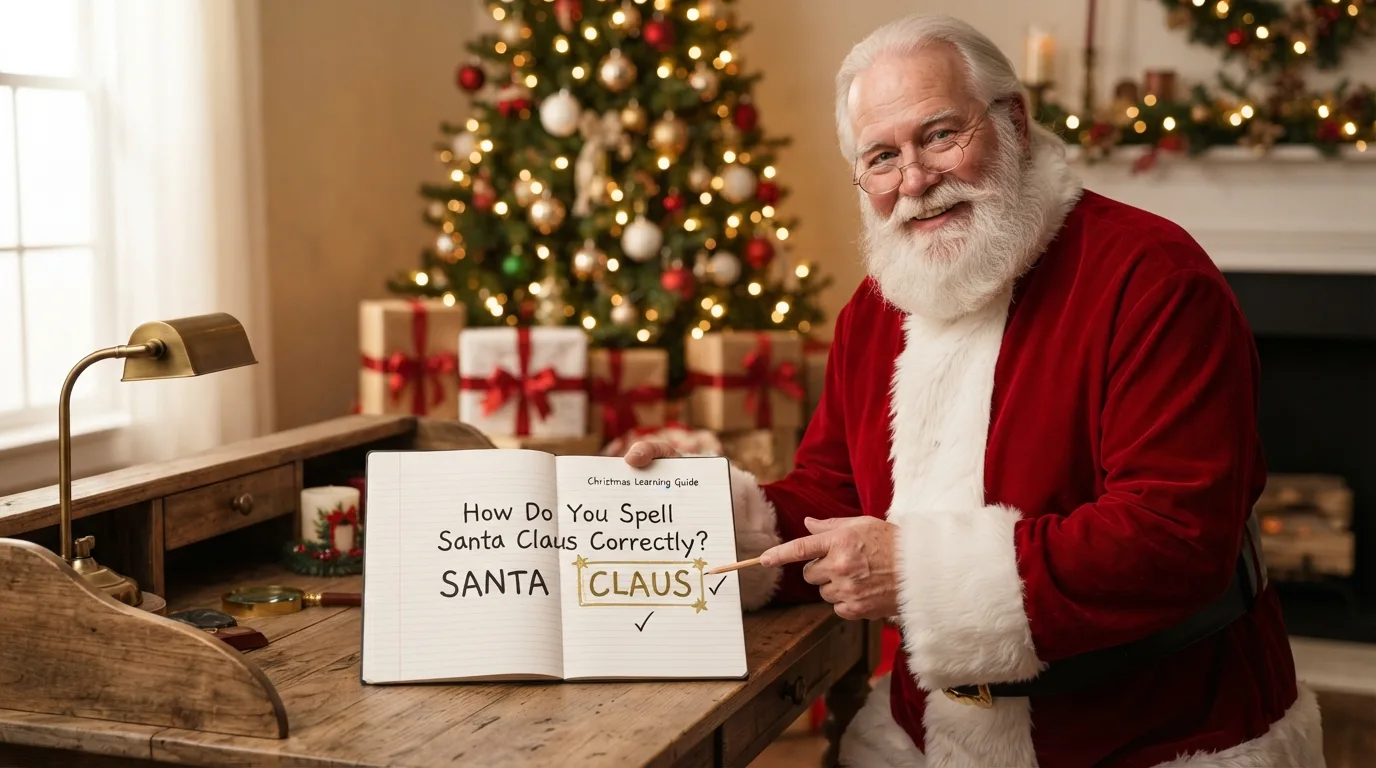
The correct spelling is:
Santa Claus
There is no e at the end of Claus.
Correct:
Santa Claus
Incorrect:
Santa Clause
Incorrect:
Santa Claws
Incorrect:
Santa Clauses
The spelling Santa Clause is especially easy to write by mistake because clause is a real English word. Your spell checker may not catch the error because clause itself is spelled correctly.
That means you need to check the meaning, not just the spelling.
For example:
❌ Santa Clause is coming tonight.
The word Clause is wrong because the sentence refers to the Christmas character.
Correct:
✅ Santa Claus is coming tonight.
Here is another example:
❌ The children are waiting for Santa Clause.
Correct:
✅ The children are waiting for Santa Claus.
Santa Claus: Origin and History of the Name
The name Santa Claus has a long history connected with Saint Nicholas and Dutch traditions.
Saint Nicholas became associated with generosity and gift-giving. Dutch traditions used the name Sinterklaas for Saint Nicholas. Dutch settlers brought this tradition to New Amsterdam, which later became New York City. Over time, the name changed in English-speaking America and developed into Santa Claus. (
The character also developed through American literature and illustrations.
The Library of Congress notes that Washington Irving included Saint Nicholas-related Dutch traditions in his 1809 work, while Clement C. Moore’s famous Christmas poem helped shape the popular image of Santa. Later, illustrator Thomas Nast created influential images of Santa Claus in the 19th century. (
This history helps explain why Claus became part of the name.
It is not simply another spelling of the grammar word clause.
The two words have different histories and meanings.
Interestingly, historical sources show that the name Santa Claus has been used in American publications for well over a century. The Library of Congress, for example, has digitized works titled Santa Claus the First from 1880 and How Polly and Ned Found Santa Claus from 1898.
Is Santa Claus a Proper Noun?
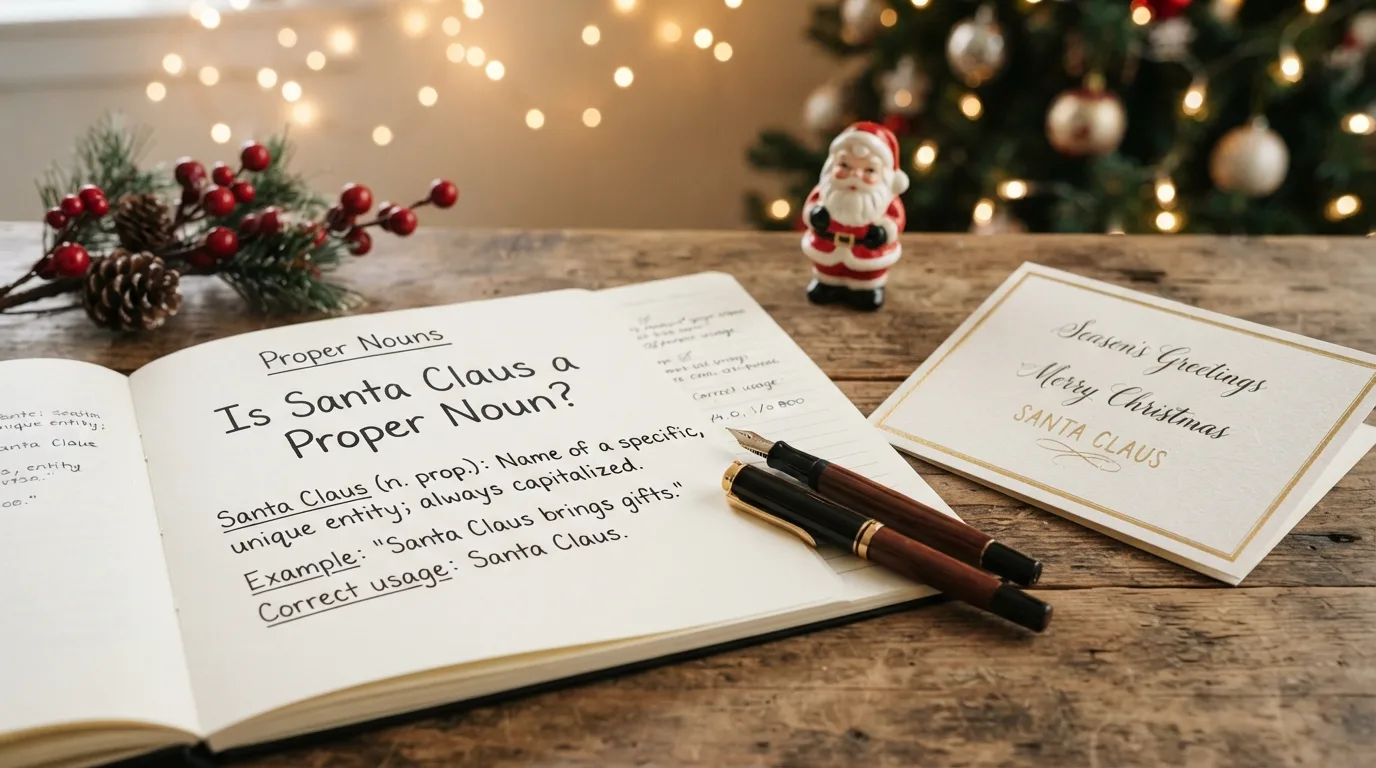
Yes. Santa Claus is a proper name, so both words are normally capitalized.
Correct:
Santa Claus
Not:
santa claus
Not:
Santa claus
For example:
Santa Claus visits children in many Christmas stories.
The capitalization matters because you are using a specific name.
The same idea applies to names such as:
- Mickey Mouse
- Harry Potter
- Easter Bunny
- New York City
A specific name normally begins with capital letters.
However, clause is normally lowercase when it is used as a grammar or legal term.
For example:
This sentence contains an independent clause.
And:
The contract includes a payment clause.
Santa Claus or Santa Clause in a Sentence
Seeing both words in examples makes the difference much easier to remember.
Correct Christmas Examples
Santa Claus left presents under the tree.
The children wrote letters to Santa Claus.
We watched a movie about Santa Claus.
Santa Claus is often shown with a red suit and white beard.
The children were excited to meet Santa Claus.
Correct Clause Examples
The sentence contains an independent clause.
The teacher explained the dependent clause.
The contract includes a special clause.
Please read the final clause before signing.
The lawyer explained the clause in simple language.
Notice how the meaning tells you which spelling to use.
Common Mistakes With Santa Claus or Clause
The most common mistake is adding an e to Claus.
People may write:
Santa Clause
instead of:
Santa Claus
This mistake happens because clause is a familiar English word.
Another mistake is writing Santa Claws. The word claws means the sharp nails of an animal, such as a cat or bird. It is not the correct spelling of Santa’s name.
Here are the most common mistakes:
| Incorrect | Correct | Why |
| Santa Clause | Santa Claus | Claus is part of Santa’s name. |
| Santa Claws | Santa Claus | Claws are animal nails. |
| santa claus | Santa Claus | Both parts of the name should be capitalized. |
| Santa claus | Santa Claus | Claus should also be capitalized. |
| clause came to town | Santa Claus came to town | The Christmas character needs the proper name. |
One important point is that clause itself is not a misspelled word.
For example:
The contract contains a clause about refunds.
This sentence is completely correct.
The mistake only happens when you use clause as part of Santa’s name.
Real-Life Examples of Santa Claus
You can use Santa Claus in many everyday Christmas sentences.
My daughter wants to meet Santa Claus.
We took a picture with Santa Claus at the mall.
The children left cookies for Santa Claus.
Santa Claus appears in many Christmas books.
The school invited Santa Claus to the holiday event.
The children believe that Santa Claus travels in a sleigh.
I bought a Santa Claus decoration for the front door.
The Christmas party will have a Santa Claus theme.
We watched a Santa Claus movie together.
The children were excited when Santa Claus arrived.
These sentences all use Claus because they refer to the Christmas character.
How to Remember Santa Claus vs Clause
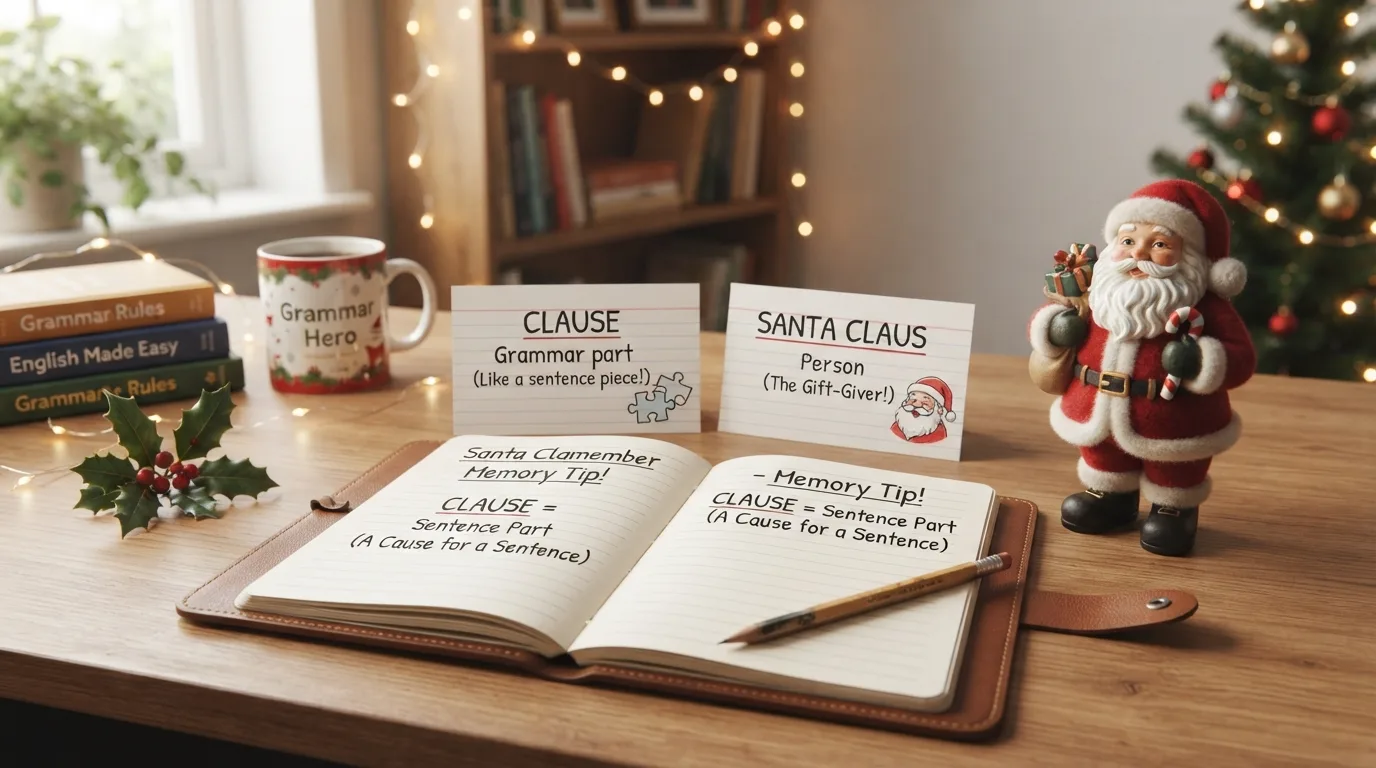
If you often forget Santa Claus or clause, use a simple memory trick.
Think about the final letter.
Claus has no e.
clause has an e.
You can also remember the phrase:
Santa Claus = Christmas
clause = grammar or contract
Another helpful trick is to connect clause with sentence.
A sentence can contain a clause.
A contract can contain a clause.
Santa has Claus.
So remember:
Santa Claus brings gifts.
A clause builds part of a sentence.
This simple connection can help English learners avoid the spelling mistake.
Santa Claus vs Clause Pronunciation
Pronunciation is one reason these words can be confusing.
In American English, Claus and clause are pronounced almost the same. That means you cannot always identify the correct spelling simply by listening.
The pronunciation of clause is commonly represented as /klɔːz/ in dictionary sources, while American pronunciation is often represented with an aw sound.
Because the sounds are so close, context becomes important.
For example, if someone says:
“The teacher explained the clause.”
you know they are talking about grammar.
But if someone says:
“Santa Claus is coming.”
you know they are talking about Christmas.
This is an example of why English spelling cannot always be predicted from pronunciation.
Is Santa Claus or Clause Correct in Christmas Writing?
For Christmas writing, always use Santa Claus.
This applies to:
- Christmas cards
- Blog posts
- School assignments
- Children’s stories
- Social media captions
- Christmas invitations
- Holiday advertisements
- Christmas decorations
- Gift tags
- Christmas newsletters
For example:
Wishing you a joyful Christmas with Santa Claus and plenty of happy memories!
Not:
Wishing you a joyful Christmas with Santa Clause…
If you are writing content for children, correct spelling is especially useful because children often learn vocabulary from stories, worksheets, books, and online content.
Santa Claus or Clause: Easy Comparison
Here is the simplest comparison to keep in mind.
| Question | Answer |
| Who brings Christmas presents in traditional stories? | Santa Claus |
| What is the Christmas character’s name? | Santa Claus |
| What is a group of words with a subject and verb? | A clause |
| What is part of a contract called? | A clause |
| Is “Santa Clause” correct? | No |
| Is “Santa Claus” correct? | Yes |
| Does “clause” relate to Christmas? | No |
| Does “Claus” belong to Santa’s name? | Yes |
The key difference is only one letter in spelling, but the meanings are completely different.
FAQs About Santa Claus or Clause
Is Santa Claus or Santa Clause correct?
Santa Claus is correct when you mean the Christmas character. Clause is a different English word used for part of a sentence or part of a legal document. Therefore, writing Santa Clause is incorrect when referring to Santa.
Why is Santa called Santa Claus?
The name developed from the Dutch Sinterklaas, a name connected with Saint Nicholas. Dutch settlers brought Saint Nicholas traditions to New Amsterdam, and the name eventually developed into the American English form Santa Claus.
Is Claus a word by itself?
Claus is best known in Santa Claus as part of the character’s name. It should not be confused with clause, which is a separate English word with meanings in grammar and law.
What is a clause in grammar?
A clause is a group of words that contains a subject and a verb. Some clauses can stand alone as complete sentences, while dependent clauses need another clause to complete the thought.
Why do Santa Claus and clause sound the same?
The words have very similar pronunciations in American English. Because they sound alike, writers sometimes choose the wrong spelling. The easiest solution is to remember their meanings: Santa Claus is the Christmas character, while a clause belongs to grammar or legal writing.
How can I remember the spelling of Santa Claus?
Remember this simple rule: Santa Claus has no “e.” If you are talking about Christmas, presents, reindeer, or the North Pole, write Santa Claus. If you are talking about a sentence or contract, write clause.
Conclusion
When choosing between Santa Claus or clause, the correct word depends on what you mean. For the Christmas character, the correct spelling is Santa Claus. The word clause is completely different and is used in grammar and legal writing.
The easiest way to remember the difference is to connect each word with its meaning. Santa Claus belongs to Christmas, while a clause belongs to a sentence, contract, law, or other formal text.
Because the two words sound very similar, spelling mistakes are understandable. However, remembering that Claus has no final “e” makes the choice much easier.
So, whenever you write about the Christmas gift-giver, use Santa Claus. It is the correct spelling, the familiar American English form, and the right choice for Christmas writing.

Hi, I’m Iqra, a passionate writer and grammar enthusiast dedicated to making English grammar simple, clear, and easy to understand. Through my work on grammar books and educational content, I help students, writers, and English learners improve their vocabulary, sentence structure, punctuation, and everyday communication skills. My goal is to turn confusing grammar rules into practical, easy-to-follow lessons that readers can confidently use in real life. I believe learning grammar doesn’t have to be difficult—it can be simple, useful, and even enjoyable. Through helpful guides, examples, and carefully explained grammar tips, Iqra aims to make learning English more accessible for everyone.