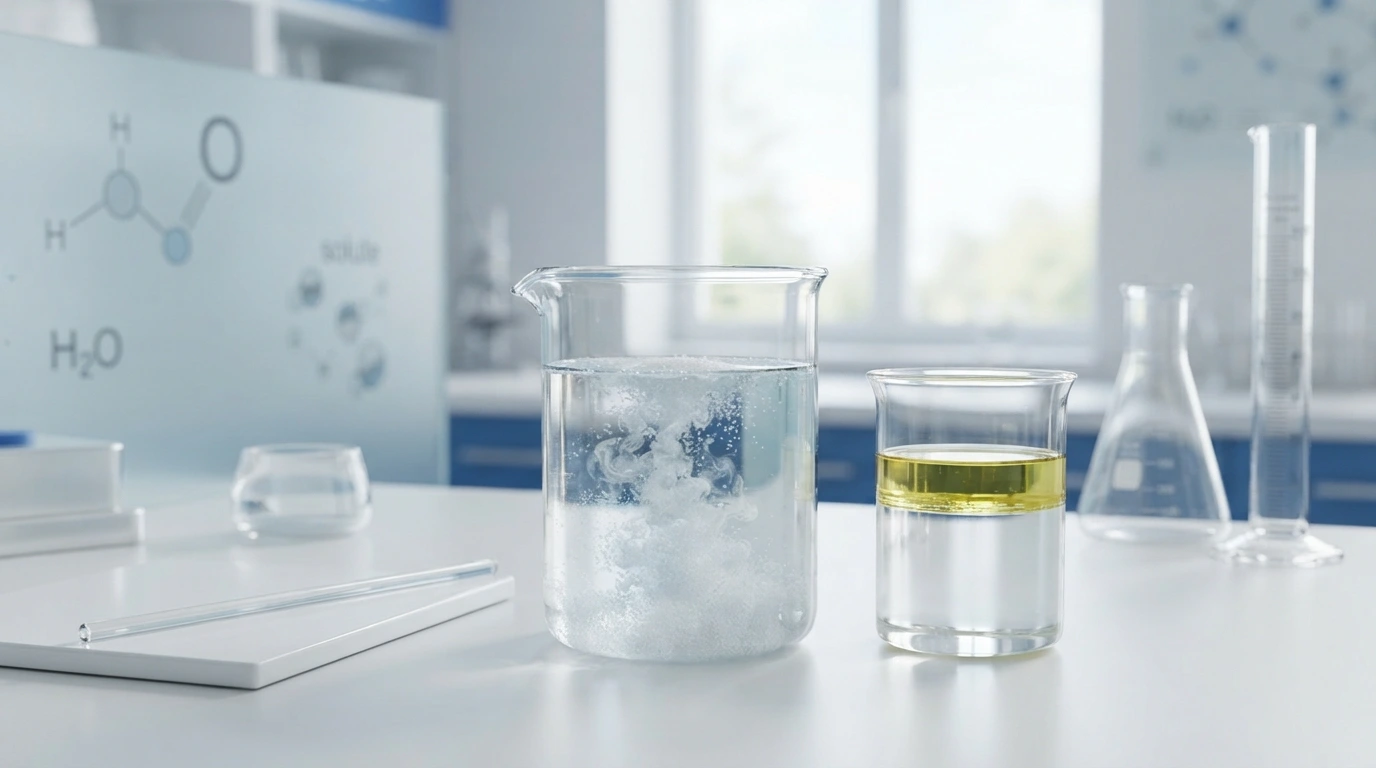
When students ask If solubility is physical or chemical, the answer is usually physical. Solubility is a physical property because a substance can dissolve in another substance without changing its chemical identity.
For example, when salt dissolves in water, the salt is still sodium chloride.
However, chemical reactions can sometimes affect solubility, so the topic can seem confusing. In this article, you will learn what solubility means, why it is considered a physical property, how it differs from chemical properties, and how to identify it correctly in science questions.
Quick Answer: Is Solubility Physical or Chemical?
Solubility is generally a physical property. It describes how much of one substance can dissolve in another substance under specific conditions, such as temperature and pressure.
For example, sugar is soluble in water. When sugar dissolves, its molecules spread throughout the water, but the sugar does not become a completely new substance. You can recover the sugar by removing the water.
This is an important clue. A physical property can be observed or measured without creating a new substance.
Solubility belongs to the same general group as properties such as color, density, melting point, boiling point, and hardness.
However, there is an important detail. Sometimes a substance reacts chemically with the solvent while dissolving. In those cases, a chemical reaction is also taking place. Therefore, the simple answer for most school science questions is that solubility is a physical property.
What Does Solubility Mean?
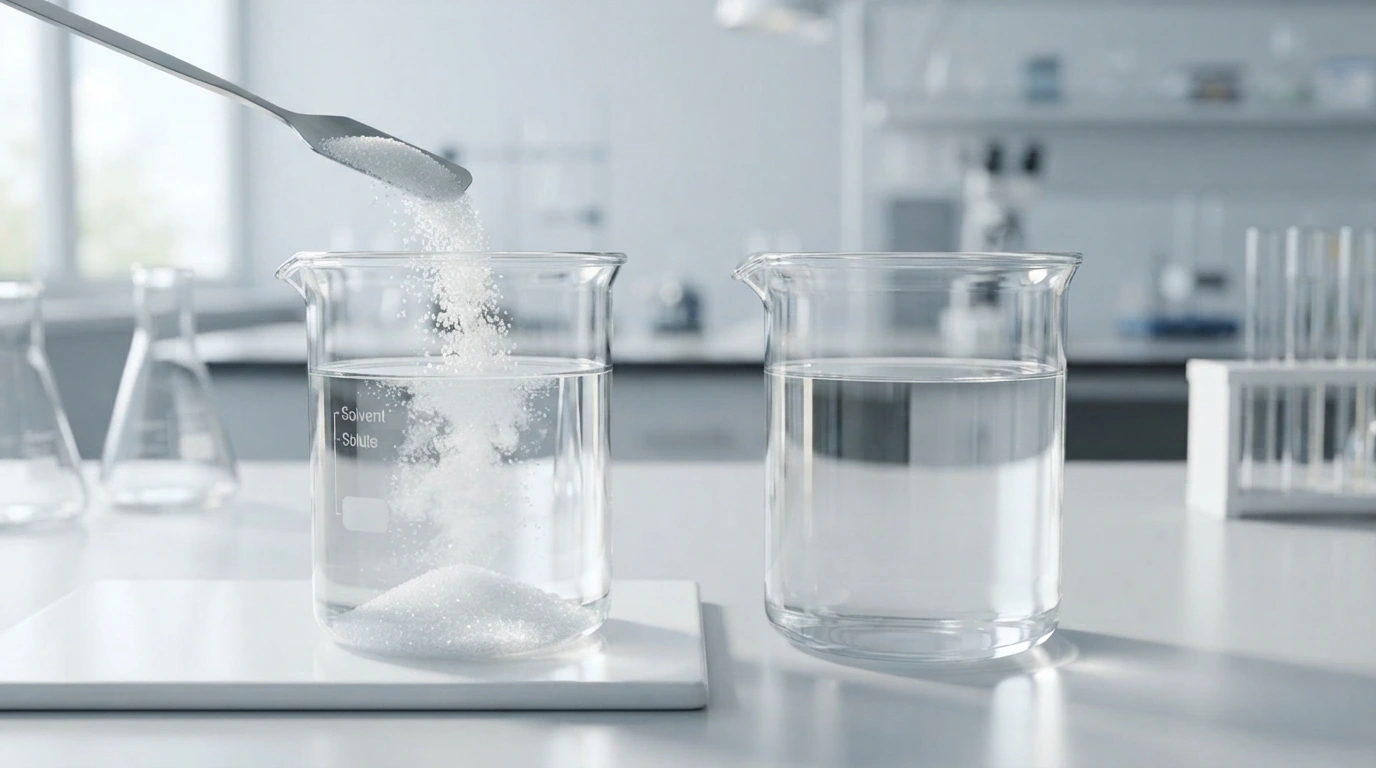
Solubility is the ability of a substance to dissolve in another substance.
The substance being dissolved is called the solute. The substance that dissolves the solute is called the solvent. Together, they form a solution.
For example, when you mix sugar with water, sugar is the solute and water is the solvent. The sugar particles spread through the water, creating a sugar solution.
Solubility also describes how much of a substance can dissolve in another substance under specific conditions. A substance that dissolves easily or in a large amount is called highly soluble. If only a small amount dissolves, it is considered slightly soluble. A substance that dissolves very little is often called insoluble, although most substances have at least some degree of solubility under the right conditions.
Here is a simple example:
| Term | Example |
| Solute | Sugar |
| Solvent | Water |
| Solution | Sugar water |
| Property | Solubility |
| Result | Sugar spreads throughout the water |
Understanding these terms makes it easier to see why solubility is considered a physical property.
Why Is Solubility a Physical Property?
Solubility is considered a physical property because measuring it does not normally require changing the substance into a new substance.
Imagine adding table salt to a glass of water. The salt dissolves and becomes spread throughout the water. The salt has not been turned into a different chemical substance simply because it dissolved.
If the water is removed, the salt can be recovered.
This ability to dissolve and later recover the original substance is one reason dissolving is usually treated as a physical change.
The chemical identity of sodium chloride remains sodium chloride. Likewise, sugar remains sugar when it dissolves in water.
A physical property describes something about a substance without changing its chemical identity.
For example:
- Water has a boiling point.
- Gold has a yellow color.
- Iron has a certain density.
- Sugar has a certain solubility in water.
- Copper has a particular melting point.
These properties help us describe substances without necessarily changing them into new substances.
Therefore, when a science question asks If solubility is physical or chemical, remember that solubility is normally classified as a physical property.
Solubility vs. Chemical Properties
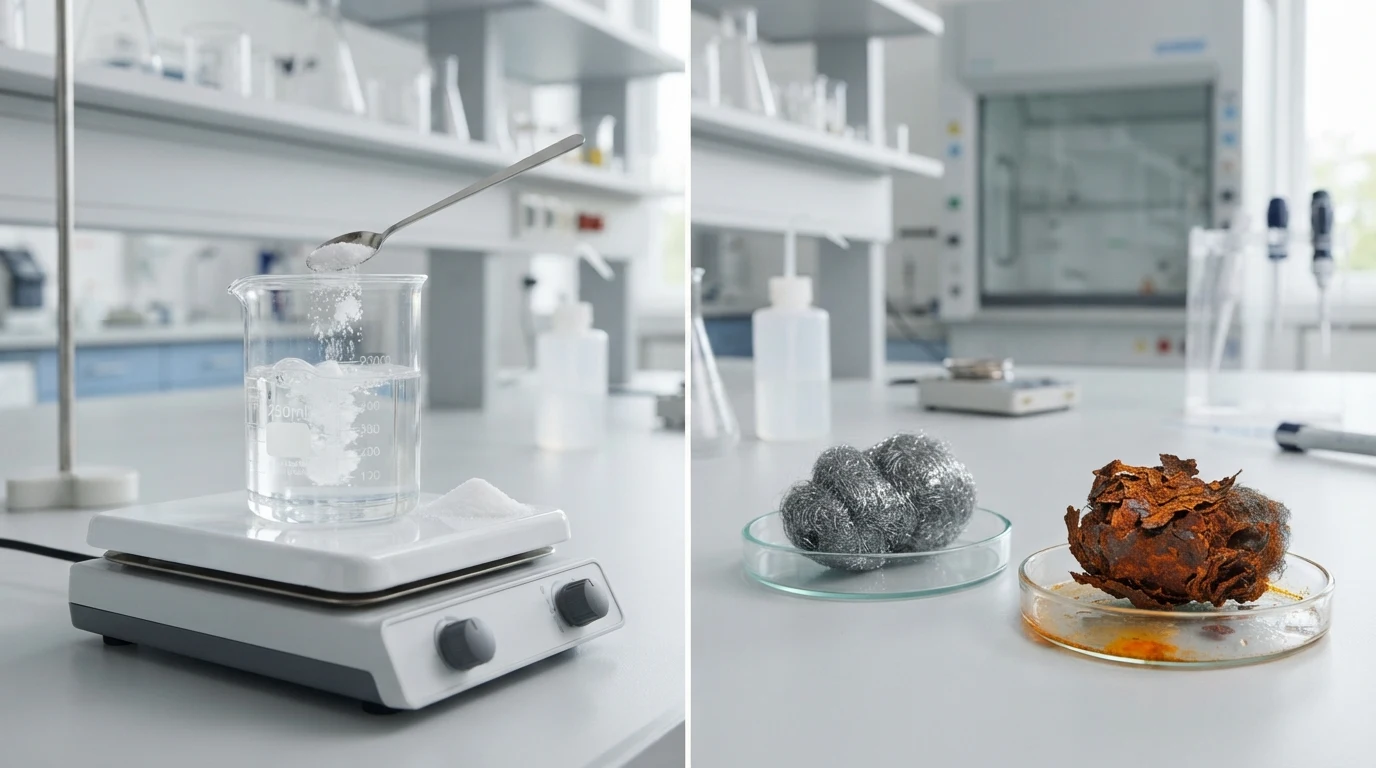
A chemical property describes how a substance can react and form one or more new substances.
For example, the ability of iron to react with oxygen and form rust is a chemical property. The ability of gasoline to burn is also a chemical property.
These examples involve chemical changes.
Solubility is different. It describes how much of a substance can dissolve in another substance.
| Physical Property | Chemical Property |
| Solubility | Flammability |
| Color | Ability to rust |
| Density | Reactivity with oxygen |
| Melting point | Reactivity with acids |
| Boiling point | Ability to decompose |
| Hardness | Ability to burn |
The easiest way to remember the difference is to ask:
Does observing the property require the substance to become a new substance?
If the answer is no, the property is generally physical.
If the answer is yes, the property is generally chemical.
Solubility normally falls into the first category.
Is Dissolving a Physical or Chemical Change?
Dissolving is usually considered a physical change, although the details can depend on the substances involved.
Consider sugar dissolving in water. The sugar molecules become distributed among the water molecules, but no new substance needs to form. If the water evaporates, the sugar can be left behind.
This is different from burning sugar.
When sugar burns, chemical reactions occur. New substances such as carbon dioxide, water vapor, and other products can form. The original sugar cannot simply be recovered by removing the water.
The difference can be shown like this:
| Process | Usually Classified As | Why? |
| Sugar dissolving in water | Physical change | Sugar remains chemically identifiable |
| Salt dissolving in water | Physical change | Salt can be recovered |
| Ice melting | Physical change | Water remains H₂O |
| Sugar burning | Chemical change | New substances form |
| Iron rusting | Chemical change | New substances form |
| Wood burning | Chemical change | New substances form |
This distinction is one of the most useful ways to understand the relationship between solubility and physical properties.
Examples of Solubility as a Physical Property
Many everyday substances show solubility.
Sugar dissolves well in water, which is why it is commonly used to sweeten drinks. Table salt also dissolves in water. On the other hand, oil does not mix easily with water.
These examples show that different substances have different solubilities.
Consider some common examples:
Sugar in water: Sugar is highly soluble in water.
Salt in water: Sodium chloride dissolves in water and forms a salt solution.
Oil in water: Oil has very low solubility in water and usually forms a separate layer.
Sand in water: Sand does not dissolve significantly in water.
Carbon dioxide in water: Carbon dioxide can dissolve in water, which is important in carbonated drinks and natural waters.
These examples show that solubility is not simply about If something disappears from sight. A substance may appear to disappear because it has dissolved, but another substance may only be suspended or spread temporarily.
Solubility Does Not Mean Something Disappears
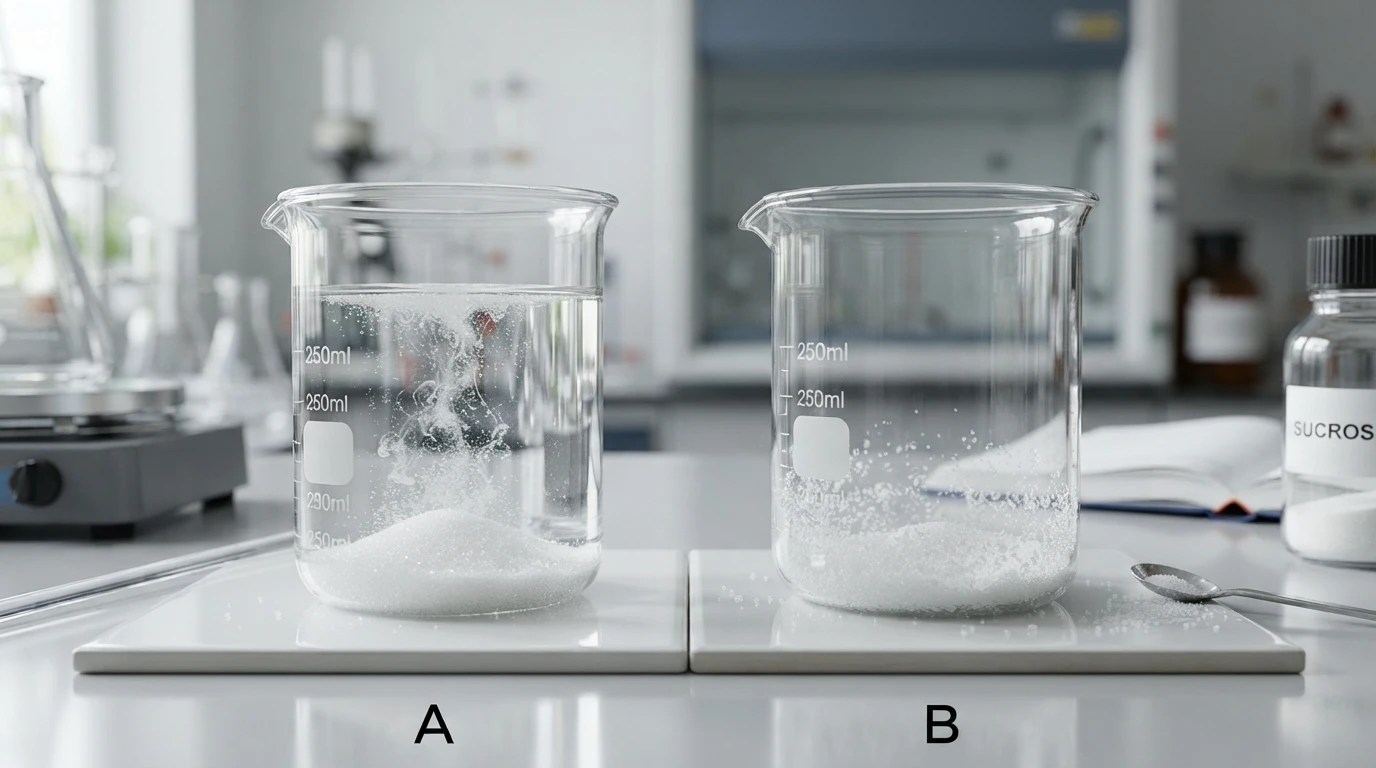
One common mistake is thinking that a substance has disappeared when it dissolves.
Suppose you put a spoonful of sugar into a glass of water. After stirring, you may no longer see the sugar crystals.
The sugar has not disappeared. Its particles are distributed throughout the water.
This is important because dissolving is different from destroying a substance.
If you evaporate the water, sugar can remain behind. This demonstrates that the sugar was still present in the solution.
The same idea applies to salt water. Although you cannot see individual salt crystals in the solution, the dissolved salt is still there.
Therefore, dissolving does not automatically mean that a chemical reaction has happened.
Factors That Affect Solubility
Solubility is affected by several factors. The most important ones include temperature, pressure, and the nature of the substances involved.
For many solid substances, increasing the temperature of a solvent increases solubility. However, this is not true for every substance.
For gases, the pattern is often different. Gases generally become less soluble in liquids as temperature increases.
Pressure can also affect gases. Increasing pressure can increase the amount of a gas that dissolves in a liquid.
The nature of the solute and solvent also matters. Substances with similar chemical characteristics often dissolve more easily in each other.
Here is a simple overview:
| Factor | General Effect on Solubility |
| Temperature | Often changes the solubility of solids and gases |
| Pressure | Especially important for gases |
| Type of solute | Different substances have different solubilities |
| Type of solvent | Affects how well the solute dissolves |
| Stirring | Usually speeds up dissolving but does not necessarily increase the final solubility |
The last point is especially important. Stirring can make a substance dissolve faster, but it does not always mean that more of the substance can ultimately dissolve.
Solubility and Temperature
Temperature can have a major effect on solubility.
For many solid substances, warmer water allows more of the solid to dissolve. This is why sugar can dissolve more quickly and often in larger amounts in warm water.
However, solubility and dissolving speed are not exactly the same thing.
Temperature can affect both how quickly something dissolves and how much can dissolve. These are two different ideas.
For example, stirring sugar into warm water can make the sugar dissolve quickly. But stirring alone does not necessarily increase the maximum amount of sugar that the water can hold at a particular temperature.
For gases, warmer liquids often hold less dissolved gas. This is one reason a warm carbonated drink may lose dissolved carbon dioxide more quickly than a cold one.
So, when studying solubility, always pay attention to If the substance is a solid, liquid, or gas.
Solubility and Pressure
Pressure has a particularly important effect on gases dissolved in liquids.
A familiar example is a carbonated beverage. Carbon dioxide is dissolved in the drink under pressure.
When you open the container, the pressure above the liquid decreases. The dissolved carbon dioxide can then escape from the liquid, producing bubbles.
This helps explain why carbonated drinks become flat after being left open.
For many solid and liquid solutes, pressure has a much smaller effect on solubility than it does for gases.
Therefore, pressure is an important factor to remember when studying the solubility of gases.
Solubility and “Like Dissolves Like”
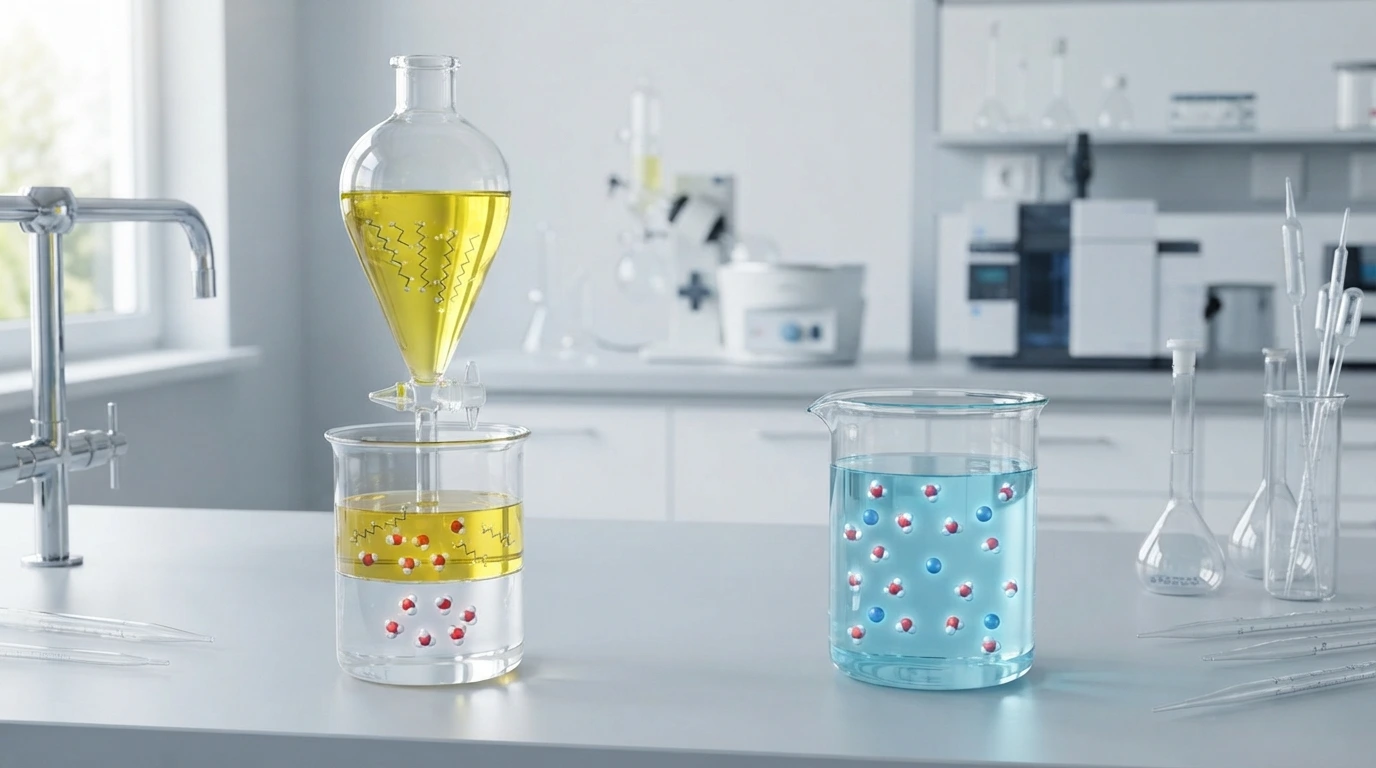
A common chemistry idea is “like dissolves like.”
This means substances with similar types of molecular interactions often dissolve more easily in each other.
Water is a polar substance. It dissolves many polar substances and ionic compounds.
Oil, however, is nonpolar. Oil does not mix well with water because their molecular properties are very different.
This explains why oil and water usually form separate layers.
This idea does not mean that every polar substance will dissolve perfectly in water or that every nonpolar substance will dissolve in every nonpolar liquid. It is a useful general rule rather than a universal formula.
Still, “like dissolves like” can help students understand why some substances dissolve while others do not.
Solubility vs. Soluble: What Is the Difference?
The words solubility and soluble are related, but they are not the same.
Soluble is an adjective. It describes a substance that can dissolve in a particular solvent.
Solubility is a noun. It describes the ability or amount of a substance that can dissolve under certain conditions.
For example:
“Sugar is soluble in water.”
“Sugar has high solubility in water.”
In the first sentence, soluble describes sugar.
In the second sentence, solubility describes the property of sugar.
The related word insoluble means that a substance has very low solubility in a particular solvent.
These terms are common in science textbooks and laboratory instructions.
Common Mistakes About Solubility
Students often make a few simple mistakes when deciding If solubility is a physical or chemical property.
One common mistake is thinking that anything that disappears must have undergone a chemical change.
That is not correct. A substance can dissolve without becoming a new substance.
Another mistake is thinking that all dissolving is always physical. In basic science, dissolving is generally treated as a physical process, but some substances can react with the solvent while dissolving. In those situations, a chemical reaction may also occur.
A third mistake is confusing solubility with reaction.
For example, if a substance dissolves in water, that alone does not prove that it reacted with the water.
A useful question is:
Can the original substance be recovered without carrying out a chemical reaction?
If yes, the process is strong evidence of a physical change.
How to Identify a Physical Property in a Science Question
When you see a multiple-choice question about physical and chemical properties, look for clues.
A physical property can usually be observed or measured without changing the substance into something new.
Common physical properties include:
- Solubility
- Color
- Density
- Mass
- Volume
- Melting point
- Boiling point
- Hardness
- Electrical conductivity
- Physical state
Chemical properties include:
- Flammability
- Reactivity with oxygen
- Reactivity with acids
- Ability to rust
- Ability to decompose
- Ability to react with another chemical
If a question says, “How much sugar can dissolve in water?” the answer involves solubility, which is a physical property.
If the question says, “Can the substance react with oxygen?” that concerns a chemical property.
Is Solubility Always a Physical Property?
For standard introductory chemistry questions, solubility is classified as a physical property.
However, chemistry can be more complicated than a simple classroom definition.
Some substances do not merely dissolve in a solvent. They can also react with it. For example, certain substances react with water and produce new chemical species.
In such cases, it is important to separate the ideas.
The solubility describes how the substance behaves in the solvent as a property of the system. A chemical reaction describes the formation of new substances.
Therefore, the fact that a substance participates in a reaction while dissolving does not mean that the definition of solubility itself suddenly becomes a chemical property.
For school-level questions, the safest answer is:
Solubility is a physical property because it describes the ability of a substance to dissolve without necessarily changing its chemical identity.
Why Solubility Matters in Everyday Life
Solubility is not just a science-class idea. It affects many things we use every day.
Food and drinks depend on solubility. Sugar and salt need to dissolve properly in many recipes and beverages.
Medicine also involves solubility. The way a substance dissolves can affect how it is prepared and used.
Cleaning products depend on how substances interact with water and other liquids. Some materials dissolve easily, while others require different solvents or cleaning methods.
Environmental science also studies solubility. Chemicals can move through water, soil, rivers, and groundwater depending partly on how they dissolve.
In laboratories, scientists use solubility to separate substances, prepare solutions, and understand chemical behavior.
So, even though solubility is usually taught as a physical property, it has important applications across science and everyday life.
Real-Life Examples of Physical Solubility

Think about these everyday situations.
- When you stir sugar into tea, the sugar dissolves and spreads evenly throughout the liquid.
- When you add salt to pasta water, the salt dissolves and becomes part of the saltwater solution.
- When you mix powdered drink ingredients with water, many of the ingredients dissolve and spread evenly throughout the liquid.
- When you pour oil into water, the oil does not dissolve and instead forms a separate layer on top.
- In a carbonated drink, pressure helps keep dissolved carbon dioxide in the liquid until the container is opened.
These examples show that solubility is all around us.
The key idea is not If the substance becomes invisible. The key idea is what happens to its particles and chemical identity.
How to Remember That Solubility Is Physical
A simple memory trick can help.
Think:
“Dissolve, don’t transform.”
If a substance dissolves without becoming a new substance, you are usually dealing with a physical change.
For example:
Salt + water → salt solution
The salt is still present in the solution.
Compare that with:
Iron + oxygen + water → rust
Rusting creates new substances, so it is a chemical change.
Another useful question is:
Can I get the original substance back without causing a chemical reaction?
If you can recover it through a physical process, such as evaporating the solvent, this supports the idea that the original change was physical.
Frequently Asked Questions About Solubility
Is solubility a physical or chemical property?
Solubility is generally a physical property. It describes how much of a substance can dissolve in another substance without necessarily forming a new substance.
Why is solubility considered a physical property?
It is considered physical because measuring solubility does not normally require changing the substance into a new chemical substance. The original substance can often be recovered from the solution.
Is dissolving a physical change?
Dissolving is usually considered a physical change when no new substance forms. For example, salt can dissolve in water and later be recovered by removing the water.
Is solubility the same as soluble?
No. Solubility is the property or amount describing how well a substance dissolves. Soluble is an adjective used to describe a substance that can dissolve in a particular solvent.
Does temperature affect solubility?
Yes. Temperature can affect solubility. Many solid substances become more soluble in warmer liquids, while gases often become less soluble as temperature increases.
Can dissolving involve a chemical reaction?
Yes. Some substances can react chemically with the solvent while dissolving. However, solubility itself is generally classified as a physical property in introductory science.
Conclusion
Solubility is generally a physical property. It describes how well a substance can dissolve in another substance under specific conditions. When sugar or salt dissolves in water, the substance can remain chemically identifiable even though it is no longer visible as separate particles.
The main difference between physical and chemical properties is If a new substance is formed. Solubility normally does not require the formation of a new substance, which is why it belongs to physical properties.
Temperature, pressure, and the nature of the solute and solvent can all affect solubility. Remember that dissolving does not automatically mean a chemical reaction has occurred.For a simple science question, the answer is clear: solubility is a physical property. When studying the topic, focus on the difference between dissolving and reacting. That one distinction makes the entire concept much easier to understand.

Hi, I’m Iqra, a passionate writer and grammar enthusiast dedicated to making English grammar simple, clear, and easy to understand. Through my work on grammar books and educational content, I help students, writers, and English learners improve their vocabulary, sentence structure, punctuation, and everyday communication skills. My goal is to turn confusing grammar rules into practical, easy-to-follow lessons that readers can confidently use in real life. I believe learning grammar doesn’t have to be difficult—it can be simple, useful, and even enjoyable. Through helpful guides, examples, and carefully explained grammar tips, Iqra aims to make learning English more accessible for everyone.