
If you are wondering about afternoon or evening, the main difference is the time of day they describe. Afternoon usually refers to the time after noon and before evening, while evening refers to the later part of the day, often before nighttime. The exact boundary can depend on context, season, and personal usage.
These two words are common in everyday American English. You may use them when talking about plans, greetings, appointments, meals, work, or daily routines. However, the transition from afternoon to evening is not always based on one exact clock time.
In this guide, you will learn what afternoon or evening means, how each word is used, when afternoon changes into evening, common mistakes, real-life examples, and how to choose the right word naturally.
Quick Answer: Afternoon or Evening?
Afternoon means the part of the day after 12:00 noon and before evening. Evening usually means the later part of the day after afternoon and before night.
For example:
- “I have a meeting this afternoon.”
- “We are going out this evening.”
- “She called me in the afternoon.”
- “They invited us to dinner in the evening.”
There is no universal clock time that says exactly when afternoon ends and evening begins. In everyday speech, people often think of the afternoon as roughly 12 p.m. to 5 or 6 p.m., while evening commonly begins around 5 or 6 p.m. and continues into the later part of the day.
| Time of Day | Common Meaning | Example |
| Morning | Early part of the day before noon | “I work in the morning.” |
| Afternoon | Time after noon and before evening | “I will call you this afternoon.” |
| Evening | Later part of the day before night | “We have dinner this evening.” |
| Night | Dark or late part of the day | “I usually sleep at night.” |
These times are flexible. A person may call 5 p.m. “late afternoon,” while someone else may call it “early evening.”
What Does Afternoon Mean?

Afternoon is the part of the day that comes after noon and before evening.
The word is used very often in American English when people talk about schedules, appointments, school, work, weather, and plans.
For example:
- “I have a doctor’s appointment this afternoon.”
- “The children play outside in the afternoon.”
- “We usually eat lunch in the afternoon.”
- “I will finish the project this afternoon.”
- “The weather became warmer in the afternoon.”
The afternoon begins after 12:00 noon. However, people do not usually think about afternoon as ending at one exact minute.
For practical everyday use, times such as 1 p.m., 2 p.m., 3 p.m., and 4 p.m. are clearly afternoon. Around 5 p.m. or 6 p.m., the choice may depend on the situation.
For example, you could say:
“I’ll see you at 5 p.m. this afternoon.”
But you could also say:
“I’ll see you at 5 p.m. this evening.”
Both can sound natural depending on the speaker and context.
What Does Evening Mean?
Evening is the later part of the day, usually after the afternoon and before nighttime.
People often use evening when talking about dinner, social activities, appointments, events, or plans after work.
Examples include:
- “We are having dinner this evening.”
- “I have an appointment this evening.”
- “She takes a walk every evening.”
- “They watched a movie in the evening.”
- “The event starts at 7 p.m. this evening.”
Evening can begin at different times depending on the context.
For example, an event beginning at 5:30 p.m. might be described as an early evening event, while something beginning at 8 p.m. would more clearly be an evening event.
| Phrase | Natural Example | Meaning |
| This afternoon | “I’ll call you this afternoon.” | Later part of the day after noon |
| Late afternoon | “The store closes in the late afternoon.” | Near the end of the afternoon |
| Early evening | “We went for an early evening walk.” | Beginning of the evening |
| This evening | “Let’s meet this evening.” | Later part of the day |
| Tonight | “We are staying home tonight.” | The coming night |
Afternoon vs Evening: What Is the Main Difference?
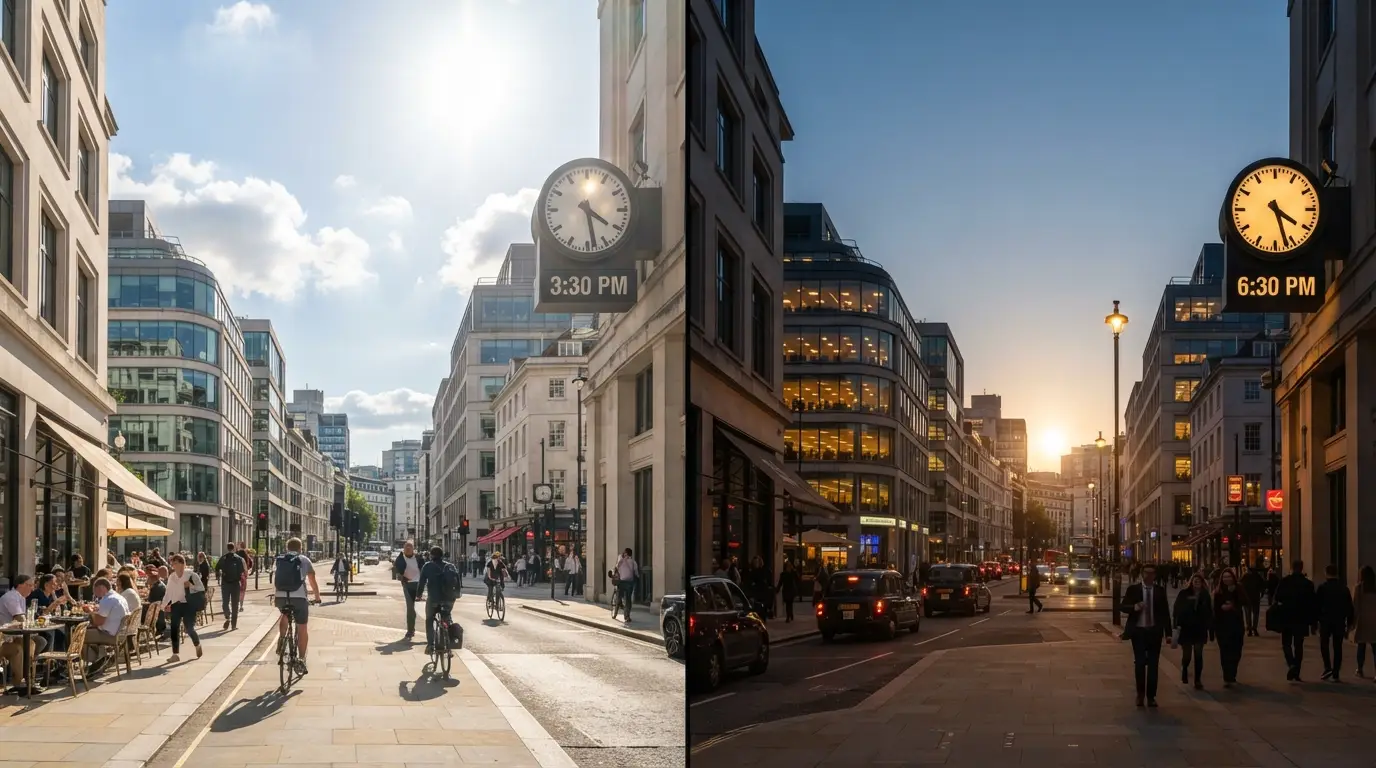
The biggest difference is where the time falls within the day.
Afternoon comes first. Evening comes later.
A simple way to remember the order is:
Morning → Afternoon → Evening → Night
If it is shortly after noon, afternoon is usually the natural choice. If it is later in the day, especially around dinner or after work, evening is often more appropriate.
For example:
- 1:00 p.m. → afternoon
- 2:00 p.m. → afternoon
- 3:00 p.m. → afternoon
- 4:00 p.m. → afternoon
- 5:00 p.m. → late afternoon or early evening
- 6:00 p.m. → evening
- 7:00 p.m. → evening
- 8:00 p.m. → evening
- 9:00 p.m. → evening or night, depending on context
There is some overlap because everyday language is not controlled by a strict clock.
When Does Afternoon Become Evening?
There is no single official time when afternoon becomes evening.
This is one of the most important things to understand about afternoon or evening.
Many people use late afternoon for the period around 4 p.m. to 5 p.m. and early evening for the period around 5 p.m. to 7 p.m. However, these are general patterns rather than fixed rules.
Sunlight can also affect how people describe the time.
For example, in summer, it may still be bright outside at 7 p.m., but people can still call that time evening. In winter, darkness may arrive much earlier, but people may still describe 4 p.m. as afternoon.
The situation matters too.
Consider these examples:
“The meeting is at 5 p.m. this afternoon.”
This sounds reasonable if the speaker is thinking of 5 p.m. as late afternoon.
“The dinner is at 5 p.m. this evening.”
This also sounds natural because dinner is commonly associated with evening.
So, the boundary is flexible.
Is 5 PM Afternoon or Evening?
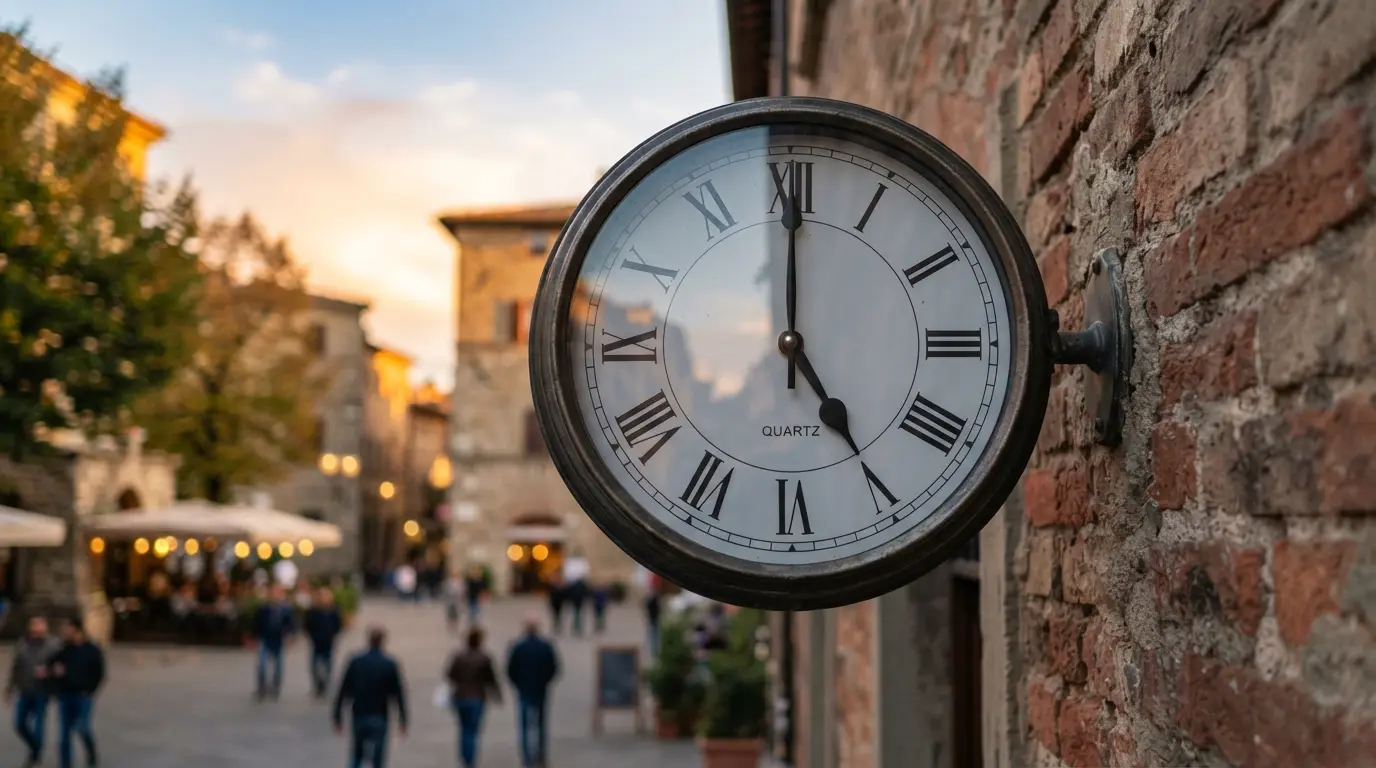
5 p.m. can be either late afternoon or early evening.
There is no serious grammar error in choosing either term when the context supports it.
If you are talking about work, you might say:
“I will send the email at 5 p.m. this afternoon.”
If you are talking about dinner, you might say:
“We are meeting at 5 p.m. this evening.”
The activity can influence the word people choose.
Here is a useful comparison:
| Time | Possible Description | Example |
| 4:00 p.m. | Afternoon | “See you this afternoon.” |
| 5:00 p.m. | Late afternoon / early evening | “The event begins this evening.” |
| 6:00 p.m. | Evening | “We will have dinner this evening.” |
| 7:00 p.m. | Evening | “The class starts this evening.” |
| 8:00 p.m. | Evening | “We are going out this evening.” |
| 9:00 p.m. | Evening / night | “I usually relax at night.” |
If you need to avoid confusion, simply use the exact time.
For example:
“Let’s meet at 5 p.m.”
That removes any uncertainty about whether someone considers 5 p.m. afternoon or evening.
Afternoon or Evening for Greetings?
Both “Good afternoon” and “Good evening” are correct greetings, but they are used at different parts of the day.
Good afternoon is generally used after noon and during the afternoon.
For example:
“Good afternoon, everyone. Thank you for joining us.”
Good evening is generally used later in the day.
For example:
“Good evening, everyone. Welcome to the meeting.”
The exact transition is flexible. Around 5 p.m. or 6 p.m., good evening is often more natural, especially at a formal event.
A useful pattern is:
Morning → Good morning
Afternoon → Good afternoon
Evening → Good evening
You normally do not say “Good night” when greeting someone at the beginning of an event. Good night is more commonly used when leaving or going to sleep.
For example:
“Good evening! How are you?”
But when leaving:
“Good night! See you tomorrow.”
Afternoon or Evening for Appointments?

Both words can describe appointments, depending on the time.
If an appointment is at 2 p.m., afternoon is clearly appropriate:
“I have an appointment tomorrow afternoon.”
If an appointment is at 7 p.m., evening is clearly appropriate:
“I have an appointment tomorrow evening.”
At around 5 p.m., either may work.
However, when making an important appointment, using the exact clock time is often best.
Instead of:
“Can we meet in the afternoon?”
You can say:
“Can we meet at 3 p.m.?”
Instead of:
“Can we meet in the evening?”
You can say:
“Can we meet at 7 p.m.?”
This makes communication clearer.
Afternoon or Evening for Meals?
The words afternoon and evening can also describe when meals happen.
Lunch is normally associated with the afternoon or midday.
For example:
“We had lunch in the early afternoon.”
Dinner is commonly associated with the evening.
For example:
“We are having dinner this evening.”
However, meal times vary between people and cultures. Someone may eat dinner at 5 p.m., while another person may eat dinner at 9 p.m.
The word evening does not require a specific dinner time.
You can say:
“I usually have dinner in the evening.”
This describes a general routine rather than a precise time.
Common Mistakes With Afternoon and Evening
People sometimes use afternoon and evening incorrectly because the boundary between them is flexible.
One common mistake is assuming that there is one exact official time when afternoon ends. There is not.
Another mistake is using night when you simply mean evening.
For example:
“We are having dinner tonight.”
This is completely natural.
But:
“Good night, everyone. Welcome to the meeting.”
may sound strange if the meeting is just beginning.
A third mistake is writing 12 p.m. as midnight. In the standard 12-hour clock system, 12 p.m. means noon, while 12 a.m. means midnight.
If the distinction is important, you can write 12 noon or midnight to make your meaning completely clear.
Afternoon or Evening in American English

In American English, afternoon and evening are both very common.
Americans often use afternoon for the hours after noon and evening for the later part of the day.
Examples:
- “See you this afternoon.”
- “I have work this afternoon.”
- “Let’s talk this evening.”
- “The party is this evening.”
- “Good afternoon.”
- “Good evening.”
American English does not have a strict official clock rule that determines exactly when one word must replace the other.
That is why native speakers may use slightly different boundaries.
For everyday communication, context is usually enough.
Afternoon vs Evening in British and American English
The basic meanings are similar in British and American English.
Both varieties use afternoon for the part of the day after noon and evening for the later part of the day.
The main difference is not a completely different definition. Instead, speakers may have slightly different habits about where they feel the boundary occurs.
For example, one person may call 5 p.m. late afternoon, while another may call it early evening.
This is normal language variation.
If you are writing for an American audience, you can safely use the common pattern:
morning → afternoon → evening → night
There is no need to worry about a tiny difference in the exact boundary.
Real-Life Examples of Afternoon
Here are natural sentences using afternoon:
- “I will finish my homework this afternoon.”
- “She usually drinks coffee in the afternoon.”
- “The weather was warm this afternoon.”
- “We have a meeting tomorrow afternoon.”
- “I went shopping yesterday afternoon.”
- “He takes a short break every afternoon.”
- “The children came home in the afternoon.”
- “Let’s talk about it this afternoon.”
In each example, afternoon refers to a period after noon and before the later part of the day.
Real-Life Examples of Evening
Here are natural sentences using evening:
- “We are going to dinner this evening.”
- “I like reading in the evening.”
- “She called me yesterday evening.”
- “The concert begins this evening.”
- “They usually watch television in the evening.”
- “He goes for a walk every evening.”
- “We have plans for this evening.”
- “The restaurant is busy in the evening.”
These examples show how evening is often connected with activities that happen after work, school, or the main daytime period.
How to Choose Between Afternoon and Evening

When you are unsure whether to use afternoon or evening, ask yourself three simple questions.
First, is the time shortly after noon? If yes, afternoon is probably the better choice.
Second, is the time later in the day, around dinner or after work? If yes, evening is probably more natural.
Third, is the time close to the boundary, such as 5 p.m.? If yes, either word may work depending on the context.
For example:
2 p.m.
“I’ll call you this afternoon.”
7 p.m.
“I’ll call you this evening.”
5 p.m.
“I’ll call you this afternoon.”
or
“I’ll call you this evening.”
Both can be understood naturally.
Tips for Using Afternoon and Evening Naturally
The easiest way to use these words correctly is to focus on normal daily patterns rather than trying to memorize one exact boundary.
Use afternoon when you are clearly talking about the period after noon.
Use evening when you are talking about the later part of the day.
Use late afternoon when you want to emphasize that the afternoon is almost over.
Use early evening when you want to describe the beginning of the evening.
Use an exact time when the distinction matters.
For example, instead of saying:
“The appointment is in the afternoon.”
you can say:
“The appointment is at 3:30 p.m.”
This is especially useful for work meetings, medical appointments, travel plans, school events, and other situations where timing must be clear.
Is “This Afternoon” Correct?
Yes, “this afternoon” is completely correct.
It means the afternoon of the current day or the afternoon being discussed.
Examples:
“I will call you this afternoon.”
“We have a meeting this afternoon.”
“She is coming this afternoon.”
Similarly, “this evening” is correct when referring to the current day’s evening.
“We are going out this evening.”
“I’ll finish it this evening.”
“Do you have plans this evening?”
These expressions are very common in everyday American English.
Is “In the Afternoon” or “In the Evening” Correct?

Yes. Both are standard expressions.
Use in the afternoon for general afternoon times:
“I work in the afternoon.”
Use in the evening for general evening times:
“I study in the evening.”
You can also use this afternoon and this evening when talking about a particular day.
Compare:
“I exercise in the afternoon.”
This describes a regular habit.
“I will exercise this afternoon.”
This describes a specific afternoon.
The same difference applies to evening.
“I read in the evening.”
“I will read this evening.”
Frequently Asked Questions About Afternoon or Evening
Is 12 PM afternoon or noon?
12 p.m. is noon, and the afternoon begins after noon. To avoid confusion, many people simply write “12 noon” when they mean exactly midday.
Is 5 PM afternoon or evening?
5 p.m. can be called late afternoon or early evening. Both can be natural depending on the speaker and situation.
Is 6 PM afternoon or evening?
6 p.m. is generally considered evening. Saying “this evening” at 6 p.m. sounds natural in everyday American English.
Should I say “Good afternoon” or “Good evening” at 5 PM?
At 5 p.m., either may be understandable, but “Good evening” often sounds more natural for a formal greeting later in the day. Context matters.
Is evening before or after afternoon?
Evening comes after afternoon. The usual order is morning, afternoon, evening, and night.
Is “Good night” the same as “Good evening”?
No. Good evening is mainly used as a greeting when meeting someone later in the day. Good night is generally used when leaving, ending a conversation, or going to sleep.
Conclusion
When choosing between afternoon or evening, remember the simple order of the day: morning comes first, followed by afternoon, evening, and night. Afternoon begins after noon, while evening describes the later part of the day.
There is no exact universal clock time that separates afternoon from evening. Around 5 p.m., either late afternoon or early evening can be natural.
For everyday American English, use afternoon for earlier times after noon and evening for later times, especially around dinner and after work. When timing must be perfectly clear, simply give the exact time.
The key is to focus on context rather than memorizing a strict boundary.

Hi, I’m Iqra, a passionate writer and grammar enthusiast dedicated to making English grammar simple, clear, and easy to understand. Through my work on grammar books and educational content, I help students, writers, and English learners improve their vocabulary, sentence structure, punctuation, and everyday communication skills. My goal is to turn confusing grammar rules into practical, easy-to-follow lessons that readers can confidently use in real life. I believe learning grammar doesn’t have to be difficult—it can be simple, useful, and even enjoyable. Through helpful guides, examples, and carefully explained grammar tips, Iqra aims to make learning English more accessible for everyone.