
Have you ever heard someone call a child’s favorite blanket a blankie or blankey .Both spellings sound almost the same, so it is easy to wonder which one belongs in your writing.
This question often comes up when parents write about children, when someone is creating a children’s story, or when a writer wants to describe a favorite comfort blanket. The word is informal, which also means people may spell it in slightly different ways.
The good news is that the difference is simple once you understand how dictionaries treat these forms. Blankie is a well-established informal English word, especially in American English. Blankey is also recorded as an alternative spelling.
In this guide, you will learn the meaning of each form, which spelling to choose, how to use it in sentences, common mistakes, and when blanket is a better choice.
Quick Answer: Blankey or Blankie?
For most general American English writing, blankie is the best default spelling.
Cambridge Dictionary lists blankie as an informal noun, mainly used in the United States. It describes a blanket, especially a small blanket or part of one that a young child uses to feel safe and happy. Cambridge also lists blankey as an alternative form.
So, if you are writing a parenting article, children’s story, casual message, or social media post, blankie is a natural choice.
However, there is an important difference between an informal word and a formal word. If you are writing a school paper, business document, medical report, or other formal text, blanket, comfort blanket, or security blanket may be more suitable.
| Word | Meaning | Style | Recommended use |
| Blankie | A child’s or comfort blanket | Informal | General casual writing |
| Blankey | Same basic meaning as blankie | Informal variant | When preserving this spelling |
| Blanky | Informal form used in some contexts | Informal/regional | Personal or specific usage |
| Blanket | A covering used for warmth or comfort | Neutral | Formal and general writing |
The simplest rule is: Use “blankie” when you want the cute, informal word. Use “blanket” when you want neutral English.
What Does “Blankie” Mean?
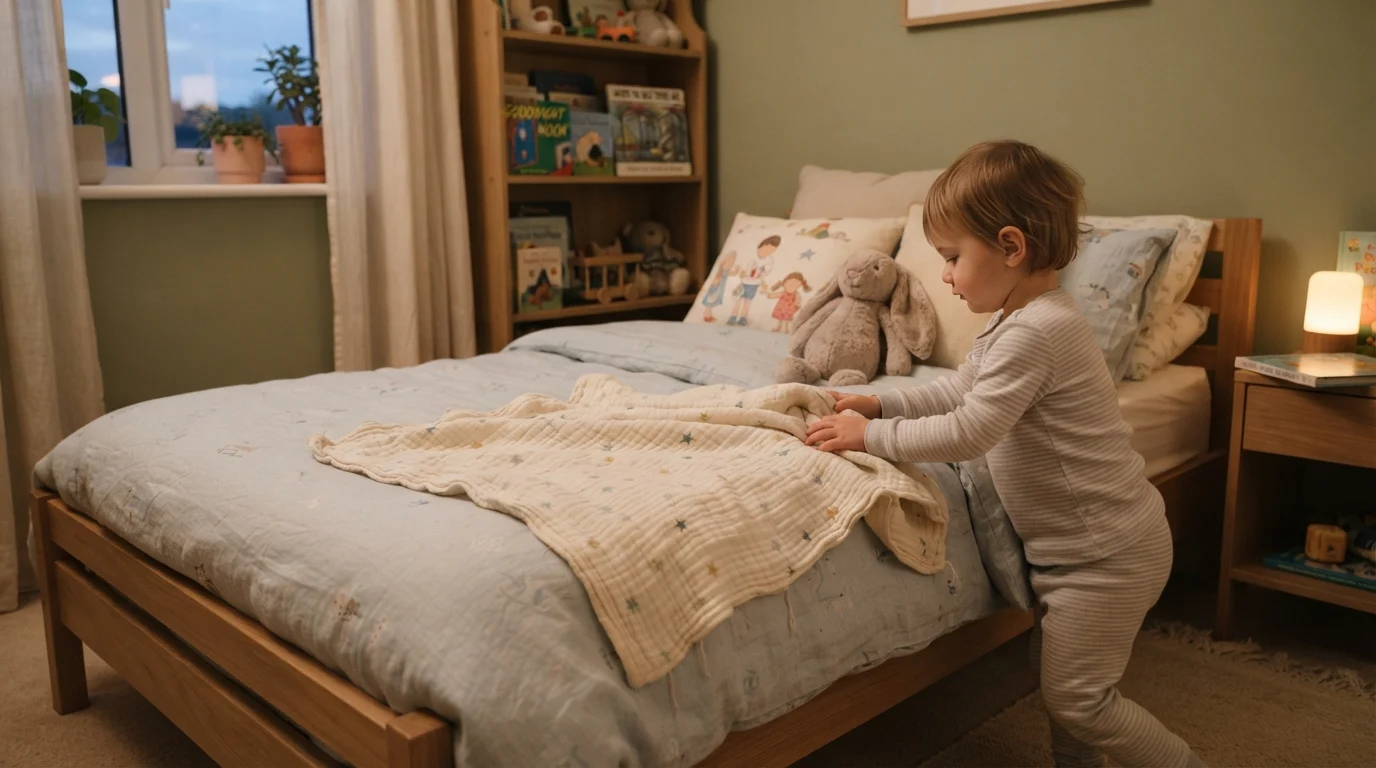
Blankie is an informal word for a blanket, especially one that a young child carries, sleeps with, or uses for comfort.
Cambridge defines it as a blanket or part of a blanket that a young child may use to feel safe and happy.
For many families, a blankie is more than an ordinary blanket. A child may become attached to one particular blanket because it is familiar and comforting.
For example:
- The baby fell asleep while holding her blankie.
- My son takes his blankie everywhere.
- We forgot the baby’s blankie at home.
- She asked for her blankie before bedtime.
- The toddler would not sleep without his favorite blankie.
The word has a warm and affectionate feeling. That is why it is common when people talk about babies and young children.
It is also important to remember that blankie does not necessarily mean a specific type of fabric or design. It is mainly about the way the word is used and the feeling it expresses.
A large blanket could be called a blankie in casual family speech, but the word often suggests a child’s favorite or comfort blanket.
Is “Blankie” or “Blankey” Correct?
Both blankie and blankey can be found in English, but they do not have exactly the same level of dictionary recognition.
Blankie is the stronger default because it has a clear dictionary entry and is identified as an informal, mainly US word. Cambridge specifically lists blankey as another form.
That means it would be too simple to say that blankey is always wrong.
Instead, think about the purpose of your writing.
If you are choosing a spelling for a general article or everyday American English, blankie is a sensible choice.
If you are quoting a person who normally writes blankey, keeping their spelling can make sense. Informal words often develop personal spellings, especially when people learn them through speech rather than formal writing.
For example:
“Where is my blankey?”
If that is how a character, child, or family uses the word, changing it to blankie may remove part of the character’s natural voice.
For edited general writing, however, consistency matters. Choose one form and use it consistently.
Blankie vs. Blankey: Main Difference
The main difference between blankie and blankey is spelling rather than basic meaning.
Both can refer to a blanket, especially a child’s comfort blanket, but blankie is the more straightforward default for American readers.
| Feature | Blankie | Blankey |
| Basic meaning | Child’s or comfort blanket | Child’s or comfort blanket |
| Pronunciation | Usually pronounced “BLANG-kee” | Usually pronounced similarly |
| Register | Informal | Informal |
| Dictionary support | Clearly listed | Listed as an alternative by Cambridge |
| Best default for US writing | Yes | Less common choice |
| Formal writing | Usually avoid | Usually avoid |
| Child-friendly writing | Yes | Yes, depending on context |
The difference is therefore not like affect vs. effect, where the words have different meanings. Here, the forms are closely related and can refer to the same object.
The spelling simply varies.
Why Do People Use “Blankie”?

The word blankie has an affectionate, child-friendly sound.
English often creates informal or affectionate words by changing the ending of an existing word. In this case, blankie is connected to blanket and uses the familiar -ie ending.
You can see similar patterns in words and nicknames such as:
- doggie
- kitty
- auntie
- sweetie
- birdie
This kind of ending can make a word sound smaller, softer, friendlier, or more affectionate.
That is one reason blankie feels natural when talking about a child’s favorite blanket.
It also helps explain why spelling variations can appear. When a word is mainly learned through speech, people may choose different spellings when they begin writing it.
So someone may write blankie, while another person writes blankey or blanky.
The pronunciation alone does not always tell the writer which spelling a dictionary will prefer.
Blankie vs. Blanket: Are They the Same?
Blankie and blanket are closely related, but they are not always interchangeable.
Blanket is the normal, neutral English word. It can describe a bed covering, a warm covering, or many other types of blankets.
Blankie is informal and often has a more personal or child-focused meaning.
Consider these examples:
Neutral:
The hotel provided each guest with a warm blanket.
Informal and child-focused:
The toddler refused to sleep without her blankie.
The first sentence sounds normal in a hotel description or formal article. The second sounds natural in a conversation about a child.
This difference is mainly about register and context.
If you are not trying to create a cute or affectionate tone, blanket is usually the better word.
Blankie vs. Blanky: What About “Blanky”?

You may also see blanky.
This form can be used informally for a comfort blanket, although its dictionary treatment varies by source and region. Some dictionaries and reference sources recognize it as an informal or baby-talk form.
That makes it important not to treat every spelling variation as a simple spelling error.
For example:
“Where’s my blanky?”
This can sound completely natural in a child’s dialogue.
However, if you are writing an edited article for a general American audience and need one standard informal spelling, blankie is the safer choice.
A useful way to remember the difference is:
Blankie = best general informal choice.
Blanky = informal variant that may appear in personal or regional use.
Blanket = neutral standard word.
British vs. American English
There is some regional variation in how these informal forms are treated.
Cambridge Dictionary identifies blankie as mainly US, while also recording blankey as an alternative spelling.
Other dictionary sources treat blanky differently, including uses associated with British or baby-talk English.
This means it is not helpful to create an absolute rule saying that one spelling is used everywhere and every other spelling is wrong.
For an American English website, blankie is a strong default.
For British English, regional usage and the exact context may affect the choice. If you are writing dialogue or reproducing someone’s personal wording, preserving their preferred spelling is often the most natural approach.
| Situation | Natural choice |
| General American English | Blankie |
| Formal American English | Blanket |
| Child’s dialogue | Blankie / blanky, depending on voice |
| Personal family spelling | Keep the family’s preferred form |
| Dictionary-style explanation | Blankie |
| Neutral description | Blanket |
Common Mistakes With Blankie and Blankey

One common mistake is assuming that blankey can never be a valid spelling.
Cambridge actually records blankey as an alternative to blankie, so calling it an absolute spelling error would be inaccurate.
Another mistake is using blankie in every situation.
For example, this sentence is possible:
The hospital gave the patient a blankie.
But if the meaning is simply a standard covering, blanket would sound more natural:
The hospital gave the patient a blanket.
A third mistake is changing someone’s personal spelling.
If a child’s family has always called a particular item a blankey, there is no need to “correct” their family vocabulary in a personal message.
Another issue is inconsistency.
If you begin an article by using blankie, do not randomly switch between blankie, blankey, and blanky unless you are specifically discussing their differences.
Consistency makes writing easier to understand.
Real-Life Examples of “Blankie”
Here are some natural examples showing how blankie works in everyday English.
Example 1: Parenting
My daughter carries her blankie with her whenever we travel.
Here, blankie sounds natural because the sentence is about a child’s favorite comfort item.
Example 2: Bedtime
Don’t forget to put his blankie next to the pillow.
The informal word fits the warm, family-focused situation.
Example 3: Conversation
“Where is my blankie?” the little boy asked.
The word works naturally in children’s dialogue.
Example 4: Casual social media
First night in her new room, and she already has her favorite blankie ready.
The casual tone makes blankie appropriate.
Example 5: Neutral writing
The child brought a comfort blanket to the new daycare.
Here, comfort blanket is more neutral than blankie.
Example 6: Formal writing
The child was allowed to bring a familiar blanket to help with the transition.
In formal or professional writing, blanket is usually the cleaner choice.
These examples show that choosing between the words is not only about spelling. It is also about tone, audience, and purpose.
How to Choose the Right Word
Choosing the right form becomes easy when you first ask what kind of writing you are doing.
If you are writing a casual message to a parent, blankie works well.
If you are writing a children’s story, blankie can make the language sound warm and natural.
If you are writing dialogue, you can use blankie, blanky, or another form if it fits the character’s voice.
If you are writing a professional report, blanket is usually better.
If you are writing an academic paper, use the neutral term that clearly describes the object.
If you are discussing someone’s exact wording, keep their original spelling when appropriate.
The goal is not to eliminate every informal spelling. The goal is to use the form that matches your audience.
Is “Blankie” Formal or Informal?
Blankie is informal.
This is an important point because being listed in a dictionary does not automatically make a word formal.
Cambridge specifically labels blankie as informal.
You can think of English vocabulary as having different levels of formality.
Formal or neutral:
The child carried a blanket.
Informal:
The child carried her blankie.
Both sentences can be grammatically correct. The difference is the feeling and register.
The informal word may sound warmer and more personal. The neutral word is better when the writing needs to sound professional or objective.
Plural of Blankie
The plural form of blankie is blankies.
For example:
The daycare keeps several extra blankies for nap time.
We washed all the baby’s blankies yesterday.
This follows the normal spelling pattern used when a word ending in -ie changes to -ies in the plural.
The forms are:
One blankie → two blankies
Do not write blankies as blankieses or blankies’ unless you are forming a possessive.
For example:
The blankies are clean.
But:
The blankie’s corner is torn.
In the second sentence, blankie’s is possessive because something belongs to one blankie.
Current Usage of Blankie
Current dictionary evidence continues to support blankie as an established informal word, particularly in American English. Cambridge’s current entry identifies it as mainly US and also records blankey as an alternative.
However, it is difficult to give an exact percentage showing how often people use blankie compared with blankey or blanky. Major dictionaries do not provide a simple 2026 usage percentage for these spellings.
That limitation matters.
A writer should not claim that “90% of Americans use blankie” unless a reliable study actually provides that number.
What can be said confidently is that blankie has clear dictionary recognition and is a natural informal choice for American English.
For SEO writing, children’s content, parenting articles, and casual communication, blankie is therefore a useful primary spelling.
Blankie or Blanket: Which One Should You Use?
The answer depends on your purpose.
| If you are writing… | Recommended word |
| A parenting blog | Blankie |
| A children’s story | Blankie |
| A casual text | Blankie |
| Children’s dialogue | Blankie or blanky |
| A family message | Blankie or personal spelling |
| A school assignment | Blanket |
| A professional report | Blanket |
| A formal article | Blanket or comfort blanket |
| A dictionary-style article about the word | Blankie |
| A quote using someone’s own spelling | Preserve the original |
This makes the choice much easier.
You do not need to ask only, “Which spelling is correct?”
Instead, ask:
“Which spelling fits my audience and purpose?”
For most American English users asking about this particular spelling question, blankie is the most useful default.
FAQs About Blankey or Blankie
Is “blankie” a correct word?
Yes. Blankie is an established informal English noun. Cambridge Dictionary defines it as a blanket, especially a small one used by a young child for comfort, and identifies it as mainly US.
Is “blankey” also correct?
Blankey is recognized as an alternative spelling of blankie by Cambridge Dictionary. It is informal, so the choice depends on context and personal preference.
Is blankie a formal English word?
No. Blankie is an informal word. In formal or professional writing, blanket, comfort blanket, or security blanket will usually be more appropriate.
What is the difference between blankie and blanket?
Blankie is an informal, affectionate term, often used for a child’s favorite comfort blanket. Blanket is the normal neutral English word for a covering used for warmth or comfort.
What is the plural of blankie?
The plural of blankie is blankies. For example: “The daycare has several clean blankies for the children.”
Should I use blankie or blankey?
For general American English, blankie is the safer default. However, blankey is also recorded as an alternative spelling, so it should not automatically be treated as an error.
Conclusion
When choosing between blankey or blankie, blankie is the best default for general American English. It is an established informal word for a blanket, especially a child’s comfort blanket, and Cambridge Dictionary specifically lists it as mainly US.
Blankey is also recognized as an alternative spelling, so it is not accurate to call it automatically wrong. Blanky can also appear in informal, personal, or regional usage.
For formal writing, however, the simple word blanket is usually the better choice. It is neutral, clear, and suitable for almost any audience.
So, remember the easy rule: blankie for informal and affectionate writing, blanket for neutral or formal writing, and preserve blankey or blanky when a specific person or context calls for that spelling.

Hi, I’m Iqra, a passionate writer and grammar enthusiast dedicated to making English grammar simple, clear, and easy to understand. Through my work on grammar books and educational content, I help students, writers, and English learners improve their vocabulary, sentence structure, punctuation, and everyday communication skills. My goal is to turn confusing grammar rules into practical, easy-to-follow lessons that readers can confidently use in real life. I believe learning grammar doesn’t have to be difficult—it can be simple, useful, and even enjoyable. Through helpful guides, examples, and carefully explained grammar tips, Iqra aims to make learning English more accessible for everyone.