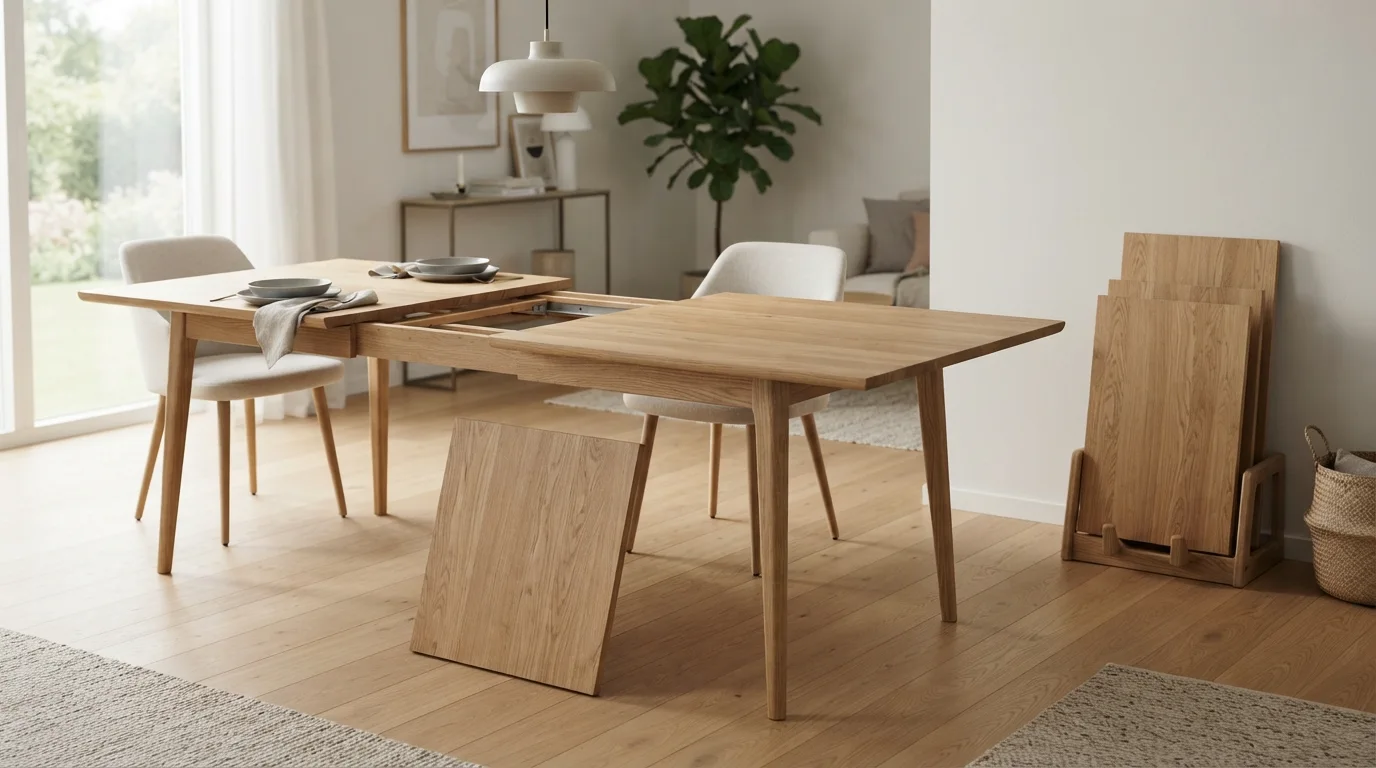
If you are wondering If “table leafs or leaves” is correct, the right plural form of leaf is usually leaves.
When talking about extra sections added to a table, such as a dining table, you should write table leaves, not table leafs.
The word leafs is rarely used and has a different grammatical purpose.
Quick Answer: Table Leafs or Leaves?
The correct phrase is table leaves when you mean the removable or foldable sections that make a table larger.
For example:
We added two table leaves to make the dining table longer.
The table has three leaves stored underneath it.
The plural of the noun leaf is normally leaves. Therefore, table leaves is the standard choice.
| Incorrect or less common | Correct | Meaning |
| table leafs | table leaves | Extra sections that extend a table |
| one table leaf | two table leaves | One or more table extensions |
| dining table leafs | dining table leaves | Removable table sections |
However, leafs is not always grammatically impossible. It can be used as a verb in certain contexts. For example, someone may write that a person leafs through a book, although leafs in that use is less common than other wording.
For your specific phrase, table leaves is the natural and correct form.
What Does Table Leaf Mean?
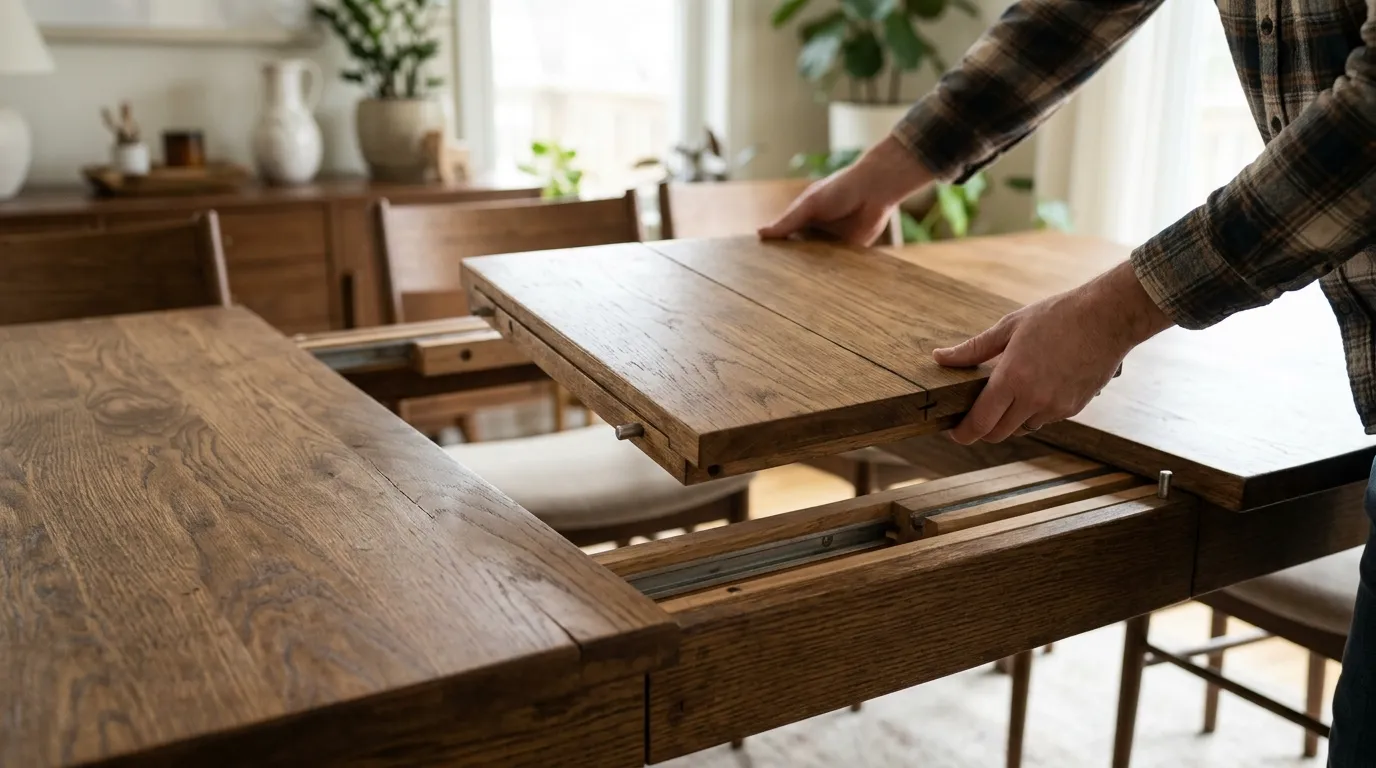
A table leaf is an extra section that can be added to a table to increase its length or seating space.
Imagine a dining table that normally seats six people. If you have guests coming over, you may need more space. Some tables are designed with openings in the middle or with expandable sections. A table leaf can fit into that space and make the table longer.
For example:
Our dining table has one removable leaf.
Here, leaf means one extra section of the table.
When there is more than one, use leaves:
Our dining table has two removable leaves.
The word may seem unusual because most people first learn leaf as the green part of a plant. However, leaf has several meanings in English, including a thin section or panel that can be added to furniture.
| Term | Meaning | Example |
| table leaf | One table extension | The table has one leaf. |
| table leaves | Two or more table extensions | The table has two leaves. |
| dining table leaf | An extension for a dining table | We need one dining table leaf. |
| dining table leaves | Multiple extensions | We stored the dining table leaves. |
So, when you are talking about expandable furniture, table leaf is singular and table leaves is plural.
Why Is the Plural of Leaf “Leaves”?
The word leaf is one of several English nouns that change their spelling when they become plural.
Instead of simply adding -s, the word changes from leaf to leaves.
This happens with several common words ending in -f or -fe.
For example:
leaf → leaves
knife → knives
wife → wives
life → lives
wolf → wolves
However, English has exceptions. Not every word ending in -f changes to -ves.
For example:
roof → roofs
chief → chiefs
belief → beliefs
This is why learners should not assume that every word ending in f follows the same rule.
For leaf, though, the standard plural noun is leaves.
| Singular | Plural |
| leaf | leaves |
| knife | knives |
| wolf | wolves |
| life | lives |
| roof | roofs |
| chief | chiefs |
When you are talking about a table extension, the same noun rule applies:
one leaf → two leaves
Therefore:
one table leaf → two table leaves
Table Leaf vs. Table Leaves
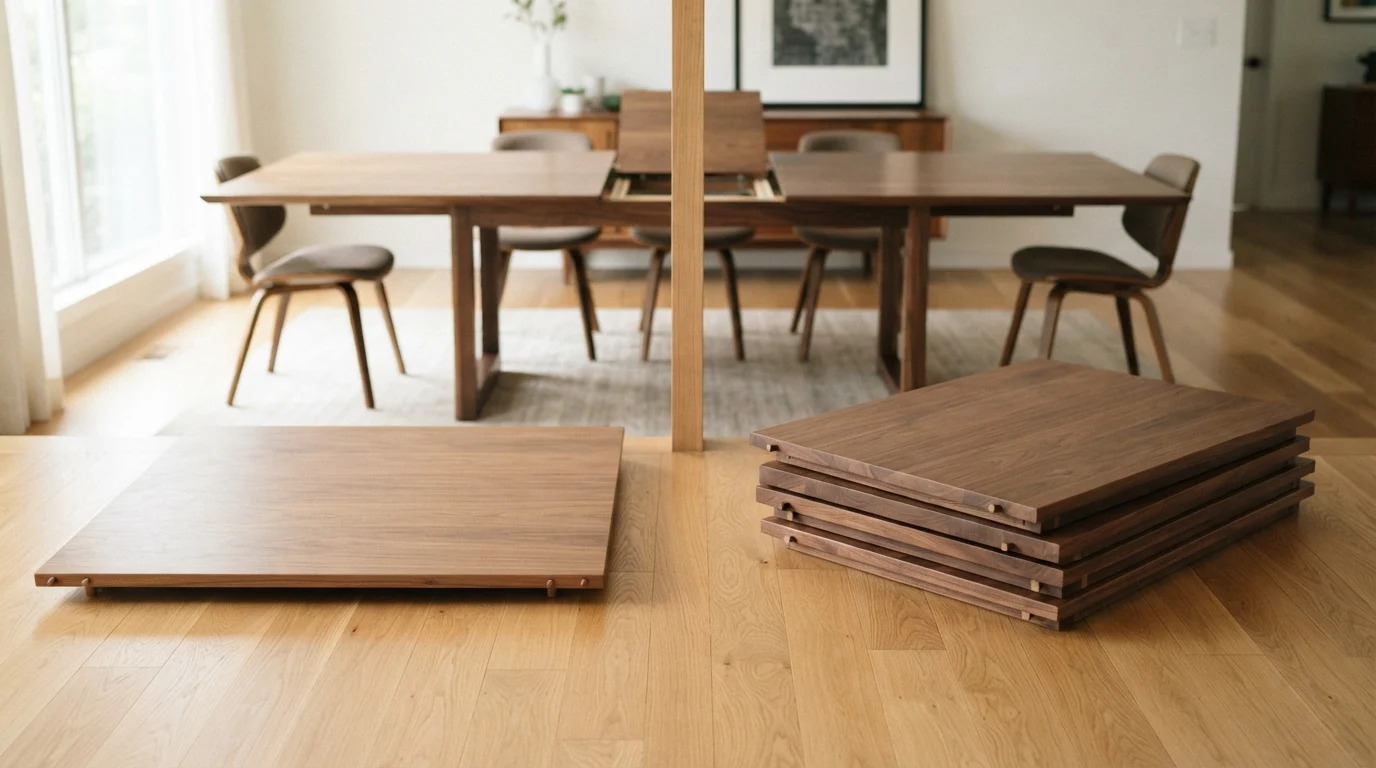
The choice between table leaf and table leaves depends on the number of extensions you mean.
Use table leaf for one:
I need to add a table leaf.
Use table leaves for two or more:
I need to add two table leaves.
This is the same singular-versus-plural pattern used with many other nouns.
For example:
one book → two books
one chair → two chairs
one leaf → two leaves
one table leaf → two table leaves
The word table does not change. Only leaf changes to leaves.
Is “Table Leafs” Ever Correct?
For the noun meaning a table extension, table leafs is not the standard plural form.
If you are writing about furniture, use:
table leaf
or
table leaves
For example:
The table has two leaves.
We removed the table leaves after dinner.
Where should I store the table leaves?
Writing table leafs in these sentences would be considered a spelling or pluralization mistake.
There is a separate verb leaf, meaning to turn pages by moving through a book or similar material. Its third-person singular form can be leafs, although leafs through is less common in modern everyday writing than alternatives such as flips through.
That verb use does not apply to furniture.
So, if your topic is an expandable dining table, remember:
leaf = one table extension
leaves = more than one table extension
What Is a Table Leaf Used For?
A table leaf is used to make an expandable table longer.
Many dining tables are designed to accommodate different numbers of people. A smaller table may be useful for everyday meals, while a larger table is helpful when family members or guests visit.
For example, a table might normally seat four people. Adding one or more leaves can create additional space.
The exact design varies from table to table. Some tables have leaves that can be stored inside the table, while others use removable pieces that must be stored separately.
Common reasons for using table leaves include family dinners, holidays, parties, and other gatherings.
The important language point is that each removable section can be called a leaf.
When there are several sections, they are called leaves.
Different Types of Table Leaves
Not all table leaves work in exactly the same way. Furniture makers use different designs depending on the table.
Some tables have removable leaves. These pieces are taken out and stored when they are not needed.
Other tables have self-storing leaves. These are designed to stay with the table when the table is made smaller.
Some tables have drop leaves, which are hinged sections that can be raised or lowered.
A butterfly leaf is another furniture term. It generally refers to a leaf designed to fold so that it can be stored within the table.
These names describe different furniture designs, but the plural of leaf remains leaves.
| Type | Basic idea |
| Removable leaf | Taken out and stored separately |
| Self-storing leaf | Stored within or attached to the table |
| Drop leaf | Hinged section that can be lowered |
| Butterfly leaf | Folding leaf designed for storage |
If you are writing product descriptions or furniture information, table leaves is the appropriate plural form.
Table Leaf or Table Extension?
You may also see table extension used instead of table leaf.
Both can describe a piece or system that makes a table larger, but table leaf is a specific furniture term.
For example:
This dining table includes two leaves.
You could also say:
This dining table has two extension sections.
The second sentence is easier for someone who is unfamiliar with furniture terminology. The first is more specific.
If you are shopping for an expandable dining table, you may encounter terms such as extension leaf, dining table leaf, extra leaf, or simply leaf.
These terms can refer to the part used to increase the table’s size.
Table Leaves in Real-Life Sentences

The easiest way to understand the correct form is to see it in everyday sentences.
We added a table leaf before dinner.
The dining table has two leaves.
Where did you put the table leaves?
This table comes with one removable leaf.
We removed the leaves after our guests left.
The table leaves are stored in a closet.
Can you help me insert the table leaf?
The extra table leaves give us more seating space.
Notice that leaf is used for one piece and leaves is used for more than one.
This simple pattern will help you avoid the common mistake table leafs.
Common Mistakes With Table Leafs or Leaves
The most common mistake is adding -s to leaf and writing leafs.
Incorrect:
The table has two leafs.
Correct:
The table has two leaves.
Another common mistake is using leaves when talking about only one piece.
Incorrect:
I added one table leaves.
Correct:
I added one table leaf.
The number determines which form you need.
A third mistake is confusing furniture leaves with plant leaves. The word leaf can describe both, but context tells you the meaning.
For example:
The tree has green leaves.
Here, leaves means parts of a plant.
The table has two leaves.
Here, leaves means furniture extensions.
The spelling is exactly the same.
Table Leafs vs. Table Leaves: A Simple Comparison
| Phrase | Correct? | Why? |
| one table leaf | Yes | Singular form |
| two table leaves | Yes | Standard plural form |
| table leafs | No, for furniture | Incorrect plural |
| one table leaves | No | Singular needs “leaf” |
| several table leaves | Yes | Plural form |
| dining table leaf | Yes | One extension |
| dining table leaves | Yes | Multiple extensions |
If you are unsure, simply count the pieces.
One = leaf.
Two or more = leaves.
This rule works well when talking about table extensions.
Why “Leafs” Looks Correct but Is Usually Wrong
English learners often add -s to a noun to make it plural. That works for many words:
chair → chairs
table → tables
book → books
But English has many irregular plural forms.
leaf → leaves
This means you cannot always create a plural simply by adding s.
The spelling leafs looks logical because it follows the regular pattern. However, when leaf is the noun referring to a plant part or table extension, leaves is the standard plural.
This is one reason the word can cause confusion.
The good news is that you only need to remember one key pattern:
leaf → leaves
Once you remember that, table leaves becomes easy.
British vs. American English: Table Leaves
The plural form leaves is standard in both American and British English when leaf is used as a noun.
There is no major American-versus-British difference here.
For example, both varieties use:
one leaf
two leaves
This also applies to furniture:
one table leaf
two table leaves
The main difference you may notice is not the spelling of leaves, but the furniture terms used in different regions or by different manufacturers.
Regardless of the variety of English, table leaves is the safe standard form for general writing.
Table Leaves vs. Plant Leaves
The word leaves can refer to very different things depending on context.
When talking about plants:
The tree has many leaves.
When talking about furniture:
The table has two leaves.
In both cases, leaves is the plural of leaf.
This is a useful example of how one English word can have multiple meanings.
| Context | Singular | Plural |
| Plant | leaf | leaves |
| Dining table | leaf | leaves |
| Book page | leaf | leaves |
The meaning changes, but the plural spelling remains the same.
Tips for Remembering Table Leaf or Leaves
A simple memory trick can make this word easier.
Think:
One leaf, two leaves.
Then add table if you are talking about furniture:
One table leaf, two table leaves.
You can also remember the f → v spelling change:
leaf → leaves
This pattern appears in several common English words, although it is not a rule for every word ending in f.
Another helpful tip is to avoid using table leafs in formal writing, product descriptions, school assignments, and website content. Table leaves is clearer and follows standard English usage.
If you are writing about a single extension, use table leaf.
If you are writing about multiple extensions, use table leaves.
Frequently Asked Questions About Table Leafs or Leaves
Is “table leaves” correct?
Yes. Table leaves is the correct plural form when referring to two or more removable or expandable sections of a table. The singular form is table leaf.
Is “table leafs” correct?
No, not when leafs is being used as the plural noun for table extensions. The standard plural of leaf is leaves, so you should write table leaves.
What is the plural of table leaf?
The plural is table leaves. For example, you can say, “The dining table has two leaves.”
What is a table leaf?
A table leaf is an extra section that can be added to an expandable table to make it longer. It can provide additional space for people, dishes, or other items.
Should I say table leaf or table leaves?
Use table leaf when you mean one extension. Use table leaves when you mean two or more extensions. The choice depends on the number of pieces.
Why does leaf become leaves?
Leaf has an irregular plural form. Instead of adding only -s, the spelling changes to leaves. This same pattern appears in words such as knife → knives and wolf → wolves.
Conclusion
When choosing between table leafs or leaves, the correct choice for furniture is table leaves. The singular form is table leaf, while the plural form is table leaves. A table leaf is an extra section used to make an expandable table longer, and several of these sections are called table leaves.
The spelling leafs is not the standard plural form of the noun leaf. Although leafs can appear as a verb in some contexts, it is not the right choice when you are talking about multiple table extensions.
The easiest rule to remember is simple: one table leaf, two table leaves. If you are writing a product description, explaining furniture, or checking your grammar, table leaves is the natural standard

Fazal Abbas
Fazal Abbas is a passionate English grammar writer with over 2 years of experience creating clear, helpful, and easy-to-understand grammar content. He specializes in confusing words, common grammar mistakes, word usage, sentence structure, and practical English tips.
With a simple teaching style, Fazal explains difficult grammar topics in easy English that students, writers, and everyday learners can understand. His goal is to make English grammar less confusing and more useful in real-life communication.
Through GrammarBook, Fazal shares practical examples, clear explanations, and useful tips to help readers improve their English with confidence. He believes that learning grammar should be simple, friendly, and enjoyable.