A swollen belly can mean many things, and that makes it confusing. If you feel puffy, tight, or full in your stomach, you might wonder: am I just bloated, or could I be pregnant? This question comes up a lot because bloating and early pregnancy can feel almost the same at first.
Both can make your pants feel tight. Both can come with gas, cramps, or a heavy feeling. But they are not the same thing, and they don’t have the same causes.
In this article, you will learn the real differences between bloating and pregnancy, the signs that point to each one, and what steps you can take to find a clear answer.
Quick Answer
The fastest way to know if you’re bloated or pregnant is to check your other symptoms and take a pregnancy test. Bloating usually comes from food, gas, or your period, and it often goes away in a day or two.
Pregnancy bloating comes with other signs, like a missed period, sore breasts, tiredness, or nausea.
A home pregnancy test, taken a few days after a missed period, gives the clearest answer. If you are still not sure, a visit to your doctor can confirm it with a blood test.
What Bloating Feels Like
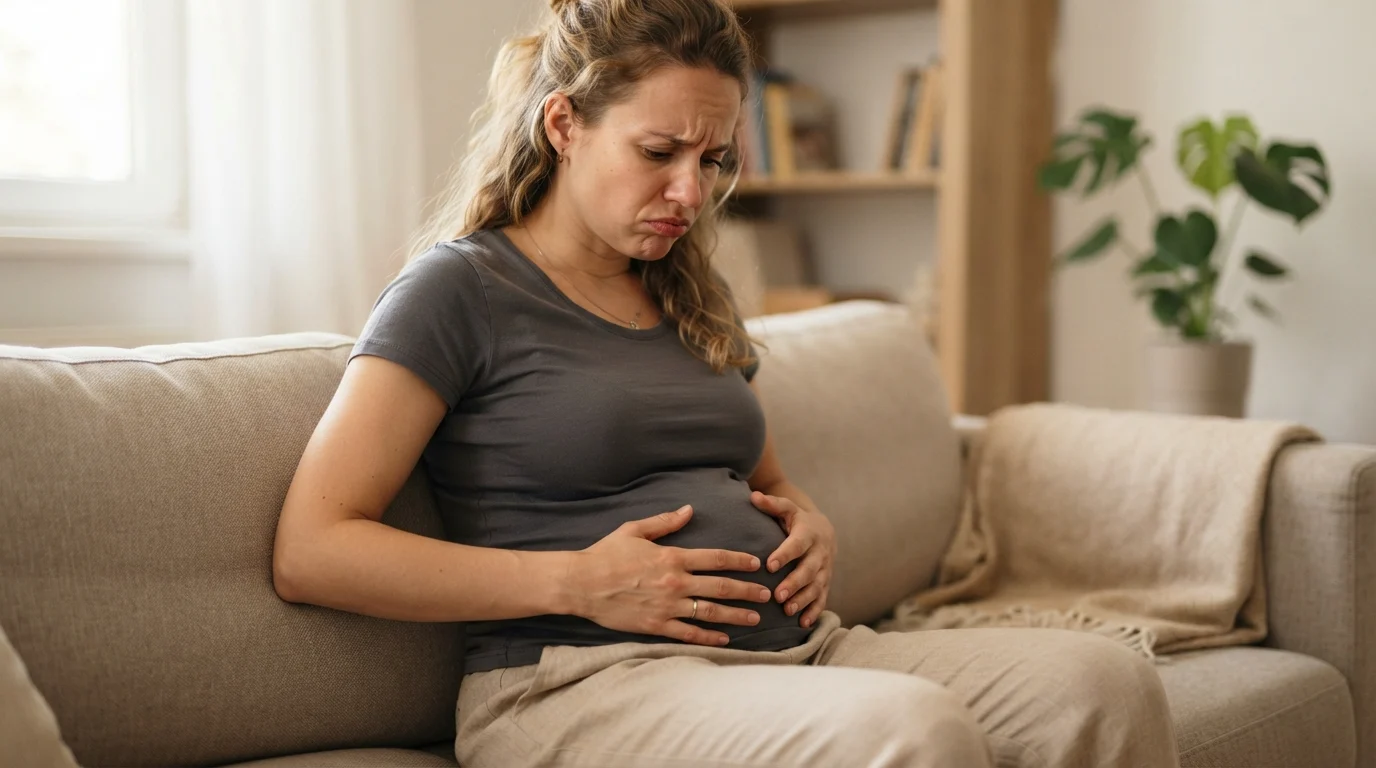
Bloating happens when your stomach fills up with gas or air, or when it holds on to extra fluid. It can make your belly look bigger than usual, and it often feels tight, hard, or uncomfortable. Some people say it feels like their stomach is stretched from the inside.
Bloating can be caused by many everyday things. Eating too fast, drinking soda, eating salty or fried food, or having a food that doesn’t agree with you can all cause it. Your period can also cause bloating, since hormone changes cause your body to hold on to more water in the days before your period starts. Stress and lack of sleep can make bloating worse too.
The good news is that normal bloating usually does not stick around for long. It tends to come and go throughout the day, and it often gets better after you use the bathroom, pass gas, or take an antacid. If your bloating shows up right after a big meal and fades a few hours later, that’s a strong sign it’s just bloating.
What Early Pregnancy Feels Like
Early pregnancy can also cause a swollen or full feeling in your belly, but this is not the same as gas bloating. In the first weeks of pregnancy, your body starts to make more of the hormone progesterone. This hormone relaxes the muscles in your digestive system, which can slow down digestion and lead to gas and a bloated feeling. So yes, pregnancy bloating is real, and it can feel a lot like regular bloating.
What makes pregnancy different is the group of other symptoms that usually come along with it. Most people don’t feel just one sign of pregnancy. They notice several signs together, and that combination is what points toward pregnancy rather than simple bloating.
Bloating vs. Pregnancy: Key Differences
Here is a simple side-by-side look at how bloating and early pregnancy tend to differ.
| Sign | Regular Bloating | Early Pregnancy |
| How long it lasts | Hours to a day or two | Weeks, and may return often |
| Linked to meals | Often worse right after eating | Can happen any time of day |
| Missed period | No | Usually yes |
| Breast changes | No | Often sore, heavy, or tender |
| Nausea | Rare | Common, especially in the morning |
| Fatigue | Not usually linked | Very common |
| Goes away with gas or bathroom use | Often yes | Usually no |
| Home pregnancy test | Negative | Positive (after a missed period) |
If most of your symptoms match the “Regular Bloating” column, it is likely just bloating. If you notice several signs from the “Early Pregnancy” column, it may be time to take a test.
Common Si gns That Point to Pregnancy
While bloating on its own does not confirm pregnancy, it becomes a clearer clue when it shows up along with other early signs. Here are the most common ones to watch for.
A missed period. This is often the first and clearest sign. If your period is late and you have been sexually active, it’s worth paying attention.
Sore or swollen breasts. Many people notice their breasts feel heavier, tender, or more sensitive within the first couple of weeks.
Nausea. Often called morning sickness, this can actually happen at any time of day. It may come with or without vomiting.
Tiredness. Early pregnancy often brings a deep tiredness that feels stronger than normal fatigue, even after a full night of sleep.
Frequent urination. Needing to use the bathroom more often is common in early pregnancy, as your body starts making more blood and fluid.
Mild cramping. Some light cramping can happen when the fertilized egg attaches to the uterus. This is sometimes mistaken for the start of a period.
Changes in smell or taste. Some people suddenly dislike foods or smells they used to enjoy, while others crave new things.
None of these signs alone proves pregnancy. But when a few show up together with bloating, it is a good reason to take a test.
Common Signs That Point to Simple Bloating
On the other hand, some clues suggest that bloating is just bloating, and not related to pregnancy at all.
It follows a specific meal.
If your belly swells up after eating beans, dairy, fried food, or a big meal, that points to digestion, not pregnancy.
It comes with burping or gas. Passing gas or burping and then feeling relief is a classic sign of regular bloating.
It lines up with your period. If the bloating shows up a few days before your period and fades once your period starts, it is likely hormonal bloating tied to your cycle, not pregnancy.
Your period arrives on time. If your period comes on schedule, pregnancy is very unlikely to be the cause of the bloating.
It improves with simple remedies. If drinking water, walking, or taking an antacid clears it up, that is another sign it’s regular bloating.
Why Bloating and Pregnancy Feel So Similar
The reason these two things get mixed up so often comes down to hormones. Both your monthly cycle and early pregnancy involve rising levels of progesterone. This hormone relaxes smooth muscle, including the muscles in your gut
. When digestion slows down, gas builds up, and your belly can feel round, tight, and full. Since this hormone rises in the days before your period and again in early pregnancy, the bloated feeling can show up in both cases. That overlap is completely normal, and it’s exactly why symptoms alone are not always enough to tell them apart.
When to Take a Pregnancy Test
Timing matters a lot when it comes to pregnancy tests. Most home pregnancy tests check for a hormone called hCG, which your body only starts making after a fertilized egg attaches to your uterus. This hormone needs time to build up to a level the test can detect.
For the most accurate result, it’s best to wait until the first day after a missed period. Testing too early can give a false negative, even if you are pregnant, simply because the hormone level is still too low.
If your test is negative but your period still doesn’t come, it’s a good idea to test again in a few days or see your doctor for a blood test, which can detect pregnancy earlier and more accurately than a home test.
Tips for Managing Bloating

Whether or not you turn out to be pregnant, there are simple steps that can help ease uncomfortable bloating in the meantime.
- Drink plenty of water throughout the day, since dehydration can actually make bloating worse.
- Eat slowly and chew your food well, which helps your stomach digest more easily.
- Cut back on carbonated drinks, since the bubbles add extra gas to your stomach.
- Try gentle movement, like a short walk, to help move gas through your system.
- Watch for foods that tend to trigger your bloating, such as beans, dairy, or fried foods, and eat smaller portions of them.
- Avoid lying down right after a big meal, since staying upright helps digestion.
If your bloating is severe, doesn’t go away, or comes with strong pain, fever, or vomiting, it’s important to see a doctor rather than trying to manage it at home.
When to See a Doctor
While mild bloating is usually harmless, some situations call for medical attention. See a doctor if you have a positive pregnancy test and want to confirm it and start prenatal care. You should also see a doctor if your period is late by more than a week with a negative test, if bloating comes with severe pain, vomiting, or fever, or if bloating lasts for more than a week without any clear cause. A doctor can run tests to figure out exactly what’s going on, whether it’s pregnancy, a digestive issue, or something else entirely.
FAQs
Can bloating be an early sign of pregnancy?
Yes, bloating can be one of the earliest signs of pregnancy. It happens because pregnancy hormones slow down digestion. However, bloating alone does not confirm pregnancy, since it also happens for many other everyday reasons.
How soon after conception does bloating start?
Some people notice bloating within one to two weeks after conception, often around the same time as a missed period. Every body is different, so the timing can vary quite a bit.
Can you be bloated and not pregnant at the same time as a missed period?
Yes. Stress, sudden weight changes, thyroid issues, or other health conditions can delay a period without pregnancy being involved. If your test is negative and your period stays late, check with a doctor.
Does period bloating feel different from pregnancy bloating?
They can feel very similar, since both are caused by rising progesterone. The biggest difference is what comes next: period bloating fades once your period starts, while pregnancy bloating tends to continue.
What is the most accurate way to check for pregnancy?
A home pregnancy test taken after a missed period is fairly accurate, especially if you use your first urine of the day. A blood test at a doctor’s office is even more accurate and can detect pregnancy earlier.
Can bloating alone mean I am pregnant?
No. Bloating by itself is a very common symptom with many causes, from food to stress to your monthly cycle. It only becomes a stronger clue for pregnancy when it shows up together with other signs, like a missed period or sore breasts.
Conclusion
Feeling bloated can be confusing, especially when you’re also wondering if you might be pregnant. The truth is that bloating alone can’t tell you the answer, since it’s a common symptom with many everyday causes.
The clearest way forward is to look at the full picture: check for a missed period, sore breasts, nausea, or fatigue alongside the bloating, and then take a home pregnancy test at the right time.
If your test is negative but your symptoms continue, or if anything feels seriously wrong, don’t wait to see a doctor. Listening to your body and getting a clear answer will always bring you more peace of mind than guessing.

Hi, I’m Iqra, a passionate writer and grammar enthusiast dedicated to making English grammar simple, clear, and easy to understand. Through my work on grammar books and educational content, I help students, writers, and English learners improve their vocabulary, sentence structure, punctuation, and everyday communication skills. My goal is to turn confusing grammar rules into practical, easy-to-follow lessons that readers can confidently use in real life. I believe learning grammar doesn’t have to be difficult—it can be simple, useful, and even enjoyable. Through helpful guides, examples, and carefully explained grammar tips, Iqra aims to make learning English more accessible for everyone.