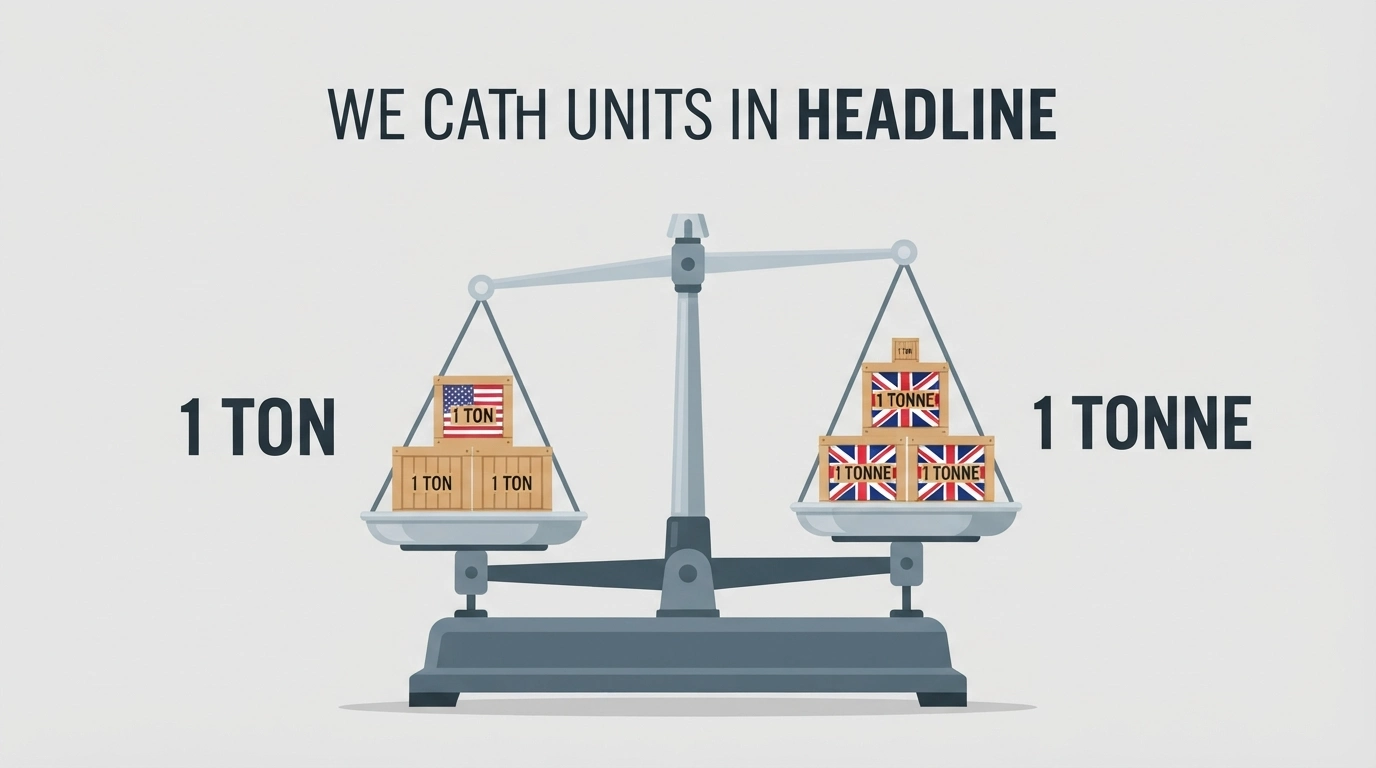
If you have ever typed a sentence about weight and paused, wondering If to write “tonnes” or “tons,” you are not alone. This mix-up trips up students, writers, and even news editors every day.
The short answer is that both words are correct, but they belong to different systems and different countries.
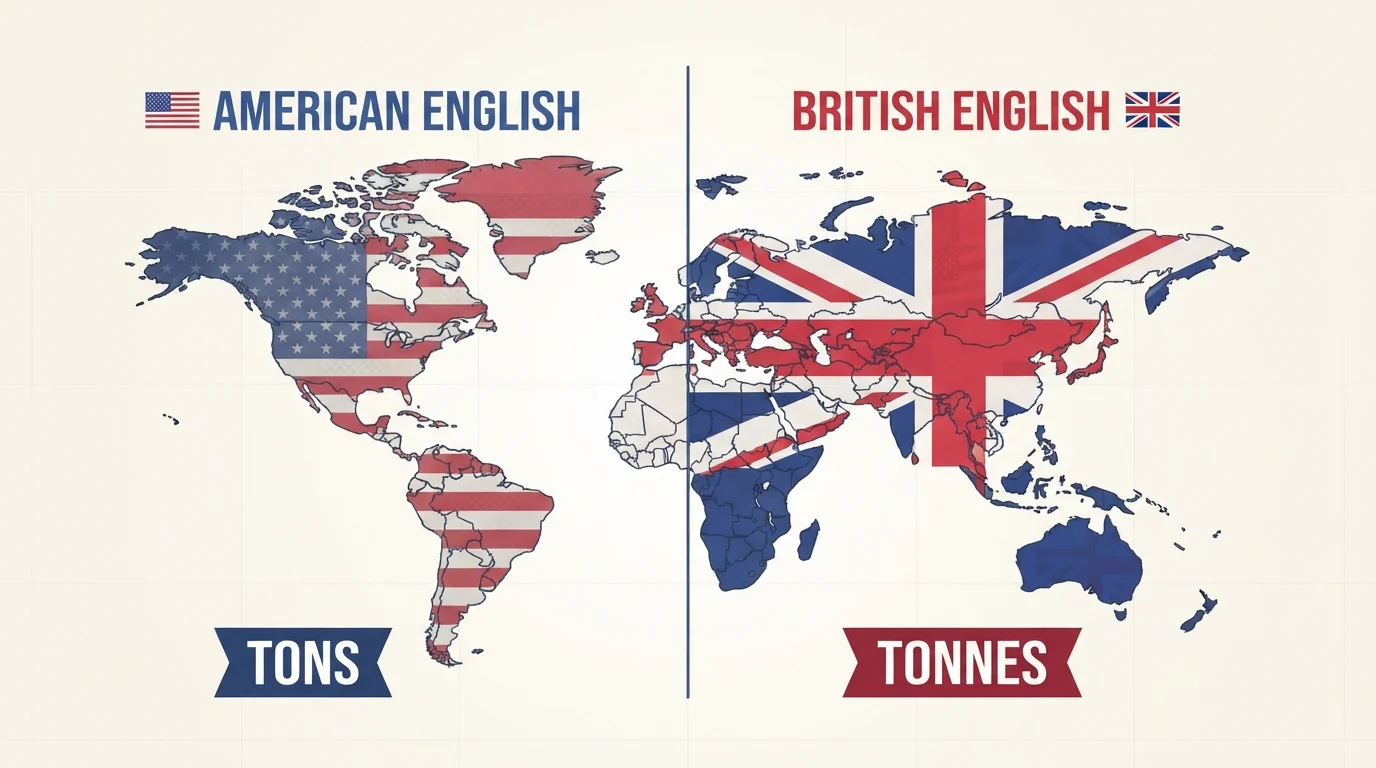
“Tons” is the word used in American English and refers to a short ton, while “tonnes” is used in British English and most of the world, referring to a metric ton. In this article, you will learn exactly what each word means, how they differ in weight, and how to use them correctly in your own writing.
Quick Answer
Here is the simple rule. In the United States, you write tons. In the United Kingdom, Canada, Australia, and most other English-speaking countries, you write tonnes.
A US ton equals 2,000 pounds, while a metric tonne equals 1,000 kilograms, which is about 2,204.6 pounds. So they are not just spelling differences. They actually stand for slightly different amounts of weight.
Meaning or Definition
Let’s break this down piece by piece, because the meanings really do matter here.
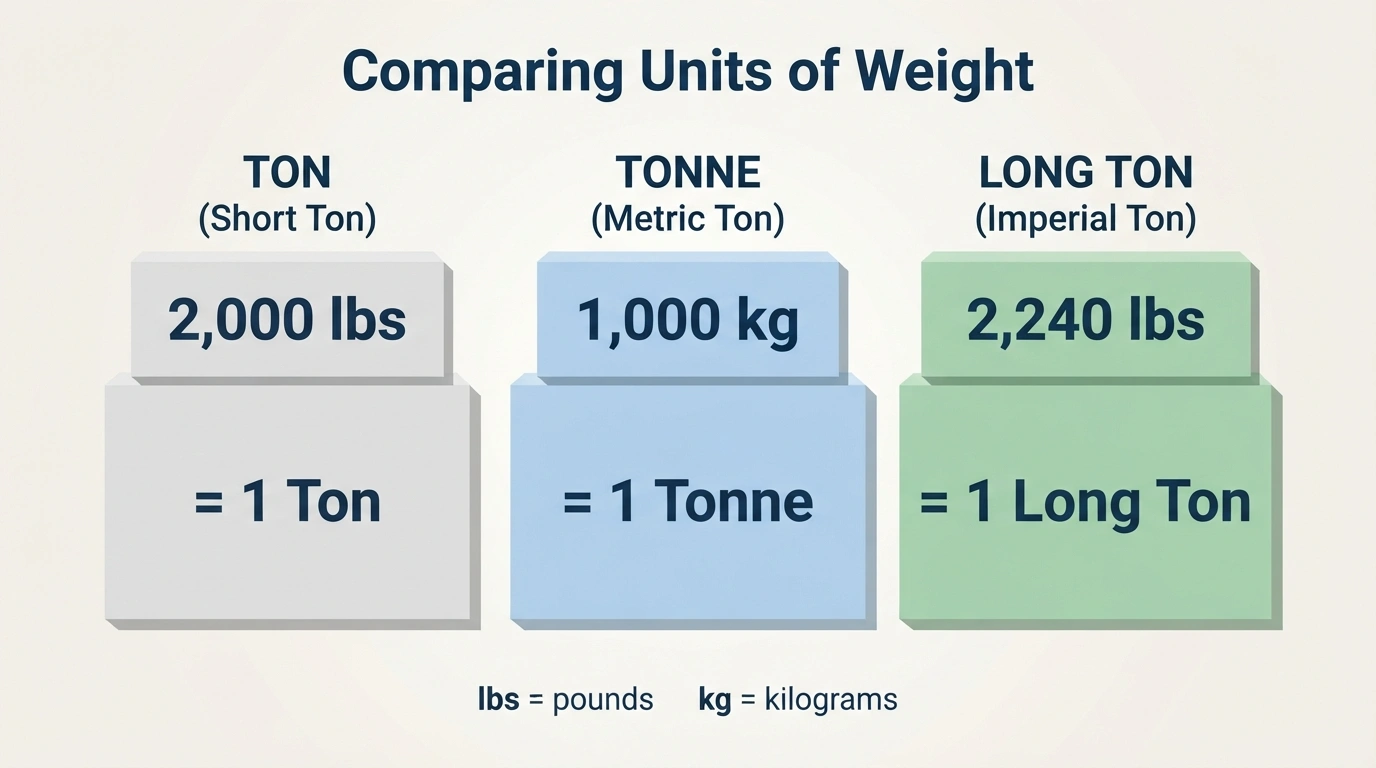
A ton (no “e”) is a unit of weight most commonly used in the United States. It is often called a “short ton” to separate it from other kinds of tons. One short ton equals 2,000 pounds, or about 907 kilograms.
A tonne (with an “e”) is a metric unit of weight used almost everywhere else in the world. It is sometimes called a “metric ton” in American writing when people want to be extra clear. One tonne equals 1,000 kilograms, or about 2,204.6 pounds.
There is also a third, lesser-known unit called the “long ton,” used mostly in older British contexts and some shipping industries. A long ton equals 2,240 pounds. Most everyday writers never need to worry about this one, but it explains why the metric system introduced the tonne in the first place to create one clear, consistent measurement that did not change depending on the country.
Here is a simple table to make the differences crystal clear.
| Unit | Also Called | Equals in Pounds | Equals in Kilograms | Common Region |
| Ton | Short ton | 2,000 lbs | ~907 kg | United States |
| Tonne | Metric ton | ~2,204.6 lbs | 1,000 kg | UK, Canada, Australia, most of the world |
| Long ton | Imperial ton | 2,240 lbs | ~1,016 kg | Older British/shipping use |
Once you see the numbers side by side, the difference feels much less confusing. A tonne is a little heavier than a ton, though for everyday conversation, people often treat them as roughly the same size.
Grammar or Correct Usage
Grammar rules for these words are actually pretty forgiving, since the choice mostly comes down to spelling convention rather than strict grammar.
If you are writing for a US audience a blog, a school paper, a business report use “tons.” For example: “The truck can carry five tons of gravel.” American style guides, including those followed by most US newspapers, stick with “tons” even when referring to the metric weight, though technically that is a bit imprecise.
If you are writing for a UK, Australian, or international audience, use “tonnes.” For example: “The ship transported ten tonnes of grain.” British and international publications almost always use the “tonne” spelling when referring to metric weight.
One helpful trick: if your writing already uses American spellings like “color” instead of “colour” or “organize” instead of “organise,” stick with “tons.” If you are using British spellings like “colour” or “organise,” go with “tonnes.” Matching your spelling style throughout a document makes your writing look more polished and professional.
There is one more small detail worth knowing. When people use the word figuratively, as in “I have tons of homework” or “She has tons of energy,” Americans and British speakers both tend to say “tons,” not “tonnes.” This informal, exaggerated use of the word almost always follows the American spelling, even in British English, because it is treated as a casual expression rather than an exact measurement.
British vs American English
This topic is really a perfect example of how British and American English quietly diverge. The core difference goes back to two separate systems of measurement.
The United States mostly uses imperial units, called the US customary system, for everyday weight, distance, and volume. That is why Americans measure ingredients in pounds and ounces, drive in miles, and weigh heavy loads in short tons.
The United Kingdom officially switched to the metric system for most official and scientific purposes decades ago, though some imperial habits still linger in daily British life, like measuring a person’s weight in stones. For big quantities of weight, though, British English fully adopted “tonnes,” matching the rest of Europe and most of the world.
Canada and Australia, both once heavily influenced by British English, also use “tonnes” and the metric system, even though Canada sits right next to the US and shares a lot of vocabulary with American English otherwise.
So in short, this is not a random spelling quirk. It reflects two different measurement systems that grew out of each country’s history and trade relationships. Knowing your audience’s country is really the fastest way to know which spelling to use.
Common Mistakes
Even careful writers slip up with these words sometimes. Here are the mistakes to watch for.
Mistake 1: Using “tonnes” in American writing.
If your content is for a US audience, using “tonnes” can look like a typo, even though it’s technically a real word. Stick with “tons” unless you are specifically referring to the metric tonne and want to be precise about it.
Mistake 2: Assuming they are exactly equal.
A ton and a tonne are close, but not identical. If you’re writing about shipping, construction, or manufacturing, this difference can matter. A tonne is roughly 10 percent heavier than a US short ton.
Mistake 3: Mixing spelling styles in one document.
Switching between “tons” and “tonnes” in the same article looks inconsistent and unprofessional. Pick one based on your audience and stick with it all the way through.
Mistake 4: Forgetting the figurative use is different.
Saying “tonnes of fun” instead of “tons of fun” can look unusual even in British English, since this casual phrase almost always keeps the American spelling worldwide.
Mistake 5: Using “ton” for precise scientific or international data.
If you are reporting global statistics, like carbon emissions or crop yields, “tonnes” (metric tons) is usually the standard, even in American scientific writing, because most international data is reported in metric units.
Real-Life Examples
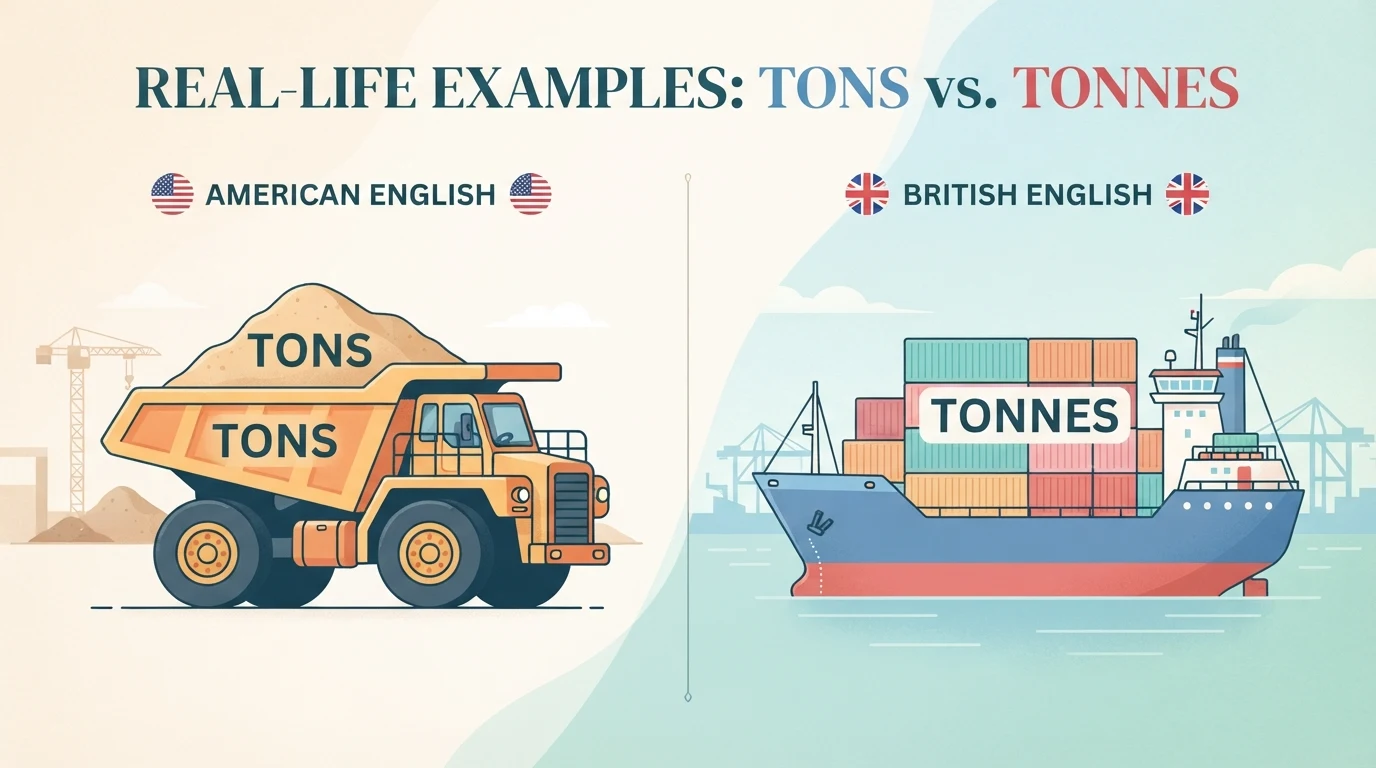
Seeing these words in real sentences often makes the rule click faster than any explanation. Here are some examples from different everyday situations.
American English examples:
- “The construction site received twelve tons of sand for the new foundation.”
- “Our recycling program collected over three tons of paper last year.”
- “This forklift can lift up to two tons safely.”
British and international English examples:
- “The factory produces around fifty tonnes of steel every week.”
- “Global wheat production reached hundreds of millions of tonnes this year.”
- “The cargo ship can hold up to 20,000 tonnes of freight.”
Scientific and global context examples (often “tonnes” even in American writing):
- “Scientists estimate that humans produce billions of tonnes of carbon dioxide each year.”
- “The country pledged to cut its emissions by several million tonnes over the next decade.”
Notice how the scientific examples lean toward “tonnes,” even though earlier American examples used “tons.” That’s because international science and environmental reporting almost always use the metric system, regardless of the writer’s home country.
Current Usage or Trends
Language habits shift slowly, but a few trends are worth mentioning here.
Because so much scientific and environmental data is now reported globally, many American publications have started using “tonnes” or “metric tons” when discussing climate change, carbon emissions, and global trade, even though they use “tons” for local, everyday content. This creates a kind of dual system within the same publication, where the word choice depends on context rather than just country.
At the same time, digital content aimed at global audiences increasingly mixes both spellings depending on the platform’s audience settings. Many websites and news organizations use automated regional formatting, showing “tons” to US visitors and “tonnes” to UK or Australian visitors.
For everyday casual writing, though, “tons” as a general, informal expression of “a lot” remains dominant everywhere online, regardless of the country, because it functions more like slang than a precise unit.
Tips or Best Practices
Here are a few practical habits that will keep your writing accurate and consistent.
| Situation | Recommended Word | Why |
| Writing for a US audience | Tons | Matches American measurement system |
| Writing for UK, Canada, Australia | Tonnes | Matches metric system and regional spelling |
| Reporting global or scientific data | Tonnes (metric tons) | Standard in international reporting |
| Informal expressions (“tons of fun”) | Tons | Common worldwide, even in British English |
| Precise industry or trade documents | Specify units clearly | Avoids confusion between ton, tonne, and long ton |
A few more quick tips:
- When precision really matters, such as in engineering, shipping, or legal documents, spell out the exact unit, like “2,000 lbs (short ton)” or “1,000 kg (metric tonne),” instead of relying on the reader to know the difference.
- If you’re unsure who your audience is, default to your website’s or company’s usual style guide.
- When converting between the two, remember: 1 tonne is about 1.1 tons, and 1 ton is about 0.907 tonnes. Keeping this rough ratio in mind helps avoid costly math errors in business or shipping contexts.
FAQs
Is “tonnes” a real word?
Yes. “Tonnes” is the standard British English spelling for a metric ton, which equals 1,000 kilograms. It’s widely used across the UK, Canada, Australia, and most other countries.
Is “tons” American or British?
“Tons” is the standard American English spelling. It refers to a short ton, which equals 2,000 pounds. British English generally uses “tonnes” instead.
Are a ton and a tonne the same weight?
Not exactly. A US ton equals 2,000 pounds, while a metric tonne equals about 2,204.6 pounds. A tonne is roughly 10 percent heavier than a ton.
Which spelling should I use in my writing?
Match your audience. Use “tons” for American readers and “tonnes” for British, Canadian, Australian, or international readers. For global scientific topics, “tonnes” is usually the safer, more standard choice.
Why do scientists usually say “tonnes” instead of “tons”?
Science relies on the metric system worldwide for consistency, so “tonnes” (metric tons) is the standard unit in global research, environmental reports, and international agreements, even among American scientists.
Can I use “tons” to mean “a lot,” even in British English?
Yes. Phrases like “tons of homework” or “tons of fun” are informal expressions used worldwide, and they almost always keep the American spelling, regardless of the writer’s home country.
Conclusion
At the end of the day, choosing between “tonnes” and “tons” comes down to two things: your audience’s country and how precise you need to be. Americans write “tons” and measure in short tons of 2,000 pounds.
The rest of the world writes “tonnes” and measures in metric tons of 1,000 kilograms. They are close in weight but not identical, so precision matters most in science, shipping, and trade.
For everyday writing, just match your spelling to your reader’s country, and when in doubt, default to the metric “tonnes” for anything global or scientific. Once you know this simple rule, you’ll never second-guess this word again.

Fazal Abbas
Fazal Abbas is a passionate English grammar writer with over 2 years of experience creating clear, helpful, and easy-to-understand grammar content. He specializes in confusing words, common grammar mistakes, word usage, sentence structure, and practical English tips.
With a simple teaching style, Fazal explains difficult grammar topics in easy English that students, writers, and everyday learners can understand. His goal is to make English grammar less confusing and more useful in real-life communication.
Through GrammarBook, Fazal shares practical examples, clear explanations, and useful tips to help readers improve their English with confidence. He believes that learning grammar should be simple, friendly, and enjoyable.