Your car won’t start, and now you’re stuck wondering: is it a dead battery or alternator problem This is one of the most common car troubles drivers face, and the good news is you don’t need to be a mechanic to figure it out.
A dead battery and a bad alternator often cause the exact same symptoms, like a car that won’t turn over or dies while driving.
But the fixes are very different, and one costs a lot more than the other. In this guide, you’ll learn the quick answer, the key warning signs, simple tests you can do yourself, and how to know which part is really causing your car trouble.
Quick Answer
If your car won’t start at all and the lights are dim or off, it’s usually a dead battery.
If your car starts fine but dies while driving, or you notice flickering lights and strange smells, it’s likely a bad alternator.
The battery starts your car. The alternator keeps it running and recharges the battery while you drive.
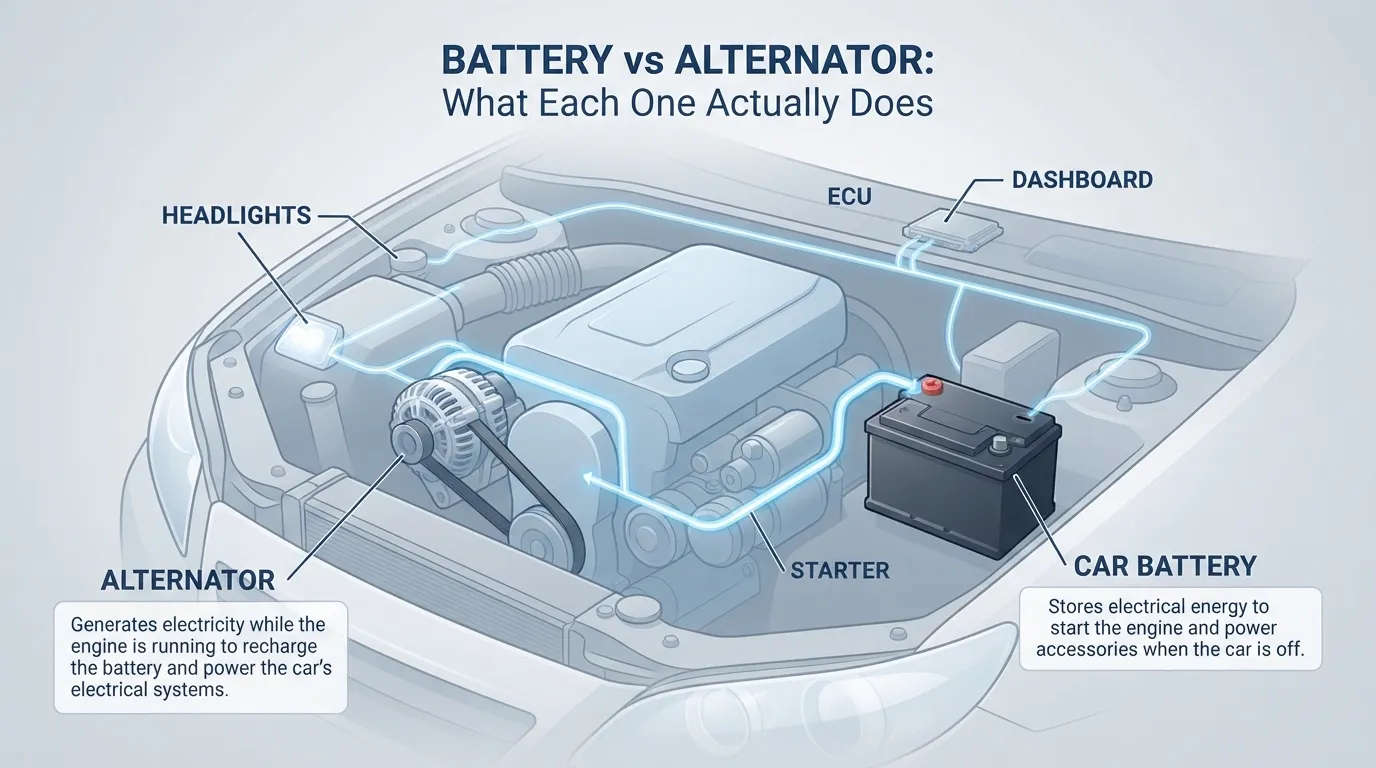
Battery vs Alternator: What Each One Actually Does
Before you can figure out which part failed, it helps to know what each one does.
The battery is like a reserve tank of energy. It stores power and sends a strong burst of electricity to the starter motor, which cranks the engine and gets it running. Once the engine starts, the battery’s main job is mostly done for that trip.
The alternator takes over from there. It’s driven by a belt connected to the engine, and it spins to create electricity. This electricity powers everything while you drive, like your headlights, radio, air conditioning, and dashboard, and it also recharges the battery at the same time. Think of the battery as a phone’s battery pack and the alternator as the charger that keeps refilling it.
When either part fails, your car struggles to run. But the way it struggles gives you clues about which one is actually broken.
Common Signs of a Dead Battery
A dead or dying battery usually shows up right when you try to start the car. Here are the most common signs:
- The engine won’t crank at all, or it cranks very slowly, almost like it’s struggling.
- You hear a single click or repeated clicking sound when you turn the key.
- The dashboard lights are dim, flickering, or don’t turn on at all.
- Your headlights look weak or yellowish instead of bright white.
- The car started fine yesterday but won’t start today, especially after sitting overnight.
- Cold weather makes the problem worse, since cold temperatures weaken battery power.
Batteries usually die because of old age, extreme temperatures, a loose or corroded connection, or something being left on overnight, like headlights or an interior light.
Common Signs of a Bad Alternator

A failing alternator behaves differently. Your car usually starts just fine at first, but problems show up once you’re driving or after the car has been running for a while. Watch for these signs:
- The car starts normally but stalls or dies while you’re driving.
- The battery warning light on your dashboard turns on while the engine is running.
- Headlights and interior lights flicker, dim, or get unusually bright.
- You notice a burning rubber smell, which can mean the alternator belt is slipping or overheating.
- Electronics like power windows, radio, or air conditioning act slow or weak.
- You hear a whining or grinding noise coming from the engine area.
- The battery keeps dying even after you replace it or fully charge it.
That last point is important. If you put in a brand-new battery and your car still won’t stay running, the alternator is very likely the real problem, since it’s not recharging the battery properly.
Dead Battery vs Bad Alternator: Side-by-Side Comparison
Here’s a simple table to help you compare the two problems at a glance.
| Symptom | Dead Battery | Bad Alternator |
| Car won’t start at all | Very likely | Less likely |
| Car starts but dies while driving | Unlikely | Very likely |
| Clicking sound when starting | Common | Rare |
| Dashboard battery light comes on while driving | Rare | Very common |
| Headlights dim when parked and off | Common | Rare |
| Headlights flicker or pulse while driving | Rare | Common |
| Burning smell near the engine | Rare | Possible |
| New battery still dies quickly | Unlikely | Very likely |
How to Test Which One Is the Problem
You don’t need a mechanic’s toolbox to narrow this down. Here are a few simple ways to test it yourself.
Try the jump-start test. If a jump start gets your car running and it keeps running fine afterward, the battery was likely just weak or dead. If the car dies again shortly after you disconnect the jumper cables, the alternator is probably not recharging it, which points to an alternator problem.
Watch your headlights while the engine runs. Turn on your headlights while the car is idling, then rev the engine a little. If the lights get noticeably brighter as you rev, your alternator may not be producing steady power, which is a warning sign.
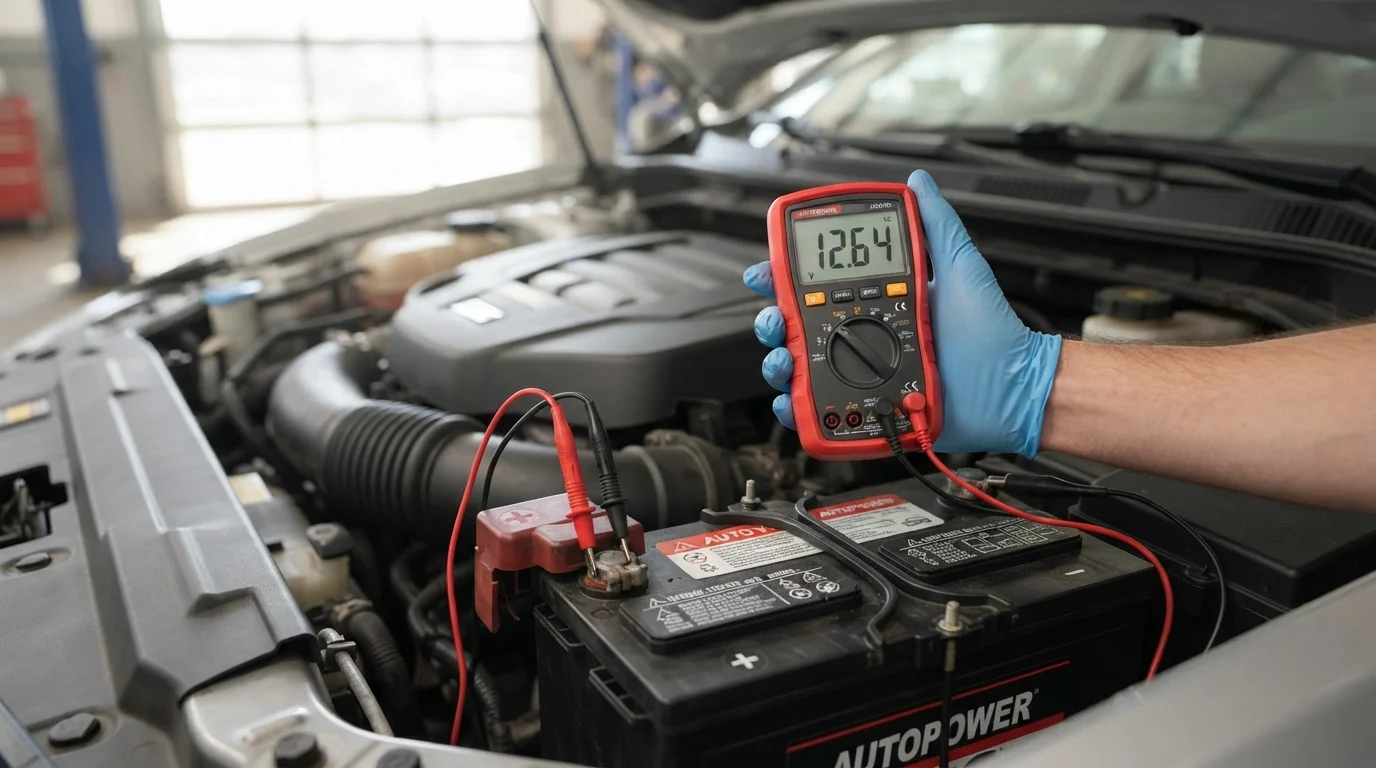
Use a multimeter, if you have one. With the engine off, a healthy battery should read close to 12.6 volts. Start the engine and check again. A good alternator should push that reading up to somewhere between 13.5 and 14.5 volts. If the number stays low or barely changes, the alternator likely isn’t charging the battery the way it should.
Check the battery warning light. This dashboard symbol looks like a small battery icon. If it lights up and stays on while you’re driving, your charging system, usually the alternator, needs attention.
Listen and smell. A whining noise or a burning rubber smell while driving often points to a slipping belt or an alternator working too hard.
Common Mistakes People Make
Many drivers assume it’s always the battery, since that’s the most familiar car part. This leads to a common and frustrating mistake: replacing the battery, only to have the car die again within days because the real problem, a failing alternator, was never fixed. Another mistake is ignoring the dashboard battery warning light, thinking it will go away on its own. It usually won’t, and driving too long with a bad alternator can drain your battery completely and leave you stranded. Some people also wait too long to get either part tested, which can lead to being stuck somewhere unexpected, like a parking lot or highway shoulder.
Real-Life Examples

Picture this: you go out to your car after a full day at work, turn the key, and hear nothing but a faint click. The dashboard lights barely glow. That’s a textbook dead battery, likely caused by something left on, like an interior light, or simply an old battery reaching the end of its life.
Now picture a different situation: you’re driving down the road, and suddenly your radio cuts out, your headlights flicker, and a few seconds later, your engine just shuts off. That’s a classic alternator failure. The battery had enough charge to get you moving, but once the alternator stopped supplying power, everything shut down.
Tips to Prevent Future Problems
- Have your battery and alternator tested during routine oil changes, since many auto shops check both for free.
- Replace your car battery every 3 to 5 years, even if it seems fine, since batteries weaken with age.
- Keep battery terminals clean and free of white, chalky corrosion buildup.
- Turn off headlights, interior lights, and accessories before leaving your car.
- Pay attention to the dashboard battery warning light the moment it appears.
- Get your serpentine belt inspected regularly, since a worn or loose belt can cause alternator problems.
FAQs
Can a bad alternator drain a good battery?
Yes. If the alternator isn’t recharging the battery while you drive, the battery slowly loses power until it can no longer start the car, even if the battery itself is healthy.
How long can you drive with a bad alternator?
It depends on how much charge is left in your battery, but it’s usually somewhere between 25 and 100 miles. It’s risky, though, since the car can shut off suddenly, sometimes in traffic.
Will a jump start fix an alternator problem?
A jump start can get the engine running, but it won’t fix the actual cause. If the alternator is bad, the car will likely die again soon after, since the battery isn’t being recharged.
How much does it cost to replace an alternator versus a battery?
A new battery typically costs less and is a much smaller repair. An alternator replacement is usually a bigger job, since it involves more labor and a more expensive part.
Can I test my alternator myself at home?
Yes. You can do a basic headlight test or use a multimeter to check voltage while the engine runs, as explained earlier in this article. For a more precise diagnosis, most auto parts stores offer free alternator and battery testing.
Is it normal for a car battery to die overnight?
Not usually. If your battery keeps dying overnight even after charging it, that often points to a parasitic drain, a bad alternator, or a battery that’s simply worn out and needs replacing.
Conclusion
Figuring out If you’re dealing with a dead battery or alternator doesn’t have to be confusing. The key is paying attention to when the problem happens. If your car won’t start at all, especially after sitting for a while, the battery is usually the culprit.
If your car starts normally but stalls while driving, or you notice flickering lights and a battery warning symbol, the alternator is likely to blame.
When in doubt, a quick jump start or a free test at an auto parts store can confirm which part needs attention. Catching the problem early, If it’s the battery or the alternator, can save you from an unexpected breakdown and a bigger repair bill down the road.

Hi, I’m Iqra, a passionate writer and grammar enthusiast dedicated to making English grammar simple, clear, and easy to understand. Through my work on grammar books and educational content, I help students, writers, and English learners improve their vocabulary, sentence structure, punctuation, and everyday communication skills. My goal is to turn confusing grammar rules into practical, easy-to-follow lessons that readers can confidently use in real life. I believe learning grammar doesn’t have to be difficult—it can be simple, useful, and even enjoyable. Through helpful guides, examples, and carefully explained grammar tips, Iqra aims to make learning English more accessible for everyone.