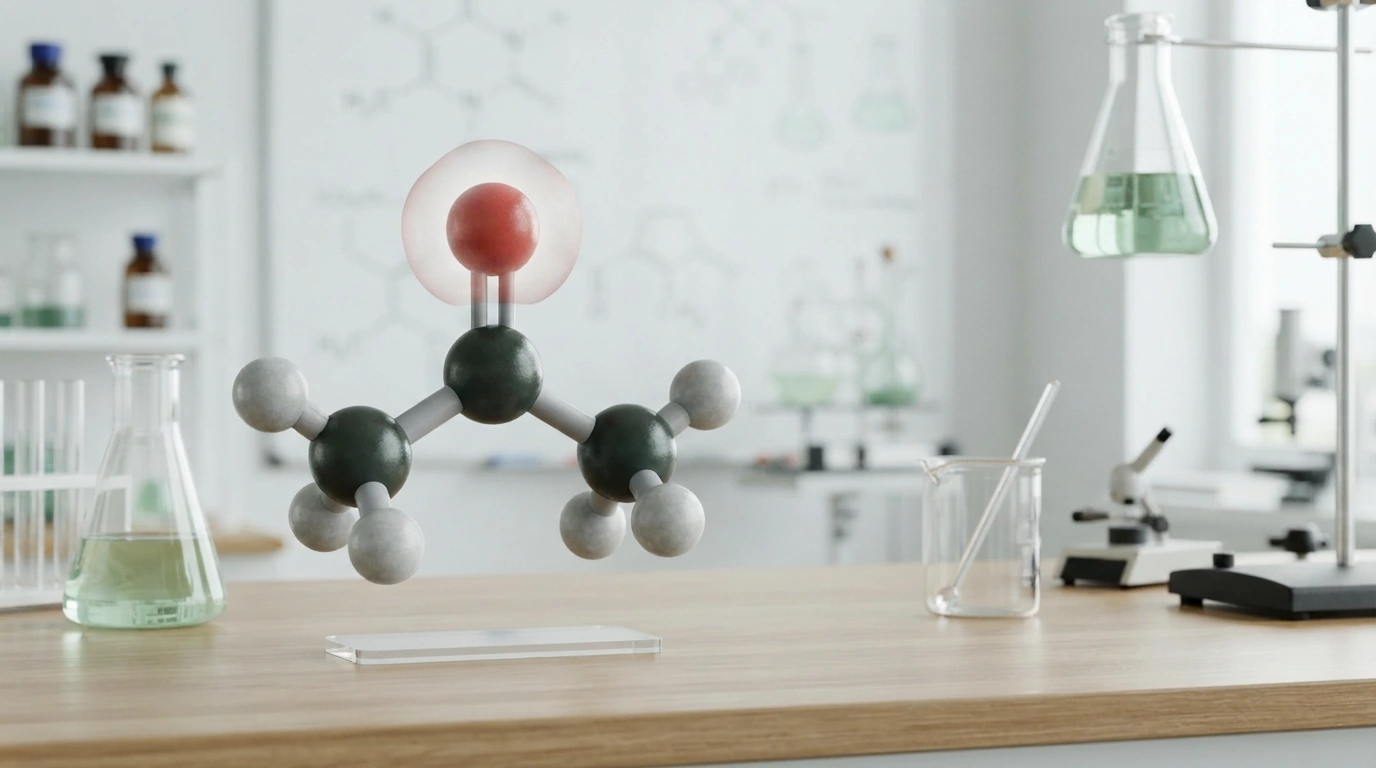
Is acetone polar or nonpolar? The simple answer is acetone is a polar molecule. More specifically, acetone is a polar aprotic solvent because it contains a polar carbonyl group and does not have a hydrogen attached to oxygen or nitrogen.
This question often appears in chemistry because acetone has an unusual combination of properties. It mixes completely with water, dissolves many organic substances, and is widely used as a solvent.
Understanding why acetone is polar can make topics such as molecular structure, electronegativity, dipole moments, and solubility much easier to understand. In this guide, we will look at the structure of acetone, why its bonds are polar, how its molecular shape affects polarity, and how acetone compares with polar and nonpolar substances.
By the end, you will have a clear answer to the question “Is acetone polar or nonpolar?” and understand why that answer matters in chemistry.
Quick Answer: Is Acetone Polar or Nonpolar?
Acetone is polar, not nonpolar. Its chemical formula is C₃H₆O, and its structure contains a carbonyl group, written as C=O. Oxygen attracts electrons more strongly than carbon, creating an uneven distribution of electrical charge.
The oxygen side of the carbonyl group becomes partially negative, while the carbon side becomes partially positive. Because the molecule has a net dipole, acetone is classified as a polar molecule.
Acetone is also called 2-propanone or propanone. The National Institute of Standards and Technology lists its molecular formula as C₃H₆O and its molecular weight as about 58.08 g/mol.
Acetone is further classified as a polar aprotic solvent. “Polar” describes its uneven charge distribution, while “aprotic” means it does not contain an O–H or N–H bond that can donate hydrogen in the usual way.
| Property | Acetone |
| Common name | Acetone |
| IUPAC name | Propan-2-one |
| Formula | C₃H₆O |
| Molecular weight | About 58.08 g/mol |
| Polarity | Polar |
| Solvent type | Polar aprotic |
| Carbonyl group | Yes |
| Hydrogen-bond donor | No |
| Hydrogen-bond acceptor | Yes |
| Water solubility | Miscible |
So, if you need the short answer for a chemistry class, remember:
Acetone is a polar aprotic molecule.
What Makes Acetone a Polar Molecule?
To understand why acetone is polar, it helps to look at its molecular structure.
Acetone has the structure:
CH₃–C(=O)–CH₃
The middle carbon is connected to two methyl groups, CH₃, and double-bonded to oxygen. This C=O bond is called a carbonyl group.
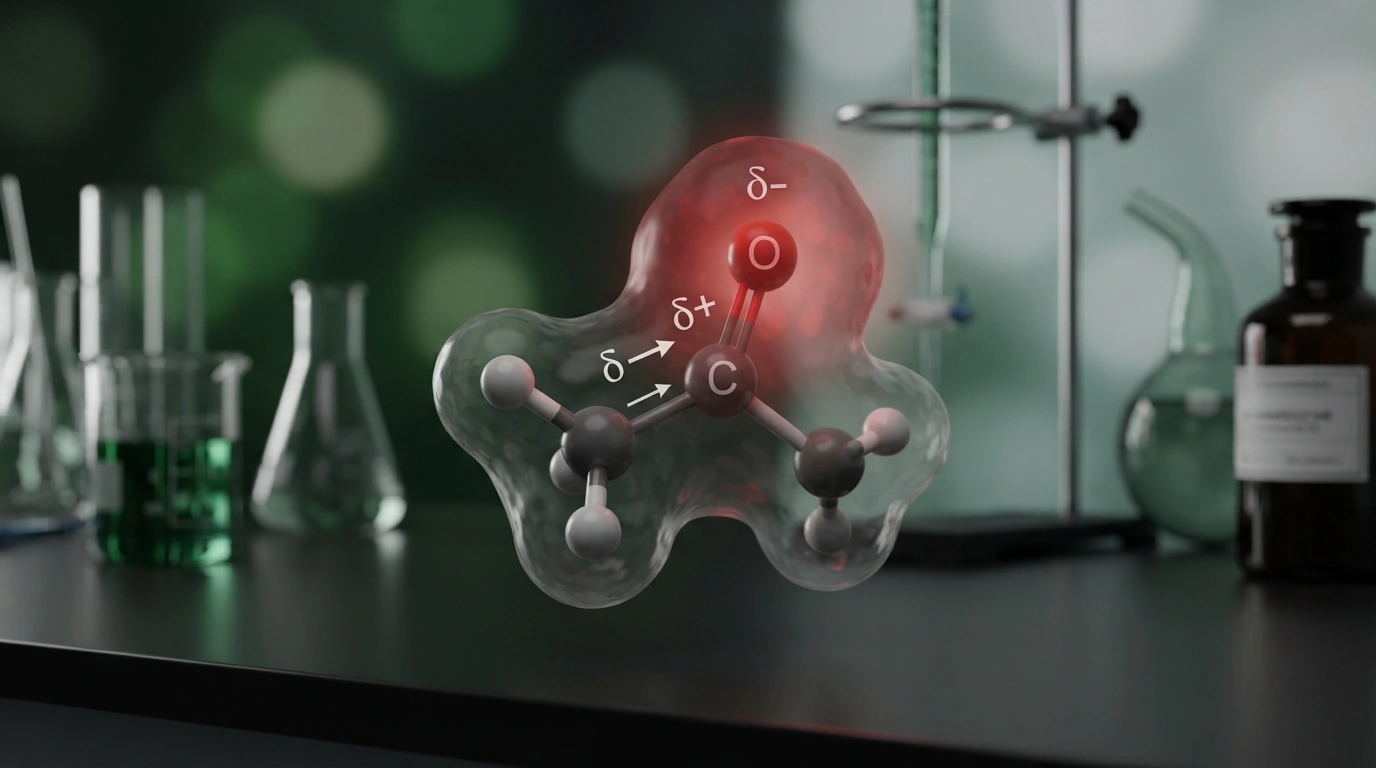
Oxygen is more electronegative than carbon. This means oxygen pulls the shared electrons in the C=O bond toward itself more strongly.
As a result, the oxygen atom develops a partial negative charge, while the carbonyl carbon develops a partial positive charge.
This creates a separation of charge inside the molecule.
That separation is one of the main reasons acetone is polar.
A useful way to picture it is to imagine the carbonyl group as the “polar end” of acetone. The two methyl groups are much less polar, but they do not cancel the strong effect of the carbonyl group.
Therefore, acetone has a net molecular dipole.
Scientific sources commonly report an acetone dipole moment of roughly 2.9 debye, although the exact reported value can vary slightly with the conditions and reference used.
Acetone’s Molecular Structure and Polarity
Molecular shape is important when deciding whether a molecule is polar or nonpolar.
Some molecules contain polar bonds but are still nonpolar because their shape allows the bond dipoles to cancel each other.
For example, carbon dioxide contains two polar C=O bonds. However, CO₂ is linear, so the two bond dipoles point in opposite directions and cancel. The entire molecule is therefore nonpolar.
Acetone is different.
Its central carbon has a trigonal-planar arrangement around the carbonyl carbon. The carbonyl group creates a strong dipole, and the rest of the molecule does not cancel it.
The result is a molecule with an overall dipole.
| Feature | Acetone |
| Main functional group | Ketone |
| Important bond | C=O |
| Electronegativity difference | C and O have different electron-attracting strength |
| Charge distribution | Uneven |
| Net dipole | Present |
| Overall classification | Polar |
This is why looking only at the individual atoms is not enough. You must consider both bond polarity and molecular geometry.
The Carbonyl Group Is the Key
If you remember only one structural feature when studying acetone polarity, remember the carbonyl group.
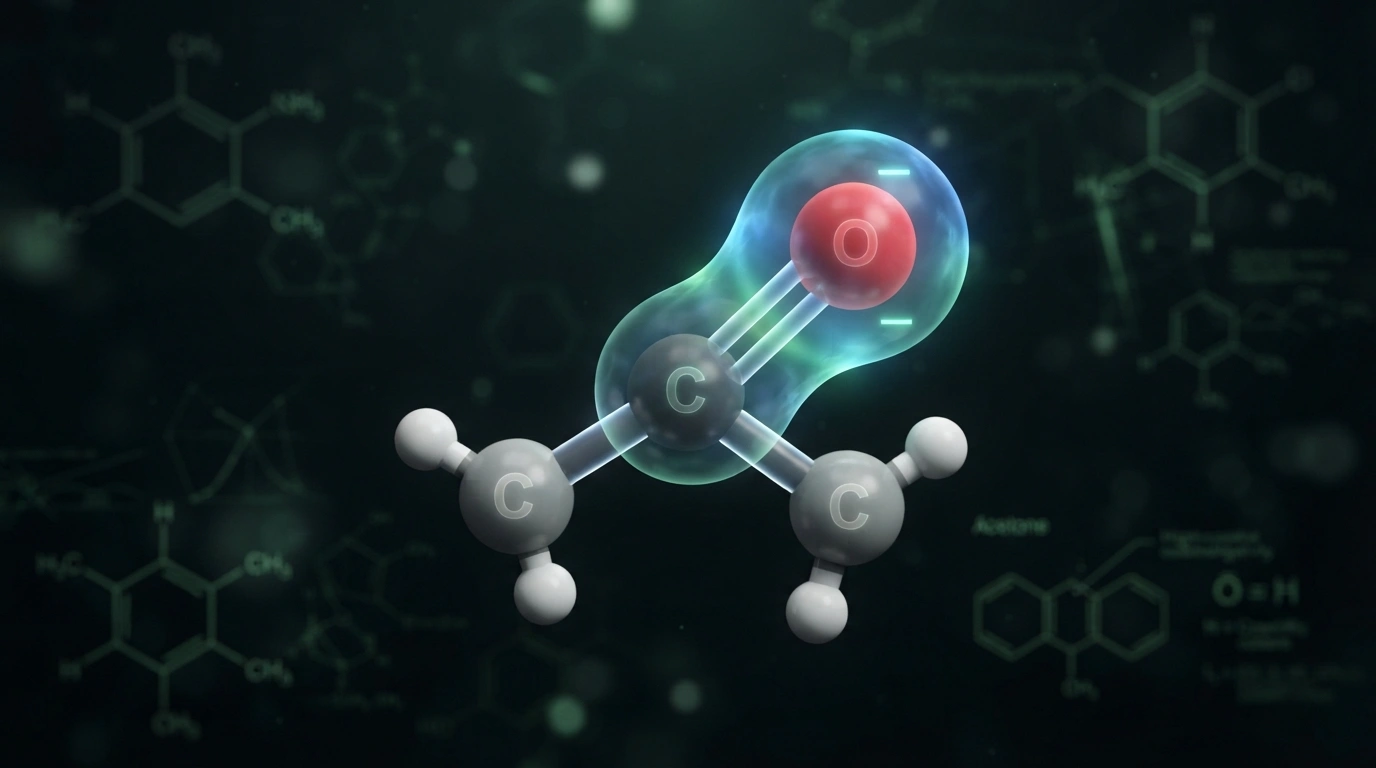
A carbonyl group contains a carbon atom double-bonded to an oxygen atom:
C=O
The oxygen atom attracts electrons strongly.
This gives the carbonyl group an uneven charge distribution. The oxygen side is relatively electron-rich, while the carbon side is relatively electron-poor.
Acetone contains one carbonyl group, and this group has a major effect on the molecule’s behavior.
The carbonyl oxygen can also act as a hydrogen-bond acceptor. PubChem lists acetone as having one hydrogen-bond acceptor and zero hydrogen-bond donors.
That distinction is important.
Acetone cannot donate a hydrogen bond in the same way that water or an alcohol can because it does not have an O–H bond. However, its oxygen can accept hydrogen bonds from suitable molecules.
This helps explain why acetone interacts strongly with water.
Is Acetone a Polar Aprotic Solvent?
Yes. Acetone is a polar aprotic solvent.
The word “polar” means that the molecule has an uneven distribution of electrical charge.
The word “aprotic” means that the solvent does not have a hydrogen attached to an electronegative atom such as oxygen or nitrogen that can readily be donated as a proton.
For comparison, water is a polar protic solvent. Water contains O–H bonds and can both donate and accept hydrogen bonds.
Acetone is different. Its oxygen can accept hydrogen bonds, but acetone does not have an O–H or N–H group for normal hydrogen-bond donation.
| Solvent | Polar? | Protic or Aprotic? | Hydrogen-Bond Donation? |
| Water | Yes | Protic | Yes |
| Methanol | Yes | Protic | Yes |
| Ethanol | Yes | Protic | Yes |
| Acetone | Yes | Aprotic | No |
| Acetonitrile | Yes | Aprotic | No |
| Hexane | No | Aprotic | No |
This is why acetone often appears in chemistry discussions about polar aprotic solvents.
Does Acetone Mix With Water?
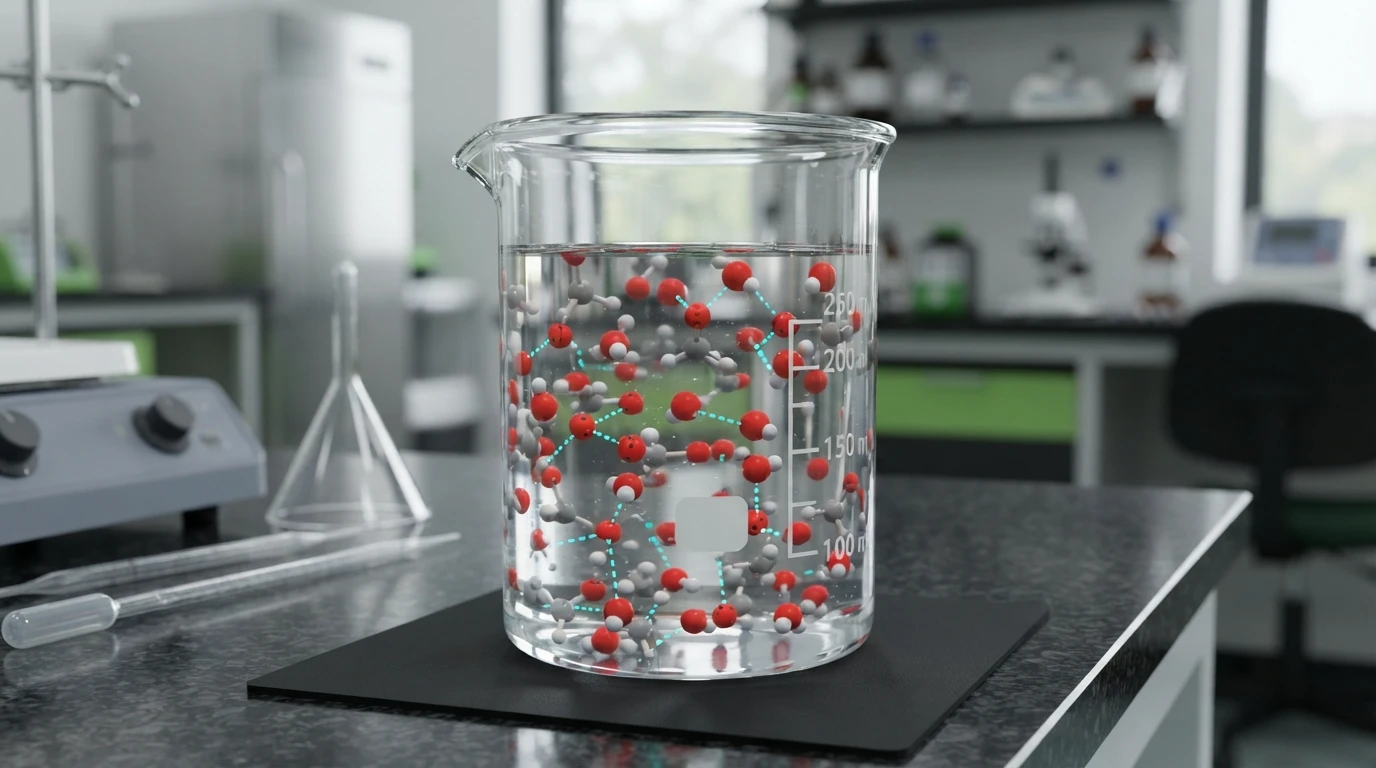
Yes. Acetone and water are miscible, meaning they can mix in all proportions under ordinary conditions.
This is an important clue about acetone’s polarity.
Water is highly polar. Acetone also has significant polarity because of its carbonyl group. The oxygen atom in acetone can interact with hydrogen atoms from water through hydrogen bonding.
Acetone does not form the same kind of hydrogen-bond network that water forms with itself, but its oxygen can accept hydrogen bonds from water molecules.
This helps explain why acetone mixes so well with water.
However, remember that solubility alone is not a perfect test for polarity. Molecular interactions, size, structure, and other properties also affect whether two substances mix.
PubChem describes acetone as a substance that dissolves in water and identifies it as a polar aprotic solvent.
Acetone Polarity Compared With Water
Both acetone and water are polar, but they are not equally polar in every measurement.
Water has a much higher dielectric constant than acetone. At about room temperature, water has a dielectric constant around 78, while acetone is around 20.7.
This means it would be incorrect to say that acetone and water have exactly the same polarity.
Instead, think of them as two polar liquids with different molecular structures and different strengths of interaction.
Water has two O–H bonds and can both donate and accept hydrogen bonds. Acetone has one carbonyl oxygen that can accept hydrogen bonds but has no O–H bond.
| Property | Water | Acetone |
| Overall polarity | Polar | Polar |
| Dielectric constant | About 78 | About 20.7 |
| Hydrogen-bond donor | Yes | No |
| Hydrogen-bond acceptor | Yes | Yes |
| O–H bond | Yes | No |
| Common solvent type | Polar protic | Polar aprotic |
So, acetone is definitely polar, but it behaves differently from water.
Acetone vs. Nonpolar Solvents
Comparing acetone with a nonpolar solvent makes its polarity easier to understand.
Hexane is a common example of a nonpolar solvent. It contains only carbon and hydrogen and has no strongly polar functional group like acetone’s carbonyl group.
Acetone, on the other hand, contains oxygen and has a strong carbonyl dipole.
The difference can be seen in their dielectric constants. Acetone has a dielectric constant of about 20.7, while hexane is around 1.9.
| Substance | General Classification | Dielectric Constant, Approx. |
| Water | Polar | 78 |
| Methanol | Polar | 33 |
| Acetone | Polar | 20.7 |
| Ethanol | Polar | 24.5 |
| Dichloromethane | Polar | 9 |
| Toluene | Nonpolar/weakly polar | 2.4 |
| Hexane | Nonpolar | 1.9 |
These values help show why acetone belongs on the polar side of the solvent scale.
Why Does Acetone Dissolve So Many Substances?
Acetone is widely used as a solvent because it can interact with many different types of molecules.
Its carbonyl oxygen can accept hydrogen bonds. Its methyl groups also provide a less polar part of the molecule.
This combination gives acetone useful solvent behavior.
It can mix with water and can also dissolve many organic substances. PubChem notes that acetone is used to dissolve other substances and is used in making plastics, fibers, pharmaceuticals, and other chemicals.
Acetone’s ability to dissolve substances is one reason it is common in laboratories, manufacturing, cleaning products, and some consumer products.
However, “polar dissolves polar” is only a helpful rule of thumb. Real solubility depends on the full molecular structure and the interactions between the solute and solvent.
Common Mistakes About Acetone Polarity
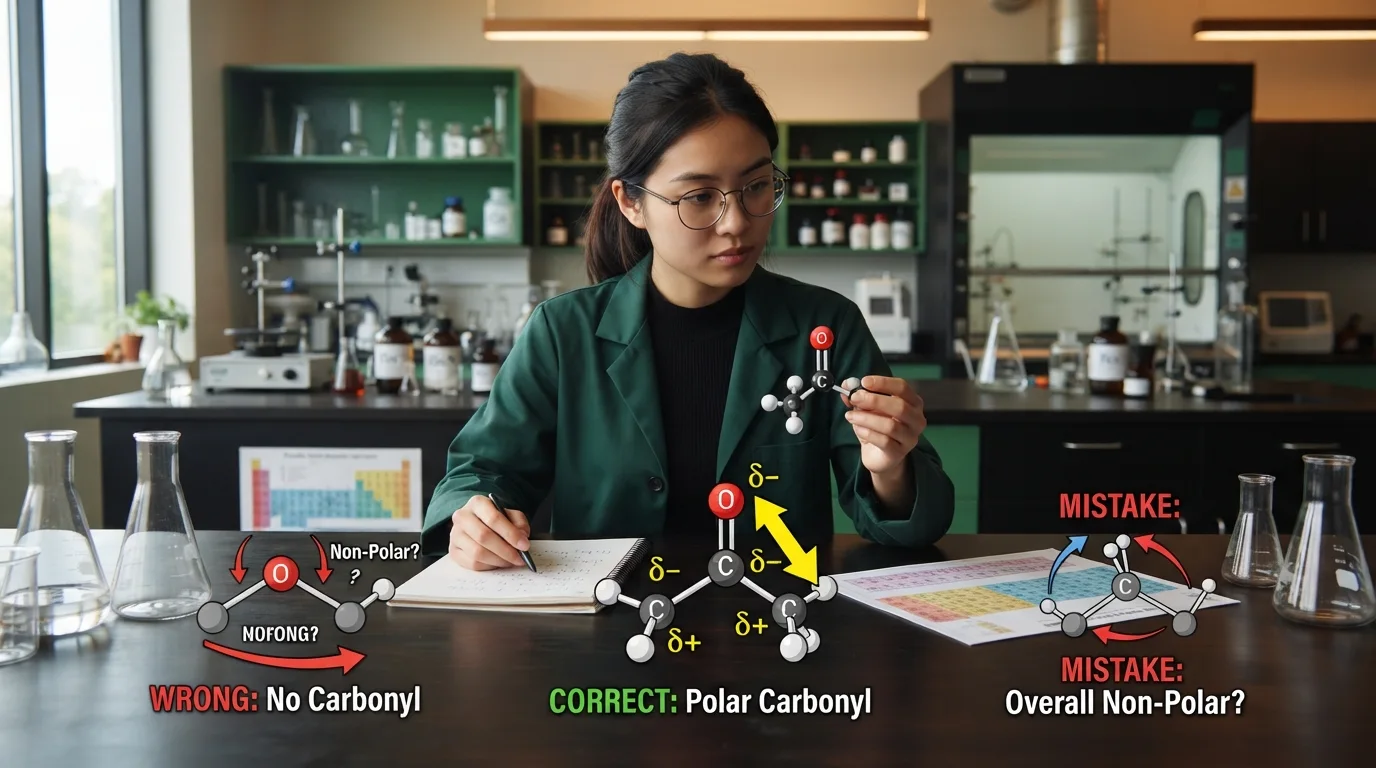
Many students make the same mistakes when answering whether acetone is polar or nonpolar.
One common mistake is thinking that a molecule must contain an O–H bond to be polar. That is not true. Acetone contains a C=O bond, and that bond creates a strong dipole.
Another mistake is confusing polar with hydrogen-bond donor. Acetone is polar, but it is not a hydrogen-bond donor in the normal solvent classification.
A third mistake is assuming that every molecule containing carbon is nonpolar. Carbon-based molecules can be strongly polar when they contain groups such as carbonyls, hydroxyls, or other polar functional groups.
Students also sometimes confuse acetone with hydrocarbons. Acetone contains oxygen, while simple hydrocarbons such as hexane contain only carbon and hydrogen.
The key is to examine the molecular structure rather than memorize the name.
Real-Life Uses of Acetone
Acetone is not just a chemistry-class example. It has many practical uses.
It is commonly known as a solvent in nail polish remover. It is also used in laboratories and industrial processes and can dissolve many organic materials.
According to PubChem, acetone is used in the production of plastics, fibers, pharmaceuticals, and other chemicals. It is also used as a solvent.
Its useful solvent properties come from its molecular structure.
Because acetone is polar, it can interact with polar substances. Because it is aprotic and has a relatively small molecular structure, it can also work well with many organic compounds.
This combination makes acetone a versatile solvent.
Is Acetone More Polar Than Ethanol?
Both acetone and ethanol are polar solvents, but they have different structures and different solvent properties.
Ethanol contains an O–H group, so it is a polar protic solvent. It can both donate and accept hydrogen bonds.
Acetone contains a carbonyl group but no O–H group. It is therefore polar aprotic.
Their dielectric constants are also fairly close, with acetone around 20.7 and ethanol around 24.5 at room temperature.
It is therefore better to avoid saying that one is simply “polar” while the other is “nonpolar.” Both are polar, but their molecular interactions are different.
How to Tell If a Molecule Is Polar
When you are asked whether a molecule is polar or nonpolar, use a simple process.
First, look at the bonds. Ask whether the atoms have different electronegativities.
Second, identify the important polar bonds. For example, C=O, O–H, N–H, and many C–Cl bonds can create bond polarity.
Third, look at the molecular shape.
Finally, ask whether the individual bond dipoles cancel.
For acetone, the answer is straightforward:
The C=O bond is strongly polar, and the molecular arrangement does not cancel the overall dipole. Therefore, acetone is polar.
This method is much more useful than memorizing a long list of polar and nonpolar molecules.
Acetone Polarity: Key Facts at a Glance
The most important facts can be summarized in one table.
| Question | Answer |
| Is acetone polar or nonpolar? | Polar |
| Is acetone a polar aprotic solvent? | Yes |
| What causes its polarity? | Mainly the C=O carbonyl group |
| Does acetone have a net dipole? | Yes |
| Can acetone accept hydrogen bonds? | Yes |
| Can acetone donate hydrogen bonds? | No |
| Does acetone mix with water? | Yes |
| Is acetone a hydrocarbon? | No |
| Does acetone contain oxygen? | Yes |
| Chemical formula | C₃H₆O |
These facts provide a quick study guide for students learning about molecular polarity and solvents.
Frequently Asked Questions About Acetone Polar or Nonpolar
Is acetone polar or nonpolar?
Acetone is polar. Its carbonyl group creates an uneven distribution of electrical charge, giving the molecule a net dipole. It is specifically classified as a polar aprotic solvent.
Why is acetone polar?
Acetone is polar mainly because of its C=O carbonyl group. Oxygen attracts electrons more strongly than carbon, creating partial charges and a net molecular dipole.
Is acetone a polar aprotic solvent?
Yes. Acetone is a polar aprotic solvent. It is polar because of its uneven charge distribution, but it does not have an O–H or N–H bond that allows normal proton donation.
Does acetone mix with water?
Yes. Acetone and water are miscible. The oxygen atom in acetone can interact with water through hydrogen-bond acceptance, helping the two liquids mix.
Is acetone more polar than hexane?
Yes, acetone is much more polar than hexane. Acetone has a strong carbonyl dipole and a dielectric constant of about 20.7, while hexane has a dielectric constant near 1.9.
Does acetone have hydrogen bonding?
Acetone can accept hydrogen bonds through its oxygen atom, but it cannot normally donate hydrogen bonds because it has no O–H or N–H bond.
Conclusion
So, is acetone polar or nonpolar? Acetone is clearly polar. Its polarity mainly comes from the carbonyl group, where oxygen pulls electron density toward itself and creates an uneven charge distribution.
Acetone is also a polar aprotic solvent. Unlike water or ethanol, it cannot donate a hydrogen bond because it does not contain an O–H bond. However, its oxygen can accept hydrogen bonds.
This molecular structure explains many of acetone’s useful properties, including its ability to mix with water and dissolve many organic substances.
When studying molecular polarity, do not rely only on memorization. Look at the bonds, electronegativity, molecular shape, and whether the bond dipoles cancel. For acetone, those clues all lead to the same answer: acetone is polar.

Hi, I’m Iqra, a passionate writer and grammar enthusiast dedicated to making English grammar simple, clear, and easy to understand. Through my work on grammar books and educational content, I help students, writers, and English learners improve their vocabulary, sentence structure, punctuation, and everyday communication skills. My goal is to turn confusing grammar rules into practical, easy-to-follow lessons that readers can confidently use in real life. I believe learning grammar doesn’t have to be difficult—it can be simple, useful, and even enjoyable. Through helpful guides, examples, and carefully explained grammar tips, Iqra aims to make learning English more accessible for everyone.