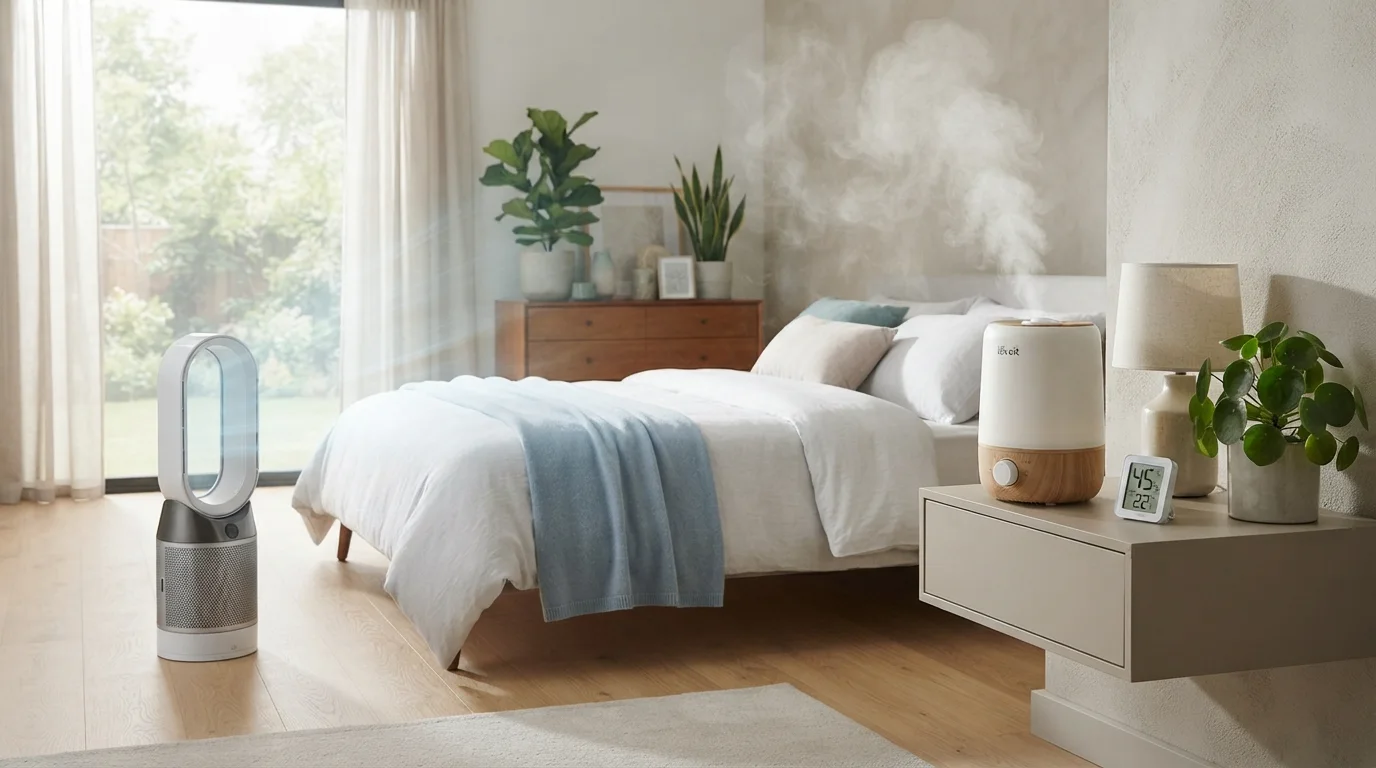
When deciding between an air purifier or humidifier, the right choice depends on what is wrong with your indoor air.
An air purifier helps remove certain airborne particles such as dust, pollen, and smoke, while a humidifier adds moisture to dry air. They do different jobs, so one is not automatically better than the other.
If your room feels dusty, smoky, or full of airborne particles, an air purifier may be more useful. If your nose, throat, lips, or skin feel dry because the air has very little moisture, a humidifier may help. In some homes, both devices can be useful, but only when each solves a real problem.
Quick Answer: Air Purifier or Humidifier?
The simplest answer is this: choose an air purifier when you want to clean the air, and choose a humidifier when you want to add moisture to the air.
An air purifier pulls indoor air through filters or other cleaning technology to reduce certain pollutants. Portable air cleaners are generally designed to clean the air in a particular room or area. They can help reduce some indoor air pollution, but they cannot remove every pollutant.
A humidifier does something completely different. It adds moisture to indoor air. This can be helpful when the air is too dry and causes problems such as dry skin, dry nasal passages, cracked lips, or an uncomfortable throat.
| If your main problem is… | Consider… |
| Dust in the air | Air purifier |
| Pollen | Air purifier |
| Smoke particles | Air purifier |
| Pet dander in the air | Air purifier |
| Very dry indoor air | Humidifier |
| Dry nose or throat | Humidifier |
| Dry, itchy skin caused by dry air | Humidifier |
| Too much moisture | Neither; consider reducing humidity |
| Mold caused by high humidity | Reduce moisture first |
The important point is that these machines solve different indoor-air problems. Before buying one, identify the problem in your room.
What Does an Air Purifier Do?
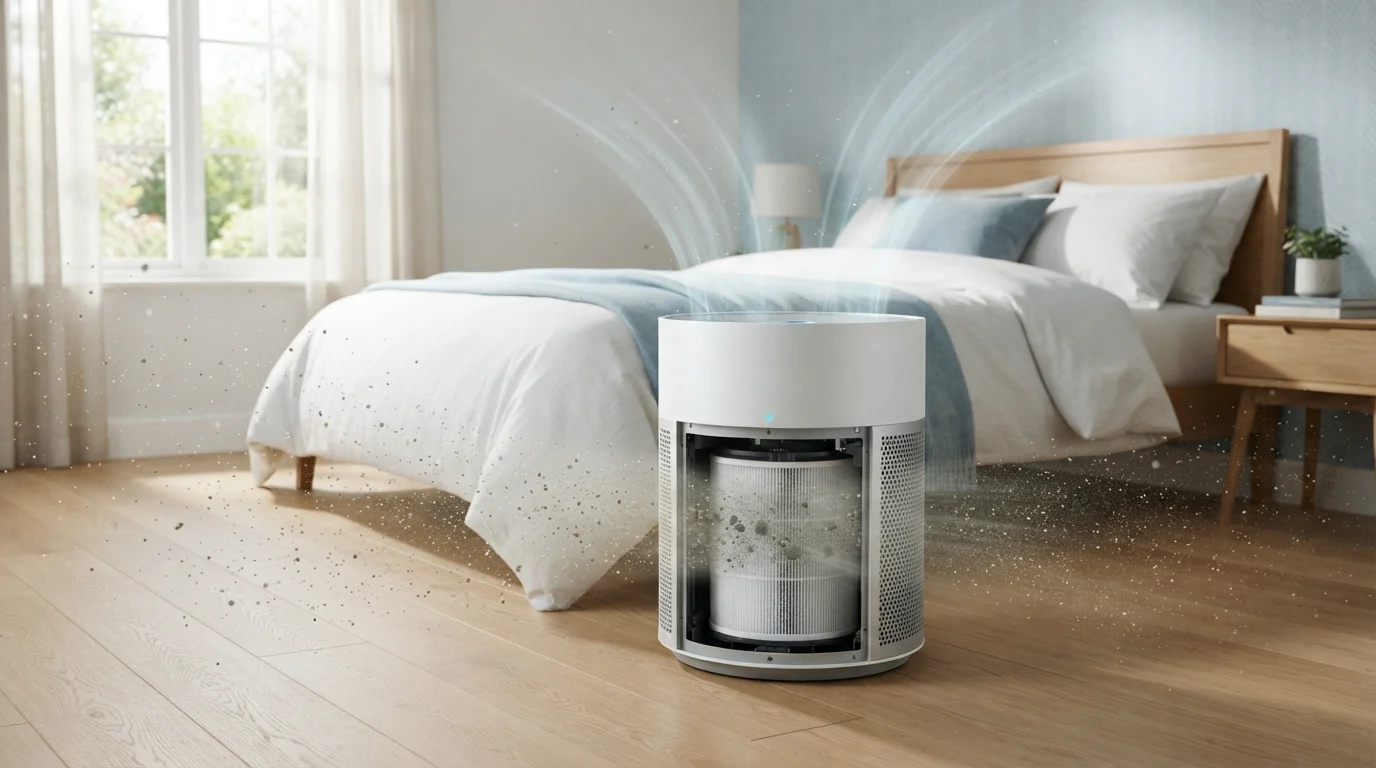
An air purifier is a device designed to clean indoor air by removing or reducing certain pollutants. Depending on its design and filter, it may capture particles such as dust, pollen, smoke particles, and other airborne material.
Many portable air cleaners use filters to capture particles. A HEPA filter is commonly used in air-cleaning products because it is designed to capture very small particles efficiently. However, the performance of the entire air cleaner also depends on factors such as airflow and the size of the room.
An air purifier does not simply make the air “fresh.” It works by moving air through a cleaning system. As the machine operates, room air enters the unit, passes through its filter or cleaning components, and then returns to the room.
This can be useful in rooms where airborne particles are a concern.
For example, imagine that you have a bedroom where dust seems to build up quickly. Cleaning the room is still important, but an air purifier can provide additional filtration for particles that are floating in the air.
The same idea applies to smoke particles and some allergens. However, an air purifier should not be treated as a replacement for cleaning, ventilation, or removing the source of pollution.
The EPA recommends controlling pollution sources and improving ventilation as important parts of indoor-air-quality management. Filtration can be used as an additional step.
What Does a Humidifier Do? Benefits and How It Works
A humidifier adds moisture to the air.
This is useful when indoor air becomes too dry, especially during periods when heating systems are running or when the natural air is dry. Dry air can make the nose, throat, lips, eyes, and skin feel uncomfortable.
There are several types of humidifiers, including cool-mist, ultrasonic, evaporative, and steam-based models. Each type adds moisture in a somewhat different way.
A cool-mist humidifier releases a cool mist into the room. An ultrasonic humidifier uses vibrations to create a fine mist. An evaporative model uses air moving through a wet material to add moisture.
A steam vaporizer creates steam using heat. Because hot water and steam can cause burns, Mayo Clinic advises against steam vaporizers around children.
The goal is not to make the room as humid as possible. Too much humidity can create new problems.
The EPA recommends keeping indoor relative humidity around 30% to 50%. Higher humidity can encourage biological growth such as mold and can support dust mites.
Air Purifier vs Humidifier: Main Differences
The biggest difference is simple: an air purifier changes the cleanliness of the air, while a humidifier changes the moisture level of the air.
They should not be viewed as competing products that perform the same task.
An air purifier is focused on particles and certain other pollutants. A humidifier is focused on humidity.
| Feature | Air Purifier | Humidifier |
| Main purpose | Reduce certain airborne pollutants | Add moisture |
| Helps with dry air | No | Yes |
| Filters particles | Yes, depending on model | No |
| Adds moisture | No | Yes |
| Useful for dusty rooms | Often | No |
| Useful when humidity is low | No | Yes |
| Can cause problems if poorly maintained | Yes | Yes |
| Needs regular maintenance | Yes | Yes |
| Measures humidity | Usually no | Some models do |
| Replaces cleaning | No | No |
This difference is important because buying the wrong machine can leave you disappointed.
For example, if your room has very dry air, an expensive air purifier will not solve the underlying lack of moisture. Similarly, if your room contains lots of airborne particles, a humidifier will not filter them out.
When Should You Choose an Air Purifier?
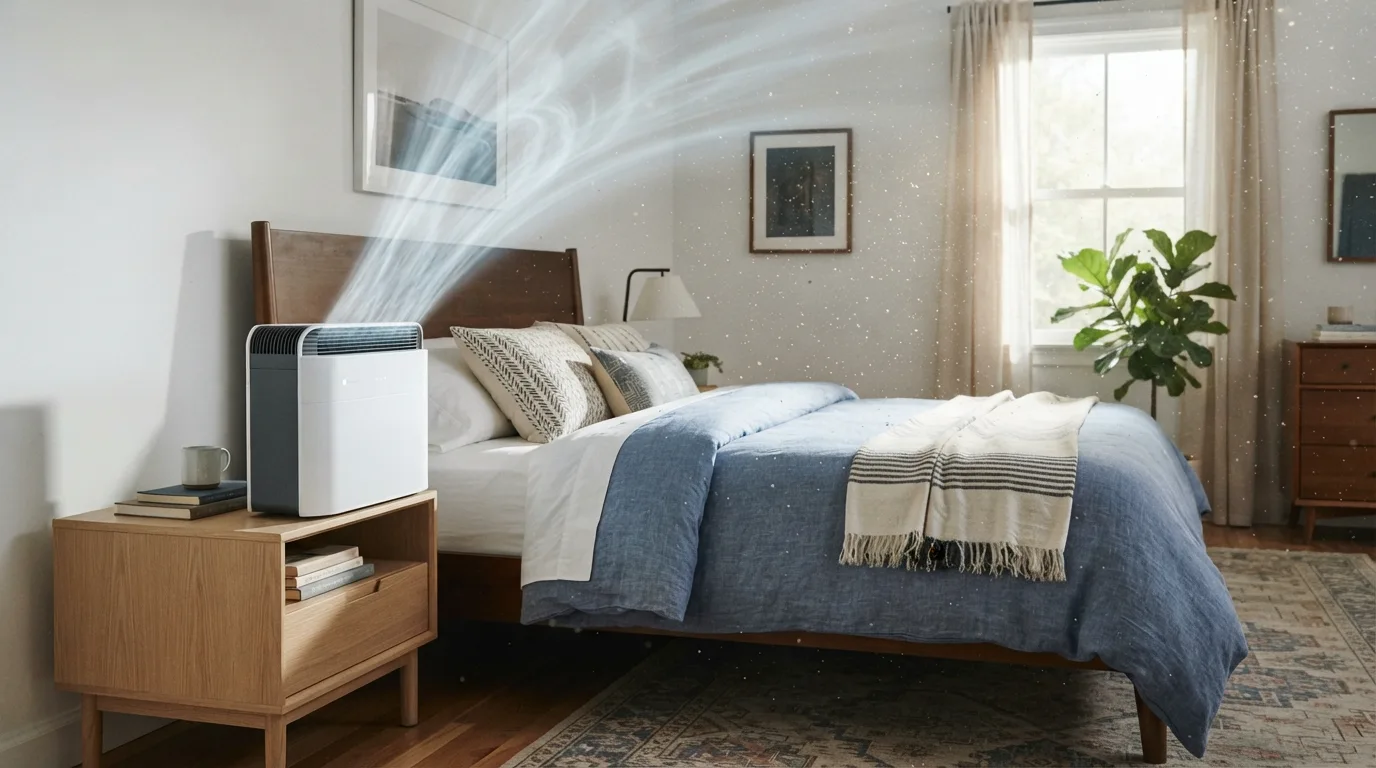
An air purifier may make more sense when your main concern is airborne particles.
For example, you might consider one if you regularly notice dust, smoke, pollen, or other particles in the air. Portable air cleaners can provide additional filtration in individual rooms.
An air purifier can also be useful when you want an extra layer of particle filtration while you work on the larger causes of indoor pollution.
However, do not expect one machine to solve every indoor-air problem.
For example, if there is visible mold caused by a moisture problem, simply placing an air purifier in the room does not fix the moisture source. You need to address the water or humidity problem itself.
The same principle applies to smoke. If someone is smoking indoors, an air purifier should not be considered a substitute for stopping the indoor source.
The EPA emphasizes source control and ventilation along with filtration.
When Should You Choose a Humidifier?
A humidifier may be the better choice when your indoor air is too dry.
Dry air can make your nose and throat uncomfortable. It can also contribute to dry or cracked skin and lips. A humidifier can add moisture and make the environment more comfortable.
One easy way to know whether you actually need one is to measure your home’s humidity.
A small device called a hygrometer measures relative humidity. Some humidifiers also have a built-in humidistat that can monitor or control humidity.
Instead of guessing, check the humidity first.
If the humidity is already high, adding more moisture is usually not the answer. Excess moisture can contribute to condensation and create conditions that support mold and dust mites.
Can You Use an Air Purifier and Humidifier Together?
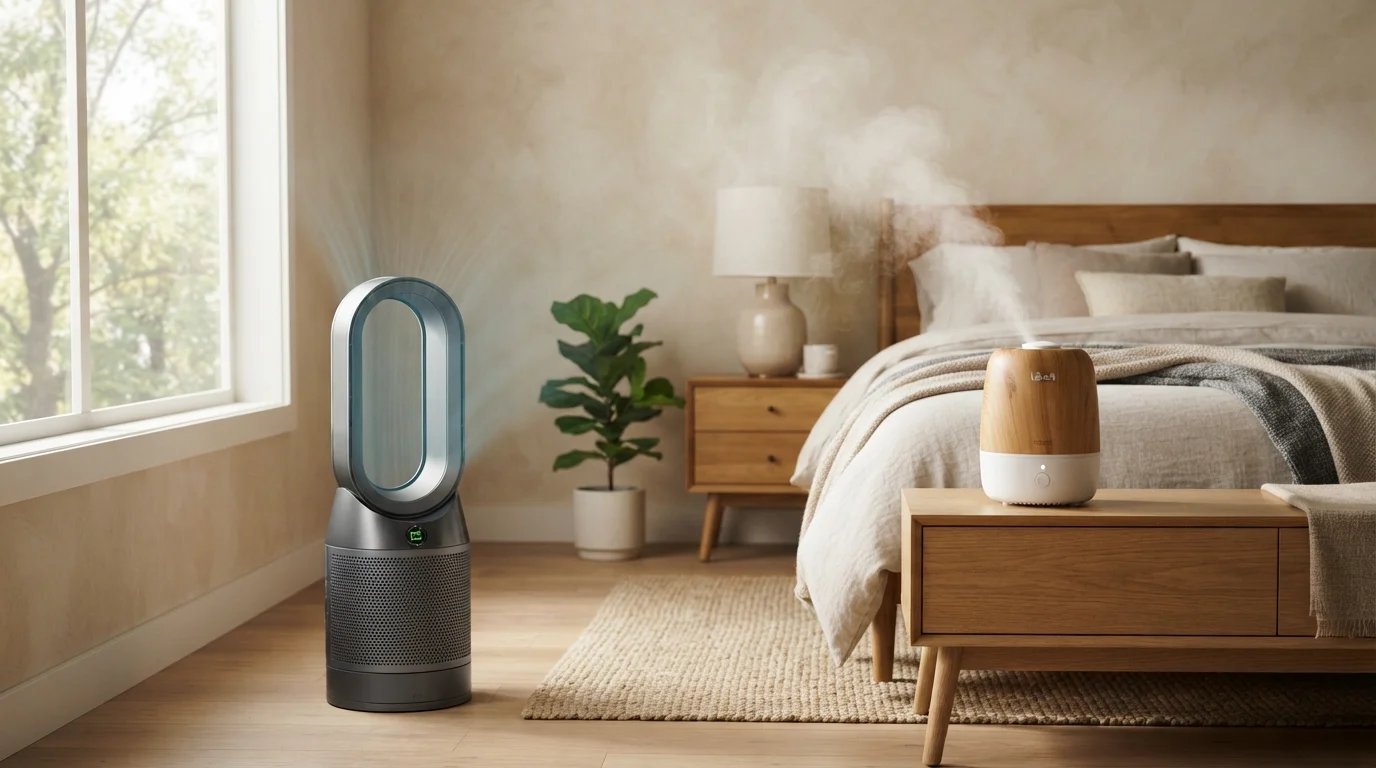
Yes, you can use an air purifier and humidifier in the same home, and sometimes in the same room.
There is no need to think of them as alternatives when you have two different problems.
For example, suppose your bedroom has dry air during winter, but you also want additional particle filtration. You might use a humidifier to maintain comfortable humidity and an air purifier to filter airborne particles.
The key is to use each device for its intended purpose.
If you use a humidifier, monitor humidity carefully. The EPA recommends avoiding indoor relative humidity above 50% because excess moisture can encourage biological growth.
Also, keep the devices clean and follow the manufacturer’s instructions.
There is little benefit in adding moisture to a room that is already humid. In that situation, increasing humidity may create more problems rather than solving one.
Air Purifier or Humidifier for Allergies?
The answer depends on what is causing the problem and the condition of the room.
An air purifier can help reduce certain airborne particles. However, many allergens settle on floors, furniture, bedding, and other surfaces rather than staying in the air all the time. The EPA notes that air cleaners cannot remove particles that are not airborne unless those particles become airborne again.
A humidifier is different. It does not remove allergens. In fact, too much humidity can encourage dust mites and mold, which can make indoor-air problems worse for some people.
If you have allergies or asthma, Mayo Clinic recommends discussing humidifier use with a healthcare professional because dirty humidifiers and excessive humidity can create problems.
Therefore, do not automatically choose a humidifier just because you have allergy symptoms.
First determine whether the room is actually too dry.
Air Purifier or Humidifier for a Stuffy Nose?
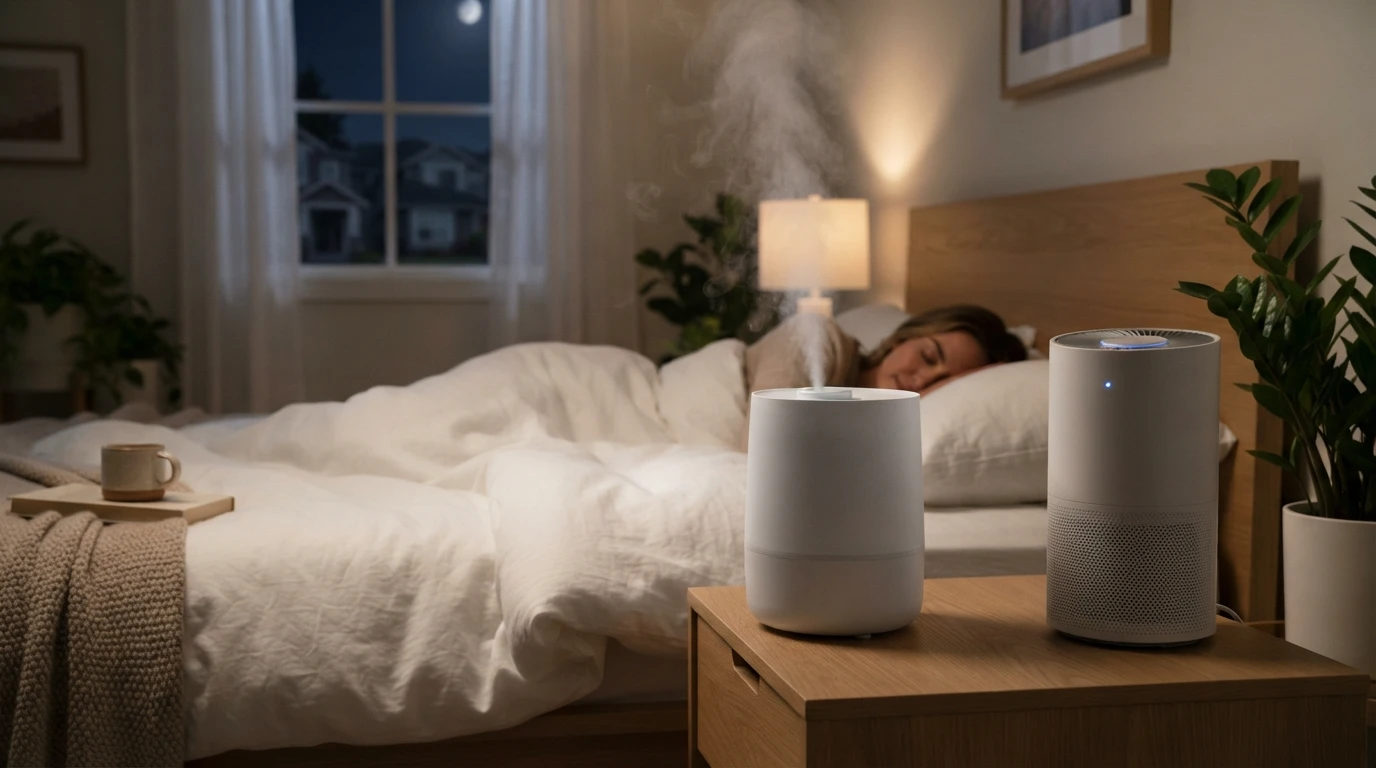
A humidifier may be helpful when nasal discomfort is connected with dry air.
Mayo Clinic notes that a cool-mist humidifier can help ease a stuffy nose during a cold by adding moisture to the air.
But a humidifier is not a treatment for every cause of nasal congestion.
If the room is already humid, adding more moisture may be counterproductive. High humidity can encourage mold and dust mites, both of which can contribute to indoor-air problems.
An air purifier may be more appropriate when airborne particles are contributing to your discomfort.
The important question is not simply, “Which machine is better for a stuffy nose?” Instead, ask, “Is the room too dry, or is there a problem with airborne particles?”
That distinction can help you choose more wisely.
What to Look for in an Air Purifier
If an air purifier seems appropriate, start by considering the room where you will use it.
A purifier that is too small for a large room may not provide the performance you expect. Look at the manufacturer’s information about room size and airflow.
Filter quality also matters. A purifier with a particle filter can help reduce airborne particles, while some models also contain activated carbon or another material intended to address certain gases or odors. EPA notes that air cleaners without specialized media generally do not remove gaseous pollutants.
You should also consider noise, replacement-filter costs, energy use, and how often the filter needs to be replaced.
Do not focus only on the purchase price. A cheaper machine can become expensive if replacement filters are costly or difficult to find.
| Air purifier feature | Why it matters |
| Suitable room size | Helps match the device to your space |
| Particle filtration | Important for airborne particles |
| Airflow | Affects how much air the machine can process |
| Filter availability | Makes long-term maintenance easier |
| Noise level | Important for bedrooms and offices |
| Energy use | Affects running costs |
| Carbon filter | May help with certain odors and gases |
The best air purifier is not necessarily the most expensive one. It is the one that fits your room and your actual air-quality needs.
What to Look for in a Humidifier
For a humidifier, humidity control and easy maintenance are especially important.
A built-in humidistat can be useful because it helps monitor humidity. You can also use a separate hygrometer to check the room yourself. Mayo Clinic recommends keeping indoor humidity between 30% and 50%.
Look for a model that is easy to clean. A complicated machine that is difficult to maintain may be more likely to be neglected.
Water quality can also matter, especially with ultrasonic and impeller humidifiers. The EPA recommends using water with lower mineral content to reduce mineral exposure and buildup.
Always follow the manufacturer’s instructions because cleaning procedures can differ between models.
Do not let water sit in a portable humidifier for long periods. The EPA recommends emptying, wiping surfaces dry, and refilling portable humidifiers daily.
Common Mistakes People Make
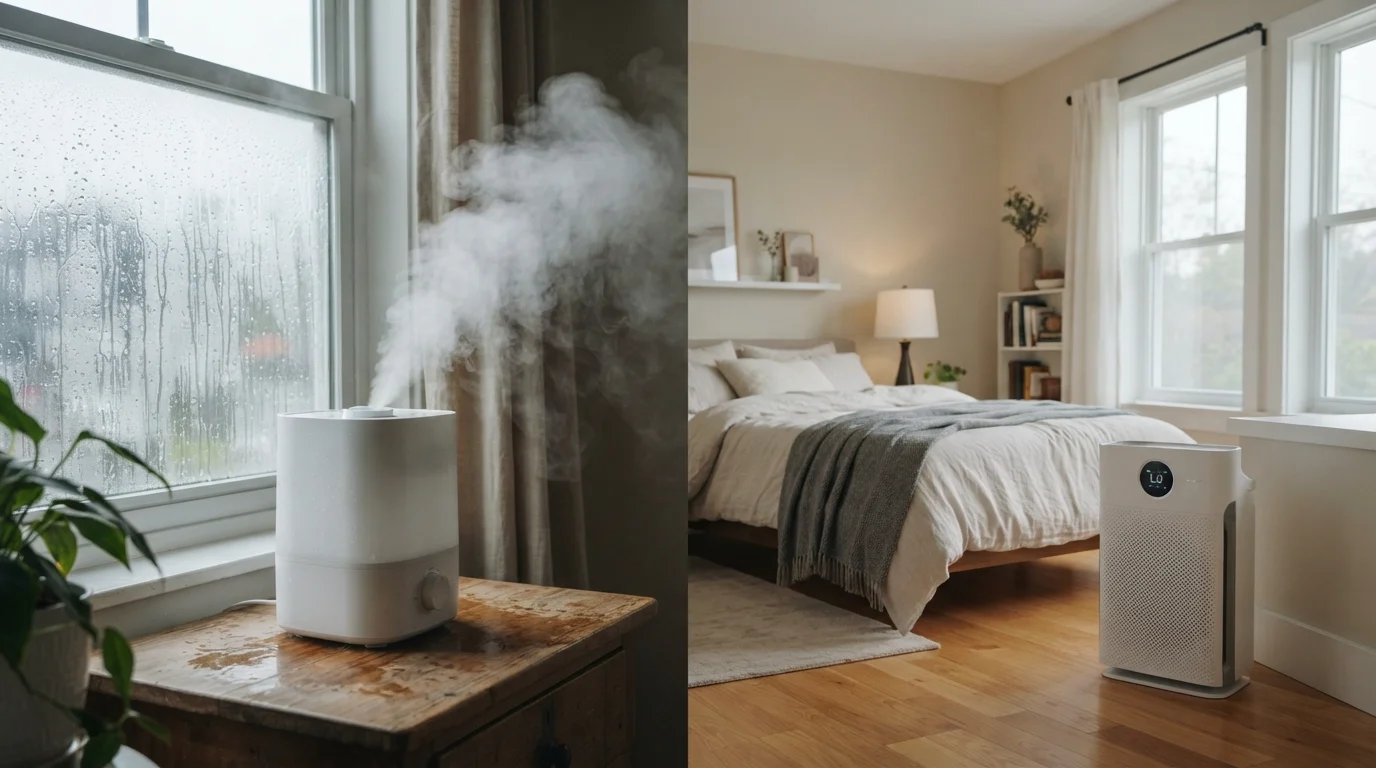
One common mistake is buying a humidifier when the real problem is high humidity.
If your windows regularly have condensation or the room feels damp, adding more moisture is not a good solution. Excess humidity can encourage mold and other biological growth.
Another mistake is thinking that an air purifier replaces cleaning.
Dust that has already settled on your furniture, bedding, or floor still needs to be cleaned. An air purifier is an additional tool, not a replacement for normal housekeeping.
A third mistake is ignoring maintenance.
A dirty humidifier can become a source of unwanted biological material. Mayo Clinic warns that bacteria and mold can grow in dirty humidifiers.
People also sometimes assume that “more” is always better. More filtration may not solve a pollution source, and more humidity can be harmful when the room is already humid.
The goal is balanced indoor air, not maximum purification or maximum humidity.
How to Decide Which One You Need
Before buying anything, take a few minutes to check your room.
Start with humidity. A hygrometer can tell you whether the room is dry, comfortable, or too humid. If humidity is already within a reasonable range, you may not need a humidifier.
Next, think about airborne particles. Do you notice smoke, dust, pollen, or other airborne pollutants? If so, an air purifier may be worth considering.
Then think about the source of the problem.
If there is mold, water damage, smoke, or another pollution source, deal with that source first. A machine may help as an additional measure, but it should not hide the underlying issue.
The EPA recommends a combination of source control, ventilation, and filtration for improving indoor air quality.
A simple decision guide looks like this:
Dry air → measure humidity → consider a humidifier if humidity is too low.
Airborne particles → consider filtration → choose an appropriately sized air purifier.
High humidity → do not add moisture → reduce indoor moisture instead.
This approach is much better than buying a device simply because it is popular.
How to Use Both Devices Safely
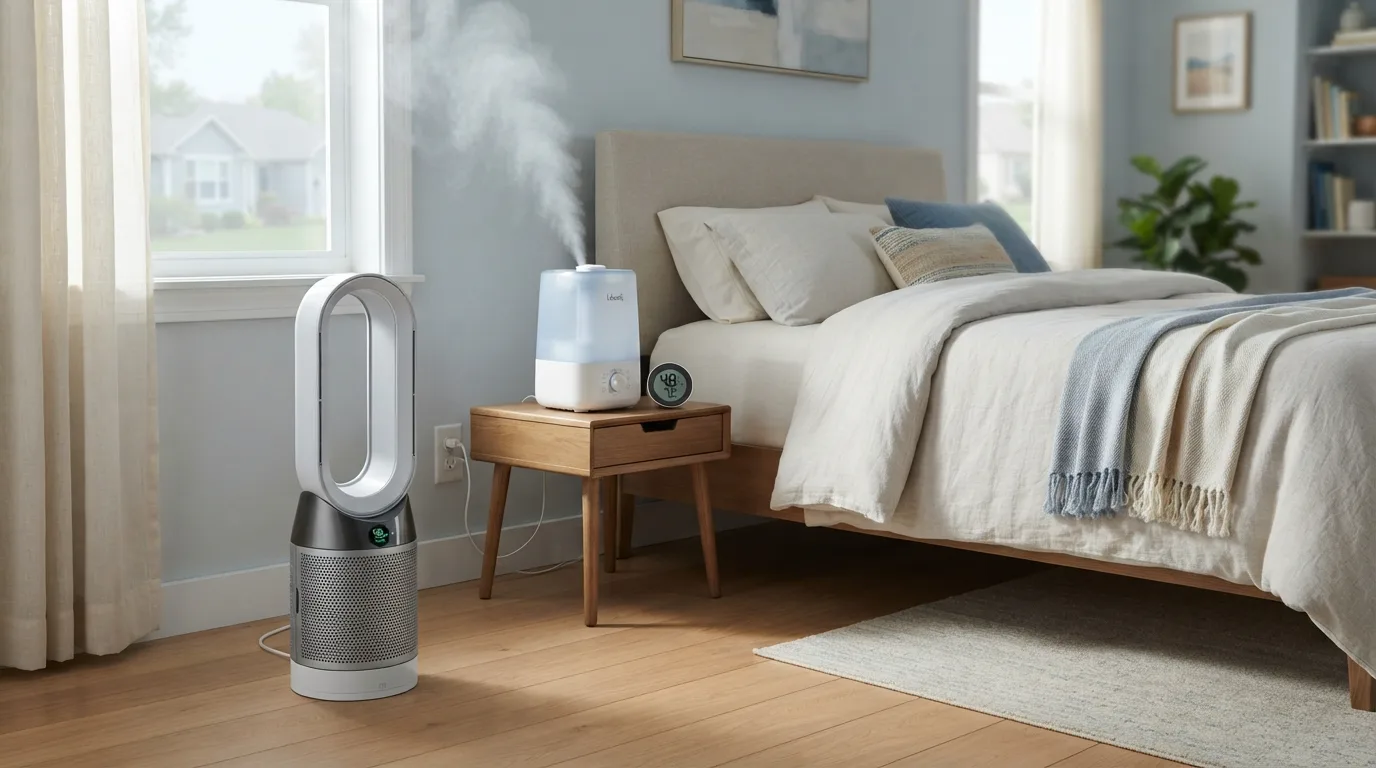
If you use both an air purifier and humidifier, give each device enough space and follow its manufacturer’s instructions.
Keep the humidifier clean and do not allow water to collect around it. The EPA recommends avoiding damp carpets, curtains, walls, and other absorbent materials around a humidifier.
Monitor humidity instead of leaving the humidifier running without checking the room.
Keep the air purifier’s filters maintained according to the manufacturer’s instructions. A filter that is overdue for replacement may not perform as intended.
Also remember that ventilation still matters. When outdoor air quality allows, appropriate ventilation can help remove indoor pollutants.
For people with asthma, allergies, or other respiratory concerns, it is especially important to consider individual circumstances and ask a healthcare professional when necessary. Mayo Clinic specifically recommends talking with a healthcare professional before using a humidifier if you have allergies or asthma.
Air Purifier or Humidifier: Which Is Better for a Bedroom?
There is no single answer because bedrooms can have different problems.
If your bedroom feels dusty or has smoke and other airborne particles, an air purifier may be the better choice. It can help reduce certain particles from the air and make the room feel cleaner.
If your bedroom feels very dry and you often wake up with a dry nose, throat, lips, or skin, a humidifier may be more helpful. It adds moisture to the air and can improve comfort.
If you have both problems, you can use an air purifier and humidifier together. Just keep the humidity at a comfortable level, clean both devices regularly, and follow the manufacturer’s instructions.
For a bedroom, noise is another practical consideration. A loud device may disturb sleep even if it works well.
Therefore, when choosing a bedroom device, consider both its technical purpose and your daily comfort.
FAQs About Air Purifier or Humidifier
Is an air purifier better than a humidifier?
Neither is automatically better. An air purifier helps reduce certain airborne pollutants, while a humidifier adds moisture. Choose based on the actual problem in your room.
Can an air purifier make the air dry?
An ordinary air purifier is designed to filter or clean air rather than intentionally remove moisture. If your room is dry, measure the humidity instead of assuming the purifier is causing it.
Can a humidifier clean the air?
No. A humidifier adds moisture but does not work like an air purifier. It should not be used as a substitute for particle filtration.
Should I use a humidifier every day?
Not necessarily. Use a humidifier when the indoor air is too dry, and monitor humidity. The EPA recommends not allowing indoor relative humidity to exceed 50%.
Can I use an air purifier and humidifier at the same time?
Yes, they can be used together when you have different needs. Keep the humidifier clean, monitor humidity, and follow both manufacturers’ instructions.
Which is better for allergies, an air purifier or humidifier?
An air purifier may help reduce certain airborne particles. A humidifier does not remove allergens, and excessive humidity can encourage mold and dust mites. If you have allergies or asthma, discuss humidifier use with a healthcare professional.
Conclusion
Choosing between an air purifier or humidifier becomes much easier when you understand what each device actually does. An air purifier is designed to reduce certain airborne pollutants, while a humidifier adds moisture to dry indoor air.
If your main concern is dust, smoke, pollen, or other airborne particles, an air purifier may be the better choice. If your room is genuinely too dry, a humidifier may provide more useful comfort.
Before buying either device, check your indoor conditions instead of guessing. A hygrometer can help you understand your humidity level, while your room’s dust, smoke, and other particle sources can help you decide whether filtration is useful.
Finally, remember that these devices work best as part of a larger indoor-air strategy. Good cleaning, source control, proper ventilation, and reasonable humidity levels all matter.

Hi, I’m Iqra, a passionate writer and grammar enthusiast dedicated to making English grammar simple, clear, and easy to understand. Through my work on grammar books and educational content, I help students, writers, and English learners improve their vocabulary, sentence structure, punctuation, and everyday communication skills. My goal is to turn confusing grammar rules into practical, easy-to-follow lessons that readers can confidently use in real life. I believe learning grammar doesn’t have to be difficult—it can be simple, useful, and even enjoyable. Through helpful guides, examples, and carefully explained grammar tips, Iqra aims to make learning English more accessible for everyone.