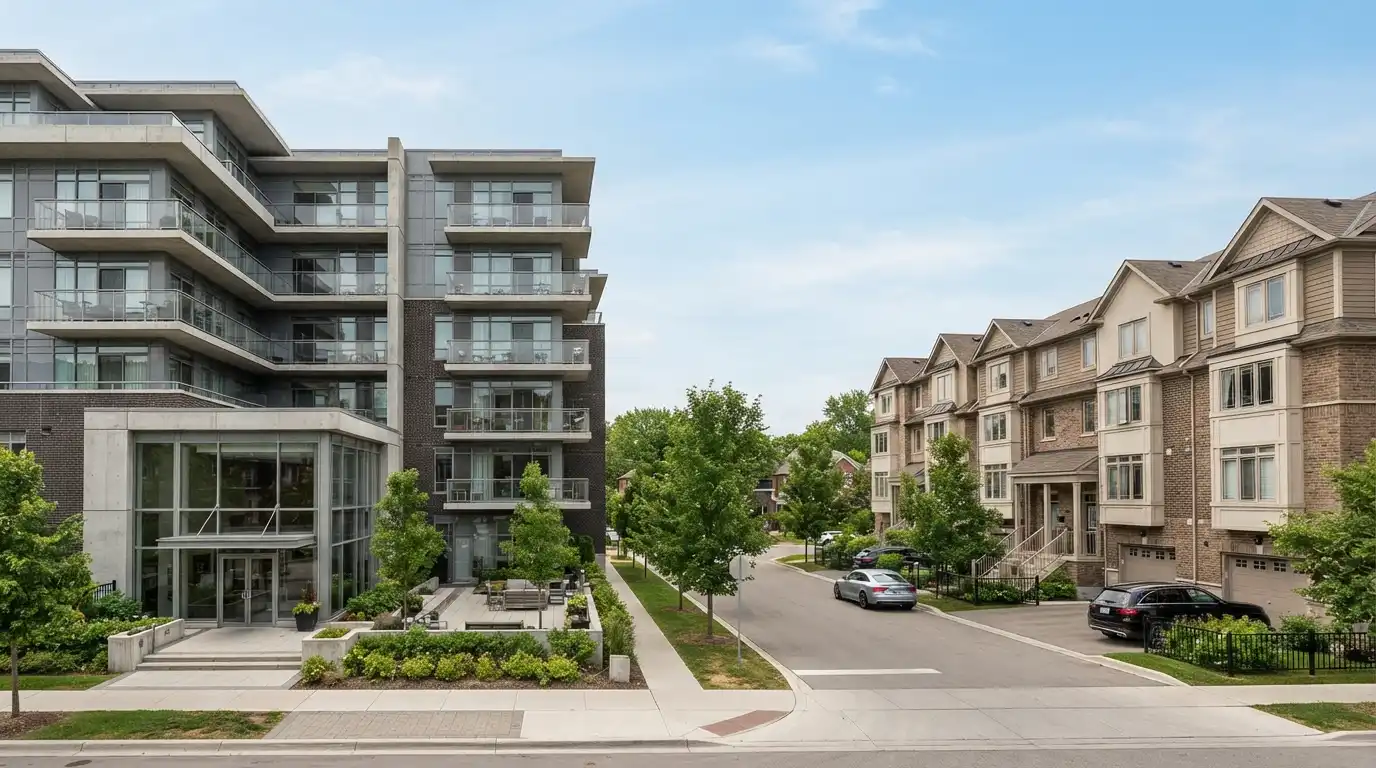
If you are comparing a condo or townhouse, the biggest difference is ownership and the way you live in the property.
A condo usually means owning an individual unit inside a larger shared building or community. A townhouse is usually a multi-level home with its own entrance and often its own small outdoor space.
Both can be good choices, but they offer different levels of privacy, maintenance, space, and community living.
Quick Answer: Condo or Townhouse?
The simple answer is that a condo is often more like owning an apartment, while a townhouse is more like owning a house that shares one or more walls with neighboring homes.
With a condo, you normally own the interior space of your unit and share ownership or responsibility for common areas. These may include hallways, elevators, roofs, pools, gyms, parking areas, and landscaping.
With a townhouse, you generally own the home itself and may also own the land connected to it, depending on the community and ownership structure. Townhouses often have two or more floors, a private entrance, and sometimes a garage, patio, or yard.
The right choice depends on what matters most to you. If you want less exterior maintenance and more shared amenities, a condo may fit your lifestyle. If you want more space, privacy, and a house-like layout, a townhouse may be more suitable.
| Feature | Condo | Townhouse |
| Basic design | Individual unit | Attached home |
| Floors | Often one floor, but not always | Usually two or more |
| Private entrance | Sometimes | Usually |
| Outdoor space | Often limited | Often a patio, yard, or balcony |
| Shared walls | Common | Common |
| Common areas | Usually significant | Usually fewer |
| Exterior maintenance | Often handled by association | May be owner or association responsibility |
| Privacy | Usually lower | Often higher |
| House-like feeling | Usually less | Usually more |
The details can vary widely, so always check the specific property’s legal documents and association rules before buying.
What Is a Condo?
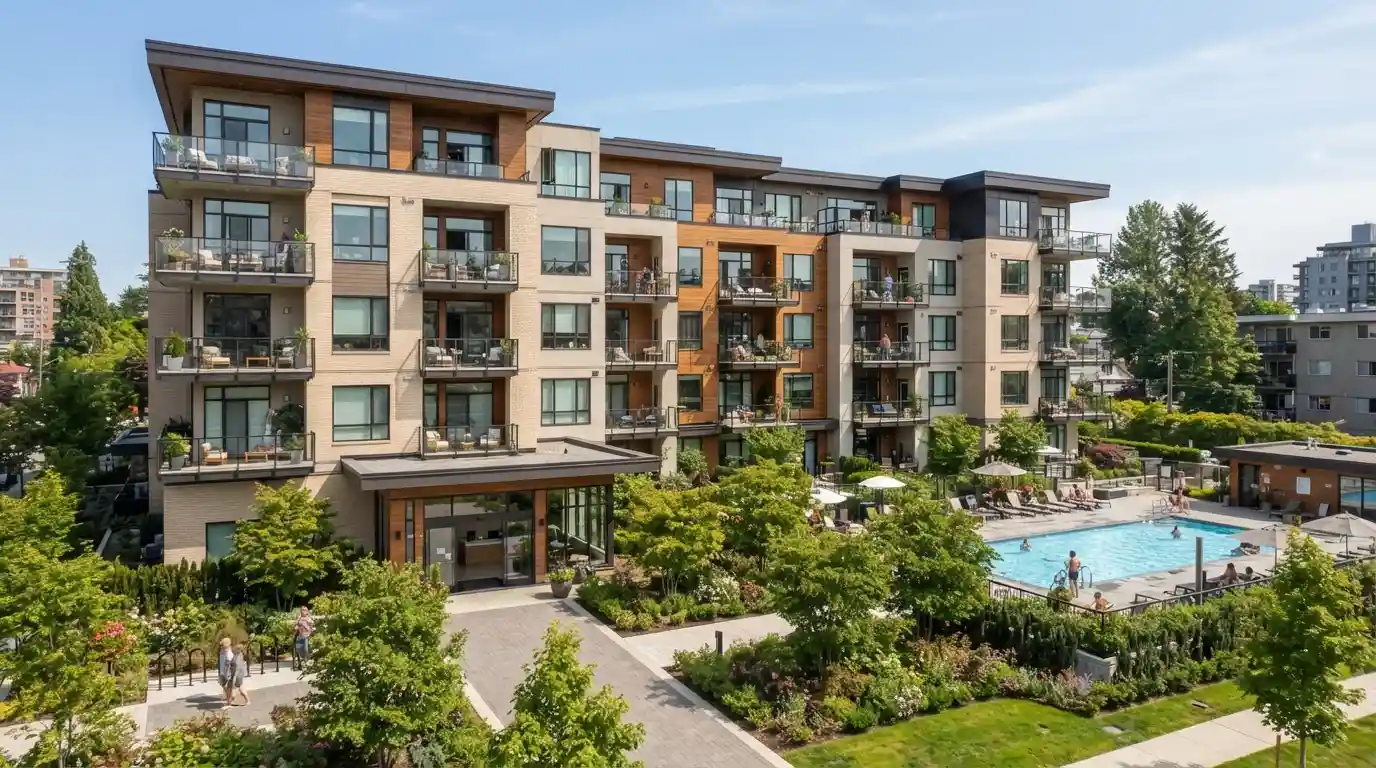
A condo, short for condominium, is a type of property ownership in which a person owns an individual unit while sharing ownership or responsibility for common areas with other owners.
For example, imagine a large residential building with 100 units. You might purchase Unit 25. You own your unit, while areas such as the lobby, elevators, hallways, pool, fitness room, or surrounding grounds may be shared by the condominium community.
Condos can be found in high-rise buildings, low-rise buildings, converted buildings, and some smaller residential communities. The design can range from a small studio to a large multi-bedroom unit.
One major attraction is convenience. In many condo communities, the association takes care of certain exterior or common-area tasks. This can make condo living easier for people who do not want to spend much time maintaining a building or yard.
However, condo ownership also comes with responsibilities. Owners commonly pay association fees, and the association may have rules about renovations, pets, parking, rentals, noise, or other matters.
The exact responsibilities depend on the condominium’s governing documents, so the word “condo” alone does not tell you everything about the property.
What Is a Townhouse?
A townhouse is a home that is usually attached to one or more neighboring homes. Townhouses commonly have multiple floors and their own front door.
Think of a row of homes connected side by side. Each home may have its own kitchen, bedrooms, bathrooms, living areas, entrance, and outdoor space. Because the homes share walls, a townhouse can provide some of the benefits of a detached house while using less land.
Many townhouses have a garage, driveway, balcony, patio, or small yard. Some are located in communities managed by a homeowners association, often called an HOA.
Townhouse ownership can vary. In many cases, the owner owns the house and the land associated with it. In other communities, the legal structure can be different.
This is an important point when comparing a condo or townhouse. The physical appearance of a property does not always tell you exactly what you own. Review the deed, community documents, and purchase agreement to understand the ownership structure.
Condo vs. Townhouse: Ownership Differences
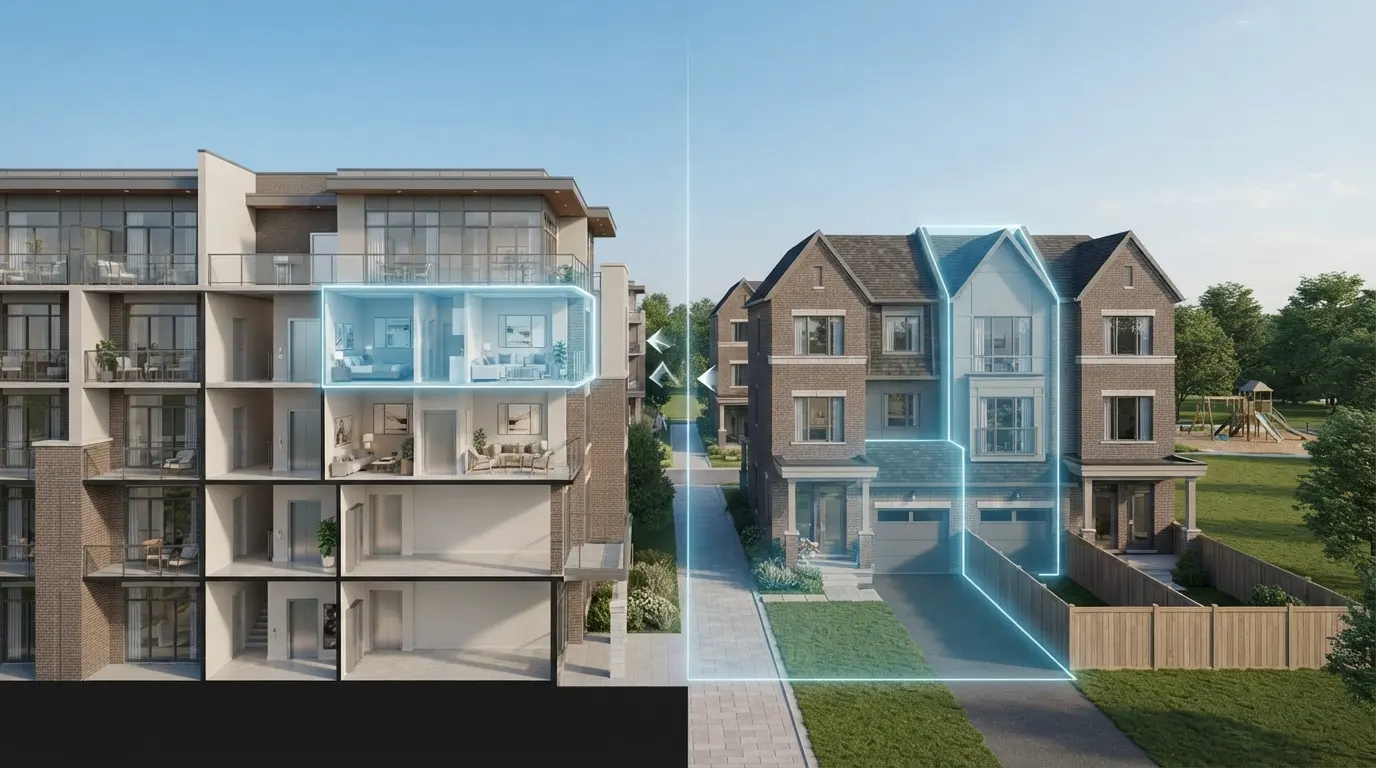
Ownership is one of the most important differences between a condo and townhouse.
When buying a condo, you typically purchase a specific unit. Shared areas are managed according to the condominium’s governing structure. Your ownership usually focuses on your individual unit, while common elements are shared among the community.
A townhouse may provide more direct ownership of the structure and, depending on the legal arrangement, the land beneath or around it.
Consider this simple example.
You buy a condo on the fifth floor of a building. You generally cannot decide to replace the building’s roof yourself because the roof is part of the larger property structure. The association usually handles responsibilities assigned to it under the governing documents.
Now imagine that you buy a townhouse in a planned community. You may have more responsibility for the home’s exterior, depending on the association rules and ownership documents.
| Ownership Question | Condo | Townhouse |
| Do you own an individual home/unit? | Usually yes | Usually yes |
| Do you share common areas? | Usually | Often |
| Do you always own the land? | Not in the same way as a typical detached home | Often, but not always |
| Can association rules apply? | Usually | Often |
| Can maintenance responsibilities vary? | Yes | Yes |
| Should you review legal documents? | Yes | Yes |
The safest approach is to look at the individual property rather than assuming every condo or townhouse follows exactly the same rules.
Condo or Townhouse: Maintenance Differences
Maintenance can strongly affect your decision.
One reason people choose condos is that some exterior and common-area maintenance is handled through the condominium association. For example, depending on the governing documents, the association may be responsible for common landscaping, shared roofs, hallways, elevators, or other areas.
That does not mean condo owners have no maintenance responsibilities. You are still responsible for your unit and for whatever the governing documents assign to individual owners.
Townhouses can require more direct involvement with the property. You may have a private entrance, patio, yard, or exterior surfaces that require attention. However, some townhouse communities have an HOA that handles certain exterior maintenance.
So, rather than asking only, “Which requires less maintenance?” ask:
“What exactly does the association maintain, and what am I responsible for?”
Before buying, request the association’s governing documents and carefully check maintenance responsibilities.
Condo or Townhouse: Privacy and Space
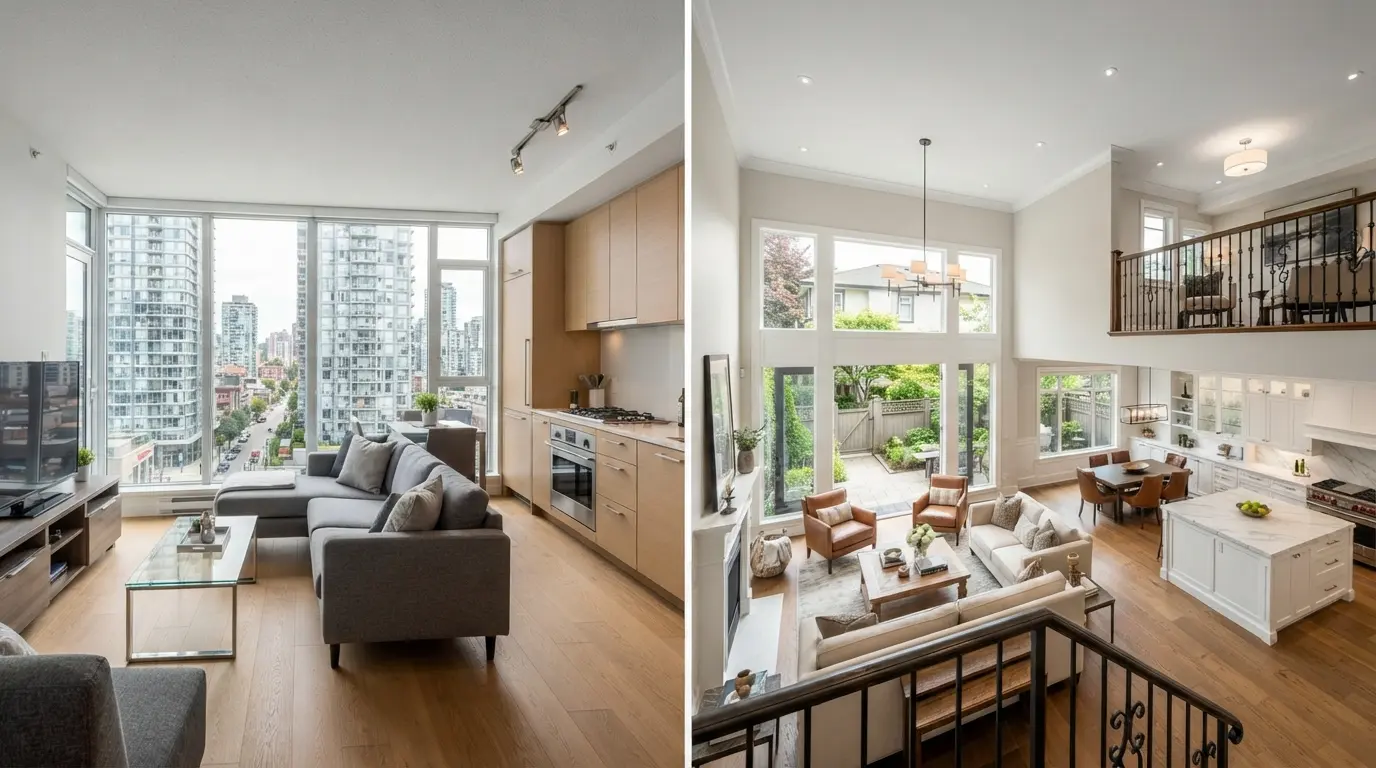
Privacy is another major consideration.
Condos often have neighbors above, below, or beside you. In a high-rise building, you may also share elevators, hallways, entrances, parking areas, and other spaces.
A townhouse usually gives you a more house-like experience. You typically enter directly from outside, and you may have several floors. There can also be fewer shared interior spaces.
However, a townhouse is not the same as a detached house. You may still share walls with neighboring homes.
If privacy is important to you, look beyond the property type. Check the location of bedrooms, wall construction, windows, entrances, parking spaces, and outdoor areas.
Visiting the property at different times of day can also help you understand noise and activity around the home.
Condo or Townhouse: Space and Layout
Townhouses often provide more vertical living space because they commonly have two or more floors.
For example, a townhouse might place the living room and kitchen on the first floor while bedrooms are upstairs. This can create a useful separation between living and sleeping areas.
Condos often have a more compact layout, especially in apartment-style buildings. Many condos have everything on one floor, which can be convenient for people who prefer fewer stairs.
Neither layout is automatically better. It depends on how you use your home.
A person who wants easy access to every room may prefer a single-level condo. Someone who wants separate living and sleeping areas may enjoy a multi-level townhouse.
Condo or Townhouse: Fees and Monthly Costs

Association fees are an important part of comparing a condo or townhouse.
Condo owners commonly pay condominium association fees. These fees can help pay for shared services and maintenance. Depending on the property, they may cover things such as common-area maintenance, building services, insurance for certain shared elements, landscaping, or amenities.
Townhouse owners may also pay HOA fees. These can help fund community services and shared property maintenance.
The amount alone does not tell you whether a fee is reasonable. You need to understand what the fee pays for.
For example, one community may have a higher monthly fee because it provides extensive amenities and services. Another may have a lower fee but leave more maintenance responsibilities to individual owners.
Also check whether the association has a history of special assessments or major planned expenses. A special assessment is an additional charge that may be imposed for certain community costs.
Condo or Townhouse: Rules and Restrictions
Both condos and townhouses can have community rules.
These rules may cover areas such as:
- Pets
- Parking
- Exterior changes
- Landscaping
- Noise
- Rentals
- Home businesses
- Renovations
- Holiday decorations
- Use of common areas
The rules can be useful for keeping a community organized, but they can also limit what an owner can do.
Suppose you want to paint your exterior door a certain color or build a fence around your patio. Before making plans, check whether the association allows it.
If you plan to rent the property in the future, rental restrictions are especially important. Some communities limit rentals or have specific requirements.
Read the documents before purchasing instead of relying only on what a real estate listing says.
Condo or Townhouse: Which Is Better for First-Time Buyers?
Both can work for first-time buyers.
A condo may appeal to someone who wants a simpler home with fewer exterior maintenance responsibilities. A condo can also provide access to amenities that might be expensive or difficult to maintain in a private home.
A townhouse may appeal to a first-time buyer who wants a more traditional home layout, multiple floors, and potentially more private outdoor space.
The decision should include more than the purchase price.
Look at the monthly association fee, property taxes, insurance, utilities, expected maintenance, financing costs, and possible future assessments. Also consider how long you expect to stay in the property.
A home that appears cheaper at first may have other ongoing costs that affect the total budget.
Condo or Townhouse: Which Has More Privacy?

In general, a townhouse often feels more private because it usually has its own exterior entrance and multiple floors. However, townhouses still share walls with neighboring homes.
A condo may involve more shared spaces, especially in a large building. You might walk through common hallways, use shared elevators, and live close to other residents.
Still, privacy depends heavily on the individual property.
A small condo with only a few units could feel quieter than a busy townhouse community. Likewise, an end-unit townhouse may have fewer shared walls than an interior townhouse.
When viewing a property, pay attention to noise, window placement, distance from neighbors, and the location of common areas.
Condo or Townhouse: What About Outdoor Space?
Outdoor space is often an important difference.
Many condos have balconies, patios, or shared outdoor areas. Some communities have large shared gardens, pools, or recreational spaces.
Townhouses are more likely to have some form of private outdoor area, such as a small yard, patio, or terrace. However, this is not guaranteed.
If outdoor space matters to you, do not assume it comes with the property simply because the property is a townhouse.
Check the listing, survey, deed, and association documents to determine what space is actually included in your ownership and what space is shared.
Common Mistakes When Comparing a Condo or Townhouse
One common mistake is assuming that all condos have the same rules. They do not. Every community can have different governing documents, fees, maintenance responsibilities, and restrictions.
Another mistake is looking only at the purchase price. A buyer should also consider association fees, taxes, insurance, maintenance, utilities, and possible assessments.
Some buyers also forget to investigate the association itself. Financial health can matter because an association may need money for repairs and long-term projects.
Another mistake is assuming that a townhouse always includes land ownership. The legal structure can differ from one property to another.
Finally, some buyers focus heavily on appearance. A beautiful property may still be a poor fit if its monthly costs, rules, location, or maintenance responsibilities do not match your needs.
Questions to Ask Before Buying a Condo or Townhouse

Before purchasing either type of property, prepare a list of questions.
Ask how much the association fee is and what it covers. Find out whether the fee has changed recently and whether additional assessments are planned.
Ask about major repairs. For a condo, this may include the roof, elevators, exterior walls, plumbing systems, or other shared components. For a townhouse, ask about exterior maintenance, roofs, shared roads, landscaping, and other community responsibilities.
Also ask about rules. If you have a pet, plan to rent the property, or want to renovate, confirm the relevant restrictions before signing a contract.
You should also understand the insurance arrangement. The association’s insurance and your individual homeowner or condo insurance may cover different parts of the property.
A real estate attorney, lender, insurance professional, or qualified real estate professional can help you understand documents and costs specific to your situation.
Condo or Townhouse: A Simple Decision Guide
Instead of asking which property is universally better, think about which features match your needs.
A condo may make sense if you value convenient living, shared amenities, and less direct responsibility for certain exterior or common-area tasks.
A townhouse may make sense if you prefer multiple floors, a private entrance, and a more house-like layout.
Here is a simple way to organize your thinking:
| If You Care Most About… | Property Type to Explore |
| Apartment-style living | Condo |
| A house-like layout | Townhouse |
| Shared amenities | Condo or amenity-rich townhouse |
| Multiple floors | Townhouse |
| Fewer stairs | Many condos |
| Private entrance | Usually townhouse |
| Low exterior maintenance | Often condo, but check documents |
| Private outdoor space | Often townhouse, but verify |
| Fewer shared interior spaces | Usually townhouse |
This table is only a starting point. The actual property, community, and ownership documents matter more than the label.
How to Choose Between a Condo and Townhouse
Start by making a realistic monthly budget. Include the mortgage or rent-equivalent housing cost, taxes, insurance, association fees, utilities, maintenance, and an emergency fund.
Next, think about your daily routine. Do you want stairs? Do you want a yard? Do you care about a private entrance? Are shared amenities important?
Then investigate the community.
Look at the association’s rules, financial information, maintenance responsibilities, insurance requirements, and any known upcoming projects. If possible, visit the property more than once.
Location should also be part of the decision. A property near work, schools, public transportation, shopping, or other important places may affect your daily life more than small differences between a condo and townhouse.
Finally, think about your future plans. If you expect your household, work situation, or housing needs to change, consider whether the property can continue to meet those needs.
Condo or Townhouse: FAQs
Is a townhouse the same as a condo?
No. A townhouse is generally a style of attached home, while a condo describes a form of ownership. A townhouse can sometimes be legally organized as a condominium, so the physical appearance alone does not determine the ownership structure.
Is a condo cheaper than a townhouse?
Not necessarily. Prices vary greatly by location, size, condition, amenities, and local housing conditions. A condo may have a lower purchase price in some markets, but association fees and other costs must also be considered.
Do townhouses have HOAs?
Many townhouses are located in communities with homeowners associations, but not every townhouse has the same arrangement. Check the property’s documents to understand whether an HOA exists and what it covers.
Do condos have HOA fees?
Condos commonly have association fees. These fees may help pay for shared property, services, maintenance, insurance, or amenities. The exact costs and services vary by community.
Which has more privacy, a condo or townhouse?
A townhouse often provides a more private, house-like setup because it usually has its own exterior entrance and multiple floors. However, it still may share walls with neighboring homes. The actual property design matters.
Should I buy a condo or townhouse?
Consider your budget, desired space, privacy, maintenance responsibilities, association fees, community rules, and future plans. There is no single choice that fits every buyer. Compare the specific properties and their documents before deciding.
Conclusion
Choosing between a condo or townhouse starts with understanding how each property works. Condos typically offer unit ownership within a shared community, while townhouses usually provide a more house-like layout with a private entrance and multiple floors.
The differences can affect privacy, maintenance, outdoor space, monthly fees, community rules, and ownership responsibilities. However, these features can vary from one property to another.
Before buying, look beyond the property’s appearance and asking price. Review association documents, fees, maintenance duties, insurance, restrictions, and possible future assessments. Think about your daily lifestyle as well as your long-term plans.
The best way to compare a condo or townhouse is to examine the specific properties, not just their labels. A careful comparison can help you understand what you are buying and avoid unexpected responsibilities later.

Hi, I’m Iqra, a passionate writer and grammar enthusiast dedicated to making English grammar simple, clear, and easy to understand. Through my work on grammar books and educational content, I help students, writers, and English learners improve their vocabulary, sentence structure, punctuation, and everyday communication skills. My goal is to turn confusing grammar rules into practical, easy-to-follow lessons that readers can confidently use in real life. I believe learning grammar doesn’t have to be difficult—it can be simple, useful, and even enjoyable. Through helpful guides, examples, and carefully explained grammar tips, Iqra aims to make learning English more accessible for everyone.