A miner or geologist may work in the same industry, but these professionals have different jobs. A miner helps remove valuable materials from the Earth, while a geologist studies rocks, minerals, and the structure of the Earth to understand where those materials can be found. Both jobs are important in mining, construction, energy, and natural resource research
. However, their daily tasks, education, tools, and safety duties are not the same. In this guide, you will learn what a miner and a geologist do, how their jobs compare, what skills they need, and how to choose between these careers.
You will also discover real-life examples, common misunderstandings, and answers to frequently asked questions. By the end, you will clearly understand when to use each term and why both professionals play an important role in finding and using Earth’s natural resources.
Miner or Geologist: Quick Answer
A miner extracts valuable materials, such as coal, metal ores, and other minerals, from the ground. A geologist studies Earth’s materials and processes to understand how rocks and minerals form and where useful resources may be located.
Although their work can overlap, their main goals are different. Miners focus on extracting resources safely and efficiently. Geologists focus on studying the Earth, collecting evidence, and interpreting geological information.
For example, a geologist may study rock samples and maps to identify an area that could contain copper. After a mining project is approved, miners may help remove copper-bearing rock from the ground.
Both jobs require attention to safety, careful planning, and knowledge of the materials found underground. Yet, they usually follow different career paths and use different methods to complete their work.
What Is a Miner?
A miner is a worker who helps take useful materials out of the Earth. These materials may include coal, gold, silver, copper, iron ore, salt, and other natural resources. Miners may work underground, in open pits, or at sites where minerals are collected from the surface.
Mining supports many parts of modern life. Metals from mines are used to make cars, buildings, electrical wires, tools, and electronic devices. Coal and other mined materials have also been used as energy sources and in industrial processes.
A miner’s exact duties depend on the type of mine, the material being extracted, and the equipment used.
Some miners operate heavy machines that cut or move rock. Others inspect work areas, prepare tunnels, move materials, or help maintain mining equipment. In some operations, workers also help separate useful minerals from unwanted rock.
Safety is a major part of the job. Miners may face risks from falling rocks, dust, loud noise, heavy machinery, and dangerous gases. They must follow safety rules, use the right protective equipment, and understand emergency procedures.
Not every miner performs the same task. Modern mines often employ people with different skills, including machine operators, drilling workers, equipment technicians, and underground construction workers.
A miner’s main purpose is to help extract natural resources while protecting workers and following the mine’s operating rules.
What Is a Geologist?
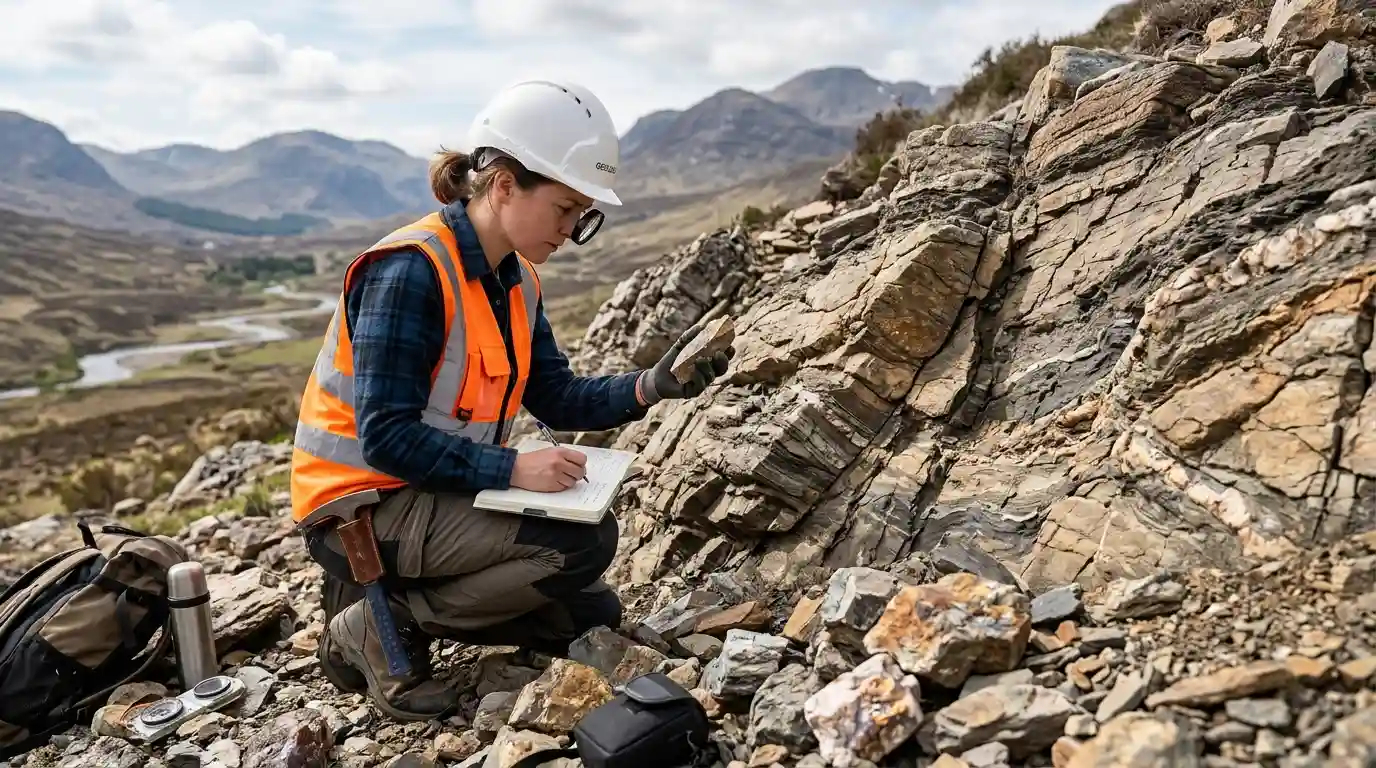
A geologist is a scientist who studies the Earth. Geologists examine rocks, minerals, soil, fossils, and other evidence to understand how the planet formed and how it changes over time.
Some geologists study volcanoes, earthquakes, mountains, rivers, and ancient environments. Others focus on finding natural resources, such as metals, coal, oil, groundwater, and industrial minerals.
In the mining industry, a geologist helps identify and study mineral deposits. A mineral deposit is a natural concentration of useful material in the Earth’s crust.
For example, a geologist may examine a rock sample to find out whether it contains copper, gold, or iron minerals. The geologist may also study maps, collect samples, review drilling results, and use computer models to understand what lies beneath the ground.
Geologists do not simply look at rocks and guess what is inside them. They use scientific methods, careful measurements, laboratory tests, and geological evidence to reach conclusions.
Many geologists work outdoors, while others spend much of their time in laboratories, offices, or research facilities. Mining geologists may visit mine sites to check rock layers, study mineral quality, and help teams understand the shape and size of a deposit.
Education is another important difference. Geologists commonly earn a degree in geology, earth science, or a related field. Some roles require additional training, professional registration, or advanced study, depending on the country and job.
A geologist’s main purpose is to understand Earth’s materials and processes and use that knowledge to answer scientific or practical questions.
Miner or Geologist: Main Differences
The easiest way to understand the difference between a miner and a geologist is to compare their main responsibilities.
A miner works mainly with the extraction of resources. A geologist works mainly with the study and interpretation of Earth’s materials. Both may work at the same site, but they approach the work from different directions.
| Feature | Miner | Geologist |
| Main role | Helps extract natural resources | Studies Earth and its materials |
| Main focus | Safe and efficient mining | Geological research and analysis |
| Common workplace | Underground mines, open pits, and processing areas | Field sites, mines, laboratories, and offices |
| Typical tools | Drills, cutting machines, loaders, and protective gear | Rock hammers, maps, sample tools, and scientific instruments |
| Education | Training and qualifications depend on the job | Usually a degree in geology or a related science |
| Main knowledge | Mining methods, equipment, and safety | Rocks, minerals, Earth processes, and geological data |
| Work output | Extracted materials and completed mining tasks | Geological reports, maps, sample results, and interpretations |
The table shows the general difference, but actual duties can vary. For example, an experienced miner may operate advanced technology, while a geologist may spend a large part of the day checking data rather than collecting rocks.
Their work often supports the same goal: understanding, planning, and safely recovering useful resources from the ground.
What Does a Miner Do Every Day?
A miner’s daily routine depends on the type of mine and the job they perform. Some workers operate machines, while others prepare work areas, move rock, inspect equipment, or support the mining team.
Before work begins, miners may attend a safety meeting. The team reviews the work plan, checks hazards, and confirms that equipment is ready to use.
During the shift, a miner may operate machinery to break rock or move material from one place to another. In an underground mine, workers may help maintain tunnels and follow instructions about ventilation and ground stability. In an open-pit mine, workers may operate large vehicles or equipment to move rock.
Some miners also help with drilling and blasting activities. These tasks require special training and strict controls because explosives can cause serious harm if handled incorrectly.
Other duties may include checking machine parts, reporting damaged equipment, keeping work areas clear, and following instructions from supervisors.
Miners often work as part of a team. They may communicate with engineers, geologists, maintenance workers, and safety officers to complete daily tasks.
The work can be physically demanding, although modern machinery performs many tasks that once required more manual labor.
Working conditions may include heat, cold, dust, noise, or long shifts. Employers use safety systems, protective equipment, training, and inspections to reduce these risks.
A miner’s day is not only about removing rock. It also involves teamwork, equipment care, following procedures, and making sure that work can continue safely.
What Does a Geologist Do Every Day?
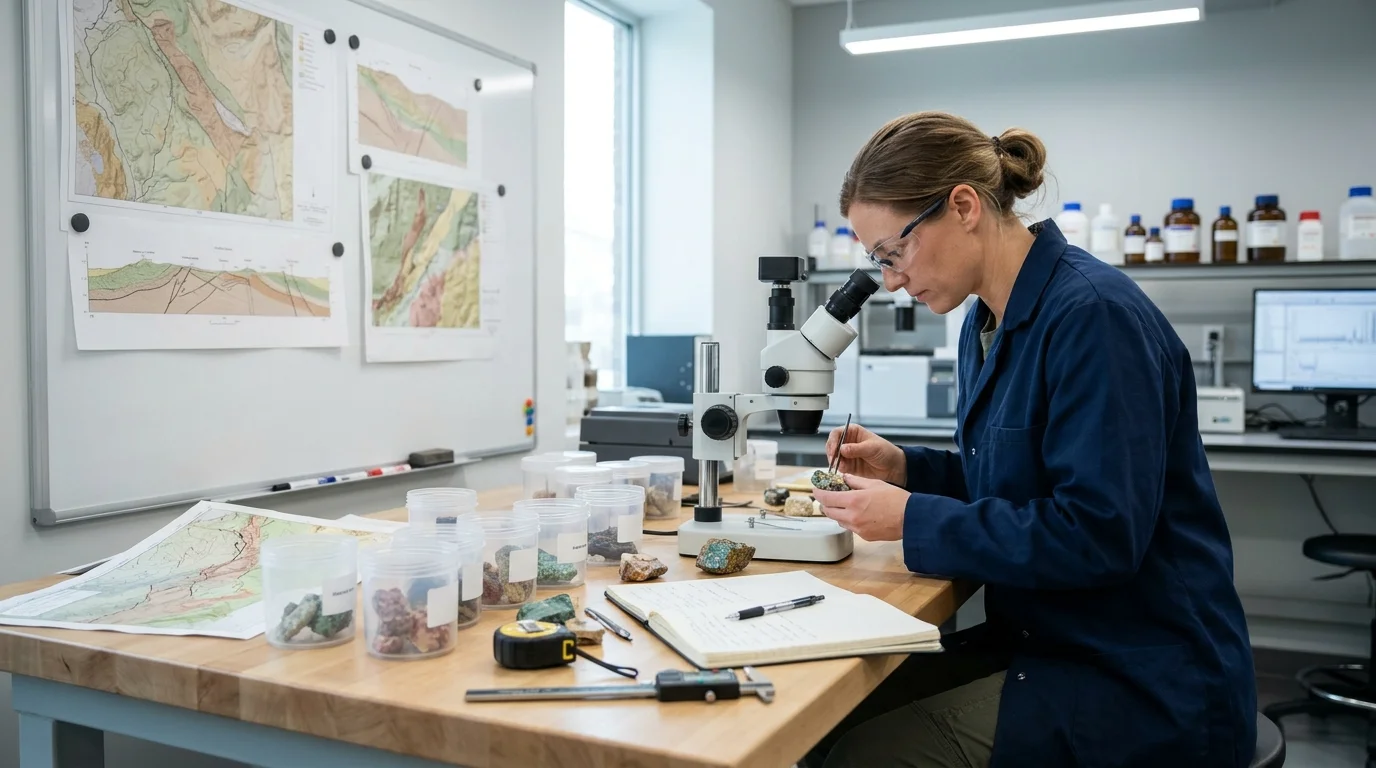
A geologist’s daily work often begins with a question: What can the available evidence tell us about the Earth?
In a mining project, the question might be whether a rock formation contains enough valuable minerals to justify further study. To investigate, the geologist collects information from the site, examines rock samples, and reviews geological maps.
Fieldwork is one possible part of the job. A geologist may walk across an area, record the location of rock formations, collect samples, and note visible features. The work may take place in remote areas, mountains, deserts, or active mine sites.
Back in a laboratory or office, the geologist may study samples, review chemical test results, and use computer software to create maps or models. These tools help explain where mineral deposits may occur and how their features change underground.
Mining geologists may also check the rock around active mining areas. Their observations can help the team understand the position of mineral-bearing rock and identify geological features that could affect mining plans.
Geologists prepare reports that explain what they found, how reliable the evidence is, and what should be studied next. They must be careful not to claim more than the data supports.
Not every geologist searches for valuable minerals. Some study groundwater, landslides, earthquakes, climate history, or environmental changes. Their work helps people understand natural hazards and manage resources responsibly.
A geologist’s job combines science, observation, problem-solving, and communication. The aim is to explain how the Earth works and provide useful information for decisions.
How Do Miners and Geologists Work Together?
Miners and geologists often work together because understanding a mineral deposit is different from extracting it.
A geologist may first study an area to determine whether useful minerals could be present. This early work may include reviewing existing maps, collecting rock samples, and studying results from exploratory drilling.
If the evidence supports further exploration, a mining company may carry out more detailed studies. The project must also meet relevant legal, environmental, financial, and safety requirements before extraction can begin.
Once mining is underway, geologists can continue studying the deposit. They may identify changes in the rock, check the location of mineral-bearing areas, and provide updated information to the mining team.
Miners use that information to help plan and carry out extraction. Their observations can also help geologists understand what the mine reveals about the deposit.
Consider a gold mine. A geologist studies samples and determines that certain rock layers contain gold-bearing minerals. Miners then work within the approved mining plan to remove the relevant material. Further testing may help the team decide how to handle and process the material.
Neither professional replaces the other. Geological knowledge helps guide the work, while mining operations provide access to the rock and materials being studied.
Good communication matters because a geological interpretation must be understood correctly by the people carrying out the mining work.
What Tools Do Miners and Geologists Use?
Miners and geologists use different tools because their jobs have different goals. Miners need equipment to remove, move, or handle materials. Geologists need tools to observe, measure, sample, and study the Earth.
Modern technology has changed both careers. Computer systems, sensors, remote equipment, and digital maps help workers complete tasks more efficiently. However, the tools used still depend on the type of mine and the purpose of the work.
| Tool or equipment | Used mainly by miners | Used mainly by geologists |
| Drilling equipment | Creates holes for mining or approved blasting work | Helps collect underground rock samples during exploration |
| Rock hammer | May be used for limited inspection tasks | Helps collect small rock samples during fieldwork |
| Heavy machinery | Moves rock and mined materials | Usually not used for routine geological study |
| Geological maps | Helps workers understand site layouts and relevant features | Shows rock formations and geological structures |
| Protective helmet and boots | Protects workers at mine sites | Protects geologists during fieldwork and mine visits |
| Laboratory testing tools | May support material checks in some roles | Helps identify mineral properties and analyze samples |
| Computer software | Supports equipment, planning, and mine operations | Helps map, model, and interpret geological information |
Some tools are shared. For example, both professionals may use protective helmets, communication devices, GPS equipment, and computers.
A geologist may also use specialized tools to measure rock direction, examine mineral properties, or record the location of a sample. A miner may use machine controls, ventilation systems, and equipment designed for the mine’s particular conditions.
The important point is that owning or using a tool does not define the profession by itself. The purpose of the work is what matters most.
What Education and Training Do They Need?
The education required for a miner or geologist is one of the clearest differences between the careers.
Miners usually need job-specific training. The exact requirements depend on the country, employer, mine type, and duties involved. Entry-level workers may receive workplace training, while specialized positions can require technical qualifications, licenses, or extra safety certificates.
For example, operating heavy mining equipment may require formal training and authorization. Workers involved in drilling, electrical systems, or blasting may need additional qualifications.
Geologists generally need a stronger background in science. Many professional geology positions require a bachelor’s degree in geology, earth science, or a related subject. Some research, teaching, and advanced specialist roles require a master’s degree or doctorate.
Geology students commonly study rocks, minerals, chemistry, physics, maps, field methods, and Earth’s history. They may also learn how to use scientific software and analyze data.
A degree alone does not guarantee employment. Practical experience, communication skills, technical knowledge, and local job requirements also matter.
A simple comparison:
- Miner: Focus on safe work practices, equipment operation, mining methods, and the skills required for the specific role.
- Geologist: Focus on science education, geological fieldwork, sample analysis, data interpretation, and clear reporting.
People can enter both careers through different routes. Someone who prefers practical work and operating equipment may enjoy mining. Someone who likes science, investigation, and understanding how the Earth works may prefer geology.
Before choosing either career, check the qualifications required by employers and safety authorities in your country.
Salary and Career Opportunities for Miners and Geologists
Pay varies widely for both careers. It depends on location, experience, employer, working conditions, education, and the type of work performed.
Mining jobs range from entry-level support roles to specialized equipment operation, technical work, and supervision. Geology jobs range from junior field positions to senior specialists, project leaders, researchers, and managers.
It would be misleading to say that one career always pays more than the other. An experienced mining equipment operator may earn more than a new graduate geologist in one location, while an experienced specialist geologist may earn more than a miner in another.
The table below outlines common career paths without suggesting a guaranteed salary.
| Career path | Possible opportunities |
| Miner | Underground miner, surface miner, machine operator, drilling worker |
| Mining support worker | Equipment maintenance, site support, materials handling |
| Geologist | Field geologist, exploration geologist, geological researcher |
| Mining geologist | Mineral deposit study, geological mapping, mine-site support |
| Experienced professional | Team leadership, technical management, project supervision |
Geologists may also work outside mining. Their skills can be useful in environmental consulting, groundwater studies, engineering projects, natural hazard research, and government agencies.
Miners can build their careers by learning specialized equipment, improving safety knowledge, and gaining experience in different operations. Some may move into supervisory or technical roles if they meet the required qualifications.
When comparing job offers, consider more than the advertised pay. Work schedules, travel, housing, health risks, training, benefits, and long-term career growth can all affect the value of a position.
Which Career Is Better for You?
There is no single best choice for everyone. The right career depends on your interests, strengths, training opportunities, and preferred working conditions.
Mining may suit you if you enjoy practical tasks, working with machinery, solving hands-on problems, and being part of an operational team. Many mining roles involve following detailed procedures and working in challenging environments.
Geology may suit you if you enjoy science, studying rocks, understanding natural processes, examining evidence, and using data to answer questions. Some geology roles involve extensive outdoor work, while others are more focused on laboratories, computers, or reports.
Think about the kind of work you would enjoy doing each day rather than choosing a career only because of its name or possible salary.
Ask yourself these questions:
- Do I prefer practical tasks or scientific investigation?
- Am I comfortable working around heavy machinery or in remote locations?
- Do I enjoy studying science, collecting evidence, and explaining what I discover?
- What education or training can I realistically complete?
- Which jobs are available where I live?
- What safety risks and work schedules am I willing to accept?
You do not need to make the decision immediately. Reading job descriptions, speaking with workers, and learning about local training programs can help you make a better choice.
If you like both careers, you can also explore related technical fields, such as mining engineering, geological technology, or mineral processing. Each has its own training and responsibilities.
Common Misunderstandings About Miners and Geologists
People sometimes confuse these professions because both involve rocks, minerals, and natural resources. However, several common misunderstandings can make the difference unclear.
Misunderstanding 1: All geologists work in mines.
This is not true. Geologists work in many fields, including environmental science, groundwater research, engineering, education, and natural hazard studies. Some never work at a mine.
Misunderstanding 2: Miners only dig with hand tools.
Modern mining can involve large machines, automated systems, remote controls, and complex equipment. The work varies by site and job.
Misunderstanding 3: Geologists can always tell where gold or other minerals are located.
Geologists use evidence to estimate where deposits may exist. They cannot identify every deposit with certainty. Exploration results can be incomplete, and further testing may be needed.
Misunderstanding 4: Miners and geologists perform the same work.
Their duties may overlap, but their main responsibilities differ. Miners focus on extracting resources, while geologists study and interpret the Earth’s materials.
Misunderstanding 5: A geology degree is required for every mining job.
Many mining positions rely on technical training, workplace experience, and role-specific qualifications rather than a university degree in geology. Requirements depend on the position and local rules.
Understanding these points helps you compare careers accurately. It also shows why a successful mining project needs workers with different skills instead of relying on just one profession.
Miner or Geologist: Frequently Asked Questions
1. What is the main difference between a miner and a geologist?
A miner helps extract natural resources from the Earth. A geologist studies rocks, minerals, and Earth’s structure to understand how these materials form and where they may be found.
2. Can a geologist work as a miner?
A geologist can move into a mining role if they meet the required training and safety standards. However, a geology degree does not automatically qualify someone to operate mining equipment or perform specialized mining tasks.
3. Do miners need a college degree?
Not every mining job requires a college degree. Many positions require practical training, safety instruction, or technical qualifications. Specialized and supervisory jobs may have additional requirements.
4. Do geologists work underground?
Yes. Some geologists visit underground mines to study rock formations, examine mineral deposits, and help mining teams understand geological conditions. Others mainly work outdoors, in laboratories, or in offices.
5. Which career pays more, a miner or a geologist?
Neither career always pays more. Earnings depend on the country, employer, experience, qualifications, job duties, and working conditions. Comparing actual job offers is the best way to understand local pay.
6. Can miners and geologists work together?
Yes. Geologists study mineral deposits and provide geological information. Miners use that information to help extract resources according to the mining plan. Their teamwork supports safer and better-informed mining operations.
Conclusion
Understanding the difference between a miner or geologist helps you see how two important professions work together. A miner helps extract valuable resources from the ground, while a geologist studies Earth’s rocks, minerals, and structure to understand where those resources may be found.
Both careers require knowledge, teamwork, and attention to safety. However, their daily tasks, training, and main responsibilities are different. Mining often focuses on practical operations and equipment, while geology focuses on scientific study, field observations, and data analysis.
If you are choosing between these careers, think about your interests, education goals, and preferred working environment. Research local job opportunities and learn what qualifications each role requires. The best choice is the one that matches your skills and long-term goals. Both miners and geologists contribute to finding and using natural resources that support modern life.

Fazal Abbas
Fazal Abbas is a passionate English grammar writer with over 2 years of experience creating clear, helpful, and easy-to-understand grammar content. He specializes in confusing words, common grammar mistakes, word usage, sentence structure, and practical English tips.
With a simple teaching style, Fazal explains difficult grammar topics in easy English that students, writers, and everyday learners can understand. His goal is to make English grammar less confusing and more useful in real-life communication.
Through GrammarBook, Fazal shares practical examples, clear explanations, and useful tips to help readers improve their English with confidence. He believes that learning grammar should be simple, friendly, and enjoyable.