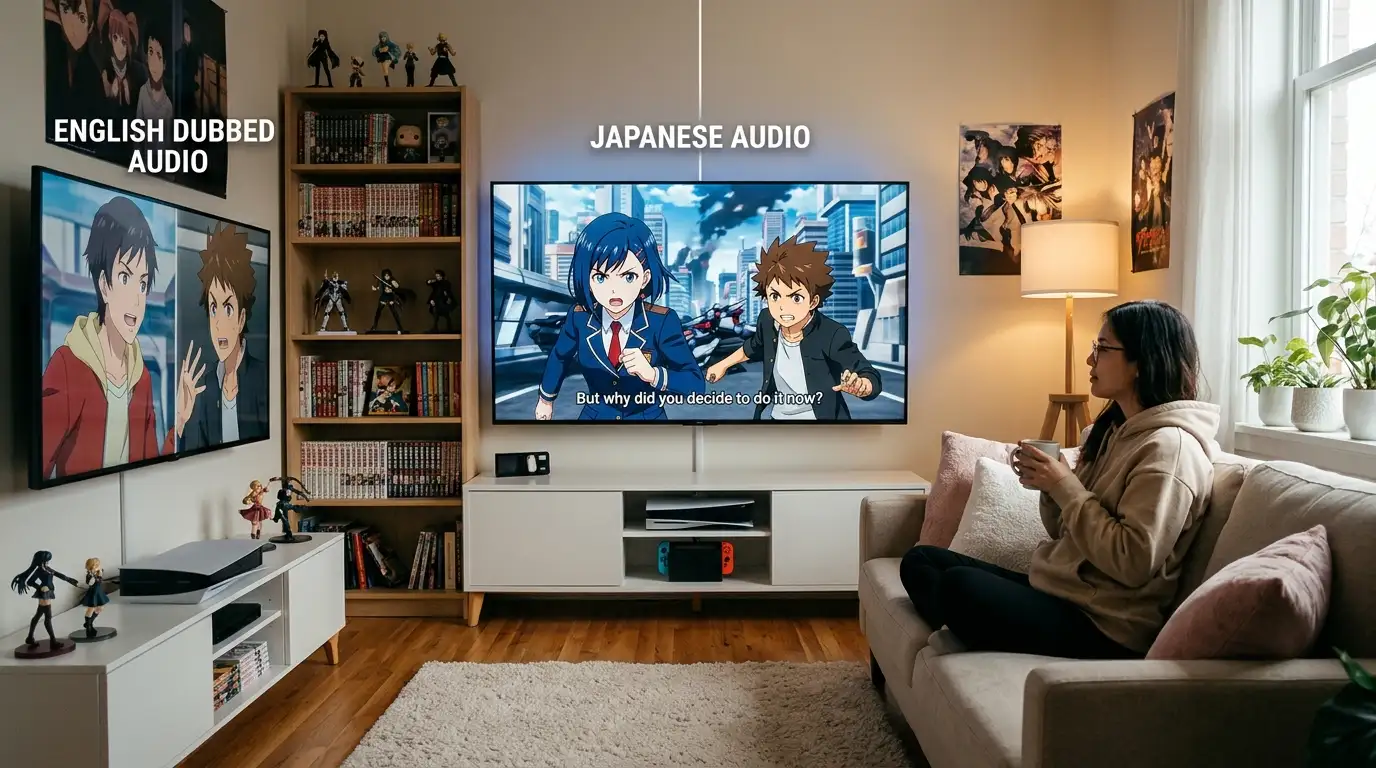
When choosing between sub or dub, anime fans are deciding If to watch a show with its original Japanese voices and subtitles or with voices recorded in another language, such as English.
Sub means watching with subtitles, while dub means listening to translated voice acting. Both options let you enjoy anime, but they offer different viewing experiences. Subtitles can help you hear the original performances, while dubbed versions let you focus more easily on the animation.
In this guide, you will learn what sub and dub mean, how they differ, which one is better for beginners, and how to choose the right option for your favorite anime. You will also discover common mistakes, practical examples, and tips for enjoying anime in the way that suits you best.
Sub or Dub: Quick Answer
Sub or dub refers to two ways of watching anime in a language you understand. A subbed anime keeps its original audio, usually Japanese, and displays translated text at the bottom of the screen. A dubbed anime replaces the original spoken dialogue with recorded voices in another language.
Neither option is always better. Subtitles may appeal to viewers who want to hear the original Japanese voice performances. Dubs may suit viewers who prefer listening in English without reading subtitles throughout the episode.
Your choice depends on your preferences, reading speed, hearing needs, language skills, and the anime itself. Some people watch almost every show subbed, while others prefer dubs. Many fans enjoy both.
| Feature | Sub | Dub |
| Meaning | Original audio with translated subtitles | Dialogue recorded in another language |
| Audio | Usually the original Japanese audio | A translated voice track, such as English |
| Reading | You read subtitles | Usually no subtitles are needed |
| Voice acting | Original voice performances | Performances by dubbing actors |
| Best for | Viewers who enjoy original audio | Viewers who prefer listening in their language |
| Main challenge | Reading while watching the action | Translated dialogue may differ from the original wording |
The simplest answer is to try both. Watch a short scene in each format and choose the one that makes the story more enjoyable for you.
What Does Sub Mean in Anime?

The word sub is short for subtitled. In anime, a subbed version usually keeps the original Japanese dialogue and adds translated text on the screen so viewers can understand what the characters are saying.
For example, imagine watching Naruto. The characters speak Japanese, but English subtitles appear at the bottom of the screen. You hear the original actors while reading the English translation.
This format lets you hear the voices chosen for the original production. You can notice their tone, emotion, pauses, and reactions as the story unfolds.
Subtitles can also help you learn a few Japanese words. You might start recognizing common expressions, greetings, or phrases that appear in many shows. However, subtitles are translations, so they do not always explain every cultural detail or match each spoken word exactly.
One challenge is that you must divide your attention between the text and the animation. If a scene has fast action, quick dialogue, or many characters speaking, you may need to read quickly to keep up.
Subtitles are also available in different languages. English is only one option. Depending on the streaming service and show, you may find subtitles in Spanish, French, Urdu, or other languages.
A subbed version is a good choice if you enjoy original voice acting and do not mind reading while watching.
What Does Dub Mean in Anime?
The word dub refers to a version of a show in which the original dialogue is replaced with recorded dialogue in another language. In English-dubbed anime, voice actors record English lines that match the characters and story.
For example, an anime character may originally speak Japanese. In an English dub, an English-speaking voice actor performs that character’s dialogue. The animation stays the same, but the audio changes.
Dubbing takes more than translating words. The recording team must consider timing, character emotions, pauses, and mouth movements. The translated lines often need to fit the length of the original speech, which can lead to differences in wording.
One major benefit is that you can listen to the dialogue without reading every line. This can make it easier to follow the action, notice background details, or watch an episode while relaxing.
English dubs can also make anime more accessible to viewers who have difficulty reading subtitles. They may be helpful for people with certain visual needs or reading difficulties, although accessibility options vary by platform.
However, the voice performances may feel different from the original Japanese version. Some jokes, expressions, and cultural references may also be changed to sound natural in the new language.
Dubbing does not automatically make an anime worse or less authentic. A well-made dub can communicate the story and emotions effectively. The important thing is If the version works for you.
Sub vs. Dub: The Main Differences
Although subbed and dubbed anime tell the same basic story, the experience can feel quite different. The biggest differences involve audio, reading, voice acting, translation, and attention.
Subbed anime lets you hear the original voice performances. You can follow the actors’ tone and delivery while reading the translated dialogue. This may appeal to viewers who want to experience the original sound of the production.
Dubbed anime lets you understand dialogue by listening in your preferred language. You can look directly at the animation instead of constantly reading text. This may be especially helpful during action scenes or episodes with detailed visuals.
Translation is another important difference. Subtitles often have limited space and reading time. Dubs must also fit the timing of the scene and, in some productions, the characters’ mouth movements. Because of these limits, the two versions may use different words to express a similar idea.
| Comparison | Subbed anime | Dubbed anime |
| Original voice performances | Usually preserved | Replaced in the dubbed language |
| Understanding dialogue | Requires reading translations | Allows you to listen in your language |
| Visual attention | Shared between subtitles and animation | More attention can stay on the screen |
| Translation style | Often shortened to fit reading time | May be adjusted for spoken timing |
| Emotional delivery | Uses the original actors’ performances | Uses the dubbing actors’ performances |
| Language practice | May help with listening exposure to Japanese | Can help with listening in the dubbed language |
| Availability | Depends on subtitle options | Depends on available dubbed tracks |
| Best choice | Depends on your interest in original audio | Depends on your preference for translated voice acting |
Neither format guarantees a better translation or stronger acting. Quality depends on the specific anime, the translation team, the voice actors, and the production.
Is Sub Better Than Dub?
Sub can be the better choice if you prefer original Japanese audio and enjoy reading subtitles. It allows you to hear the performances created for the original release rather than a new voice track.
Some viewers also feel that the original delivery suits the characters’ personalities better. This can be important in emotional scenes, comedy, or stories where the actors’ tone carries much of the meaning.
Subtitles may also be useful if you are interested in Japanese language and culture. You can hear Japanese speech while reading an English translation. Over time, you may begin recognizing familiar words and expressions.
However, watching subbed anime does not automatically make you fluent in Japanese. Learning a language requires more focused practice, and translated subtitles do not always show the exact meaning of every spoken phrase.
Subtitles can also be tiring if you have difficulty reading quickly or want to relax without constantly following text. You might miss facial expressions, small details, or important action while reading a long line.
Sub is not automatically better just because it uses the original audio. The best choice depends on what you value most in a viewing experience.
Is Dub Better Than Sub?
Dub can be the better choice if you prefer listening to dialogue in English or another language you understand well. You can follow the conversation without reading subtitles, which makes it easier to focus on the animation and characters.
This can be useful in fast-paced shows. During a fight scene, for example, you may want to watch the characters’ movements instead of looking down to read dialogue.
Dubs can also make anime easier to enjoy with family or friends who do not like subtitles. Everyone can listen to the story in a familiar language, provided the appropriate dub is available.
Another benefit is convenience. Some viewers like watching anime while eating, resting, or doing a simple task that does not require much attention. A dub may make it easier to follow what is happening, although looking away can still cause you to miss important visual details.
The main concern is that a dub may sound different from what you expect. You may prefer the original Japanese actor’s voice, or a translated joke may not have the same effect. Voice preferences are personal, so a performance that feels perfect to one viewer may not work for another.
Dub is not a lesser way to watch anime. A strong dub can deliver memorable performances, clear dialogue, and powerful emotional scenes. Try an episode before deciding If it suits your taste.
Which Is Easier for Beginners: Sub or Dub?

For many beginners, dub is easier because you can listen to the dialogue in a familiar language. You do not need to read subtitles while learning the characters, understanding the story, and following the animation.
Imagine watching an anime with several characters talking quickly. With a dub, you can focus on their faces and actions while listening to the conversation. With a sub, you must read each translated line while keeping up with the scene.
However, some beginners prefer sub from the beginning. They may enjoy the original Japanese voices or already be comfortable reading subtitles while watching movies.
Your reading speed also matters. If you read English comfortably, subtitles may not feel difficult. If reading and watching at the same time makes you tired, a dub may be a better starting point.
Here is a simple guide:
| Your preference | Best option to try |
| You want to understand dialogue without reading | Dub |
| You enjoy original Japanese voices | Sub |
| You find subtitles hard to follow | Dub |
| You want to hear the original performances | Sub |
| You want to compare different voice actors | Try both |
| You are new to anime and unsure what you like | Start with whichever version is available and comfortable |
You do not have to choose one format forever. Try a dubbed episode first, then watch a short scene with subtitles. You may discover that you prefer different formats for different shows.
Does Sub or Dub Change the Meaning of Anime?
Subbed and dubbed versions usually tell the same main story, but the exact wording can differ. This happens because translation is not always a word-for-word process.
Japanese expressions, jokes, honorifics, and cultural references may not have direct English equivalents. Translators must find ways to communicate the intended meaning while keeping the dialogue clear.
Subtitles need to fit on the screen and remain readable while characters speak. A long sentence may be shortened so viewers can read it before the next line appears.
Dubbing has a different challenge. Actors need to speak naturally while matching the timing of the original scene. Sometimes the English dialogue is adjusted to fit the animation or sound natural when spoken aloud.
For example, a character might use a Japanese expression of respect that has no exact English match. A subtitle may keep a familiar Japanese title, while a dub may replace it with a name or a phrase that English-speaking viewers understand more easily.
These choices do not necessarily mean that one version is wrong. Both may communicate the same general idea in different ways.
If a particular line seems confusing, compare the subtitle and dub versions when both are available. Remember that neither translation always captures every detail of the original language.
Sub or Dub for Action, Comedy, and Romance Anime
The best format can depend on the kind of anime you watch. Different genres place different demands on your attention and may benefit from different viewing styles.
Action anime often includes fast movement, quick dialogue, and detailed fight scenes. Some viewers prefer dubs because they can watch the action without reading subtitles. Others enjoy subbed action anime because they prefer the original voice performances.
Comedy anime can be enjoyable in either format. Some jokes depend on Japanese wordplay, cultural references, or a character’s way of speaking. A subtitle or dub may adapt a joke to make it easier to understand in another language. The result depends on the writing and translation.
Romance anime often relies on emotional dialogue, quiet pauses, and subtle changes in voice. You might prefer the original performances in a sub, or you might connect more strongly with the emotions conveyed by a good dub.
Fantasy and adventure anime also work well in both formats. If a story introduces many names, locations, or special terms, choose the version that helps you follow the world without losing interest.
There is no universal rule that action should be dubbed or romance should be subbed. Try the available versions and choose the one that helps you enjoy each story.
Common Mistakes When Choosing Sub or Dub
One common mistake is assuming that sub is always better than dub. Original audio can be appealing, but that does not mean every original performance will match your personal taste.
Another mistake is believing that dubbed anime is not authentic. A dub uses different voice actors, but it can still communicate the characters’ emotions and the story’s main ideas effectively.
Some viewers also assume that subtitles always provide a perfect translation. In reality, subtitles can be shortened or adapted for readability. They may not reflect every word or cultural detail in the original dialogue.
It is also easy to judge a dub after hearing only a few seconds. Voice acting styles vary, and a performance may feel more natural once you become familiar with the characters. Try watching a full scene before making up your mind.
Finally, do not feel pressured to follow what other fans prefer. Online discussions can make it seem as if everyone must choose a side, but watching anime is supposed to be enjoyable.
Choose the version that fits your needs, and change it whenever you want. Your viewing experience matters more than winning an argument about sub or dub.
How to Choose Between Sub and Dub
If you are still unsure If to watch sub or dub, start by thinking about what makes a show enjoyable for you. You do not need to follow a rule or copy another fan’s preference.
First, check which audio and subtitle options are available. Some anime offer several languages, while others may only have subtitles or a limited selection of dubs. Availability can vary by streaming service and region.
Next, consider your comfort. If you enjoy reading subtitles and hearing original performances, try sub. If you would rather listen to dialogue in your preferred language, try dub.
You can also test both versions before watching a whole series. Choose a scene with ordinary conversation and another with strong emotions or action. Notice which version feels easier to follow and which voice performances you enjoy more.
Finally, remember that your preference can change. You might watch one series subbed and another dubbed. You might even switch formats halfway through a show if a different version becomes available.
The goal is simple: understand the story, connect with the characters, and have fun.
FAQs About Sub or Dub
1. What does sub or dub mean?
Sub means watching anime with its original audio and translated subtitles. Dub means listening to dialogue recorded in another language, such as English.
2. Is sub better than dub?
Not always. Sub lets you hear the original voice performances, while dub lets you listen in a familiar language. The better choice depends on your preferences.
3. Is dub easier for beginners?
Dub is often easier for beginners who prefer listening instead of reading subtitles. However, viewers who are comfortable with subtitles may enjoy sub just as much.
4. Can I learn Japanese by watching subbed anime?
You may recognize Japanese words and phrases through repeated exposure, but watching anime alone is not enough for fluency. Language study and listening practice can help you make greater progress.
5. Why is dubbed dialogue sometimes different from subtitles?
Subtitles and dubbing have different limits. Subtitles must be short enough to read, while dubbed dialogue must fit the scene’s timing and sound natural when spoken.
6. Can I switch between sub and dub?
Yes. If your streaming service offers both versions, you can change the audio or subtitle settings. You can also watch different anime in different formats.
Conclusion: Sub or Dub Which Should You Choose?
Choosing between sub or dub depends on how you enjoy watching anime. Subbed anime keeps the original audio and uses translated subtitles, while dubbed anime replaces the original dialogue with voices in another language.
If you enjoy original Japanese performances and do not mind reading, try sub. If you prefer listening to dialogue in English and focusing on the animation, dub may suit you better.
Neither option is always the best. Both can offer an enjoyable way to experience anime, understand characters, and connect with a story. You can even switch between them depending on the show or your mood.My advice is to watch the same short scene in both formats before deciding. Choose the version that feels natural and helps you enjoy the story. The best choice is the one that makes anime more enjoyable for you.

Fazal Abbas
Fazal Abbas is a passionate English grammar writer with over 2 years of experience creating clear, helpful, and easy-to-understand grammar content. He specializes in confusing words, common grammar mistakes, word usage, sentence structure, and practical English tips.
With a simple teaching style, Fazal explains difficult grammar topics in easy English that students, writers, and everyday learners can understand. His goal is to make English grammar less confusing and more useful in real-life communication.
Through GrammarBook, Fazal shares practical examples, clear explanations, and useful tips to help readers improve their English with confidence. He believes that learning grammar should be simple, friendly, and enjoyable.