Choosing between skiing or snowboarding can feel difficult if you are new to winter sports. Skiing uses two separate skis, one on each foot, while snowboarding uses one board attached to both feet.
Both sports let you slide down snowy slopes, enjoy mountain views, and experience winter adventures. However, they use different movements, have different learning challenges, and require different equipment. Skiing may feel easier during the first few lessons because your legs move separately and you usually face forward.
Snowboarding may appeal to people who enjoy board sports and moving with both feet attached to one board. In this guide, you will learn how skiing and snowboarding compare in difficulty, cost, safety, fitness, and equipment. You will also discover how to choose the sport that best fits your goals, comfort level, and budget.
Skiing or Snowboarding: Quick Answer
Skiing and snowboarding are both winter sports, but they use different equipment and body movements. Skiers stand on two skis and usually face forward, while snowboarders stand sideways on one board with both feet attached.
For many beginners, skiing feels easier during the first day because they can move each leg separately and learn basic turns while facing downhill. Snowboarding can feel harder at first because both feet are attached to one board, but some learners find it easier once they understand how to balance and control their edges.
Neither sport is always easier or better for everyone. Your balance, fitness, past experience, comfort, and willingness to practice all make a difference.
If you want to try either sport, start with a beginner lesson on a gentle slope. A trained instructor can teach you how to stop, turn, use the lift safely, and avoid common mistakes.
What Is the Difference Between Skiing and Snowboarding?
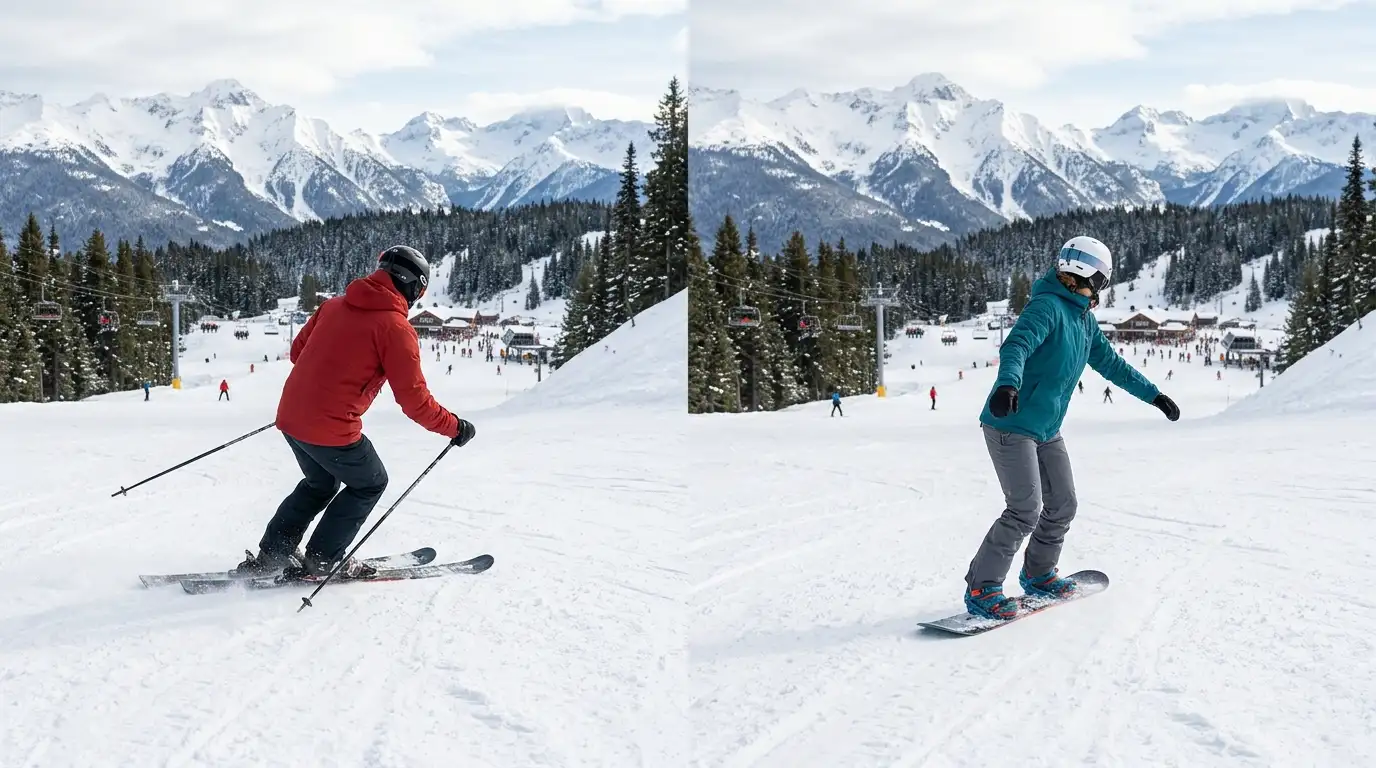
The biggest difference is how you stand and control your movement. Skiing uses two skis, while snowboarding uses a single board. This changes how you turn, stop, balance, and move around the mountain.
When skiing, your feet point mostly forward. You can move your legs apart or closer together, and you use your skis to control speed and direction. Ski poles may help with balance and movement, although beginners do not always need them on easy slopes.
When snowboarding, both feet are attached to one board. Your body faces sideways across the slope, and you turn by shifting your weight and controlling the board’s edges. Snowboarders usually do not use poles.
Both sports take practice. A beginner may spend time learning how to stop, turn, and get back up after falling. The movements become more natural as balance and confidence improve.
| Feature | Skiing | Snowboarding |
| Equipment | Two skis | One snowboard |
| Body position | Mostly faces forward | Faces sideways |
| Feet | Move separately | Attached to the same board |
| Poles | Sometimes used | Usually not used |
| Turning | Control each ski and shift weight | Shift weight and use board edges |
| Beginner challenge | Controlling two skis | Balancing and turning sideways |
| Common beginner falls | Can affect legs and knees | Often involve hands, wrists, and shoulders |
| Getting around on flat ground | Can use a skating motion or poles | Often requires unstrapping one foot |
Neither sport is automatically the best choice. The right option depends on what feels natural to you and what you want to learn.
Which Is Easier for Beginners?
For many first-time learners, skiing feels easier during the first few hours. Your feet remain separate, you face forward, and you can learn a basic way to slow down before moving to harder slopes.
However, skiing has its own challenges. Controlling two skis at the same time takes practice. Beginners may struggle to keep their skis pointed in the right direction, make smooth turns, or avoid crossing their ski tips.
Snowboarding often has a steeper early learning curve. Because both feet are attached to one board, beginners must learn to balance sideways and control the board’s edges. Falling is common while learning these skills.
After the basics become familiar, some snowboarders find that linking turns feels natural. Others progress faster on skis. There is no single learning timeline that works for everyone.
| Learning stage | Skiing | Snowboarding |
| First lesson | Often easier to learn basic forward movement | May take longer to feel balanced |
| Learning to stop | A beginner wedge or other taught method helps control speed | Requires learning edge control |
| First turns | Learn to guide two skis | Learn to shift weight and change edges |
| Getting up after a fall | Often possible without removing equipment | May require more effort, especially on a slope |
| Building confidence | Can improve quickly with practice | Often improves after mastering the early basics |
These are general patterns, not promises. A person with experience in skateboarding, surfing, or wakeboarding may find snowboarding movements familiar. Someone who enjoys skating on ice or activities that involve separate leg movements may prefer skiing.
The best beginner choice is the sport you feel excited to practice. Book a lesson, use a gentle learning area, and give yourself time to improve.
Is Skiing or Snowboarding Safer?
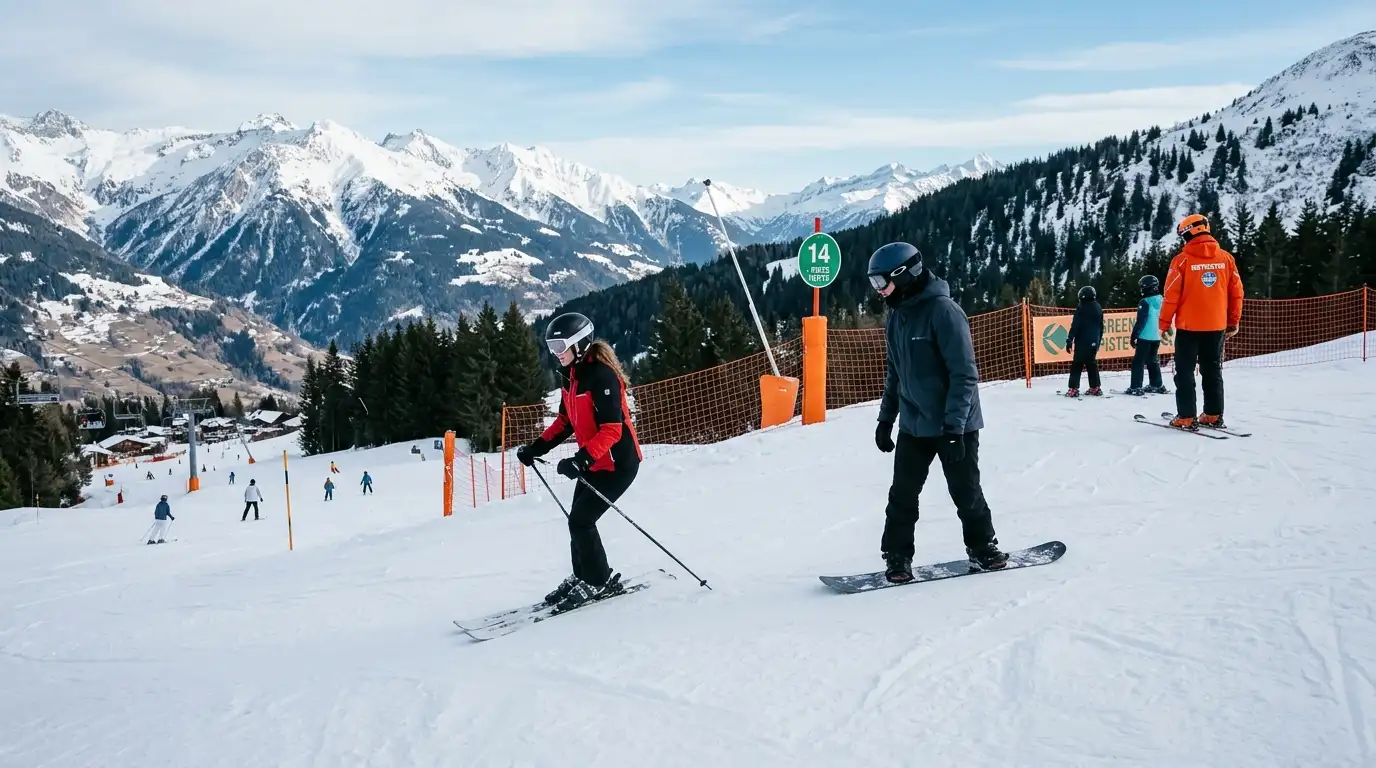
Both skiing and snowboarding involve risks. Falls, collisions, changing snow conditions, and moving too fast can cause injuries in either sport. Good instruction, suitable equipment, and careful choices help reduce these risks.
National Safety Council
+1
The types of injuries can differ. Skiers may be more likely to injure their knees or lower legs, while snowboarders may be more likely to injure their wrists, arms, or shoulders, especially during falls. Research also shows that beginners face a higher injury risk than more experienced participants.
AOSSM
+1
This does not mean one sport is always safer for every person. Injury risk depends on skill, speed, terrain, equipment, fatigue, and other factors.
Follow these safety rules when you begin:
- Wear a properly fitted snow-sports helmet.
- Take lessons from a qualified instructor.
- Stay on marked trails suited to your ability.
- Keep a safe distance from other people.
- Look uphill before starting or crossing a trail.
- Stop at the side of a run where others can see you.
- Rest and drink water when you feel tired.
- Follow signs, closures, and lift instructions.
Snowboard beginners may also benefit from properly fitted wrist guards, particularly while learning to fall. Ask your instructor about suitable protective gear for your chosen sport.
Never assume that a helmet makes every fall safe. The best protection comes from combining suitable equipment with good judgment and controlled movement.
National Safety Council
+2
Equipment Needed for Skiing and Snowboarding
You do not need to buy every piece of equipment before your first trip. Many ski resorts rent basic gear, which is useful when you are still deciding which sport you prefer.
Skiers usually need skis, ski boots, bindings, and sometimes poles. The bindings connect the boots to the skis and should be set by a trained technician for the skier’s needs.
Snowboarders need a snowboard, compatible boots, and bindings that attach the boots to the board. The board’s size and shape should suit the rider and the type of riding they plan to do.
Both sports require suitable clothing. Wear layers to stay warm, a waterproof outer layer, gloves or mittens, and goggles or suitable eye protection. Sunscreen is also important because snow reflects sunlight.
| Equipment | Skiing | Snowboarding |
| Main equipment | Two skis | One snowboard |
| Boots | Ski boots | Snowboard boots |
| Bindings | Connect boots to each ski | Connect both feet to one board |
| Poles | Optional for some beginner lessons; useful in many forms of skiing | Usually not needed |
| Helmet | Strongly recommended | Strongly recommended |
| Gloves | Warm, weather-resistant gloves | Warm, weather-resistant gloves |
| Goggles | Help protect eyes from wind, snow, and glare | Help protect eyes from wind, snow, and glare |
| Waterproof clothing | Needed | Needed |
| Wrist guards | Not usually a standard requirement | May be useful for beginners |
A good equipment fit matters more than choosing the most expensive brand. Boots that are too loose or too tight can make learning harder and less comfortable. Ask the rental shop to check your equipment before you head to the slope.
Is Skiing or Snowboarding More Expensive?
Neither sport is always cheaper. The total cost depends on where you go, how long you stay, what equipment you rent, and whether you take private or group lessons.
Skiing requires two skis and often poles, while snowboarding requires one board and usually no poles. However, that does not automatically make snowboarding cheaper. Equipment prices, rental packages, and lesson fees vary by resort.
For beginners, renting equipment is often a sensible way to control costs. You can try the sport without paying for gear that you may not use again.
Your budget should include more than equipment. Lift tickets, lessons, transport, lodging, meals, warm clothing, and protective gear can all add to the total cost of a snow trip.
| Expense | Skiing | Snowboarding |
| Equipment rental | Skis, boots, and sometimes poles | Board, boots, and bindings |
| Lessons | Beginner ski lesson | Beginner snowboard lesson |
| Lift ticket | Usually required at lift-served resorts | Usually required at lift-served resorts |
| Clothing | Warm, waterproof layers | Warm, waterproof layers |
| Protective gear | Helmet and suitable protection | Helmet and suitable protection |
| Long-term gear costs | Depend on equipment quality and use | Depend on board, boots, bindings, and use |
To save money, compare beginner packages before booking. Some resorts offer lessons, equipment rental, and lift access together. Read the details carefully because packages do not always include every item you need.
Whistler Blackcomb
+1
Which Sport Gives You a Better Workout?
Both skiing and snowboarding use muscles throughout the body. They can help improve balance, coordination, strength, and fitness, but the workout depends on how you ride and how long you stay active.
Skiing uses the legs and hips to control two separate skis. Your core muscles help keep your body steady, and your arms may work when you use poles.
Snowboarding also uses the legs and core. Riders bend their knees, shift their weight, and use their hips and ankles to control the board. Beginners may use their arms more often to get up after falls.
Both sports can be tiring, especially at high altitude or in cold weather. It is normal to feel tired after a long day, but exhaustion can make it harder to control your movements.
You can prepare before your trip by building general fitness. Walking, cycling, bodyweight squats, and balance exercises can help improve stamina and leg strength. Start at a level that feels comfortable, and increase activity gradually.
Neither sport is a magic way to lose weight. Your energy use depends on your body, effort, weather, terrain, and time spent moving. Choose the sport you enjoy, take breaks, drink water, and stop when fatigue affects your control.
Which Sport Is Better for Families and Children?
Skiing and snowboarding can both be enjoyable family activities. The best choice depends on the child’s age, interest, coordination, comfort with snow, and the lessons available at the resort.
Some children find skiing easier at first because they can move each leg separately. Others enjoy snowboarding and like learning to balance on one board. Neither sport should be forced on a child who feels uncomfortable or afraid.
Look for a resort that offers lessons for beginners and groups children by age and skill. Young learners need clear instructions, suitable equipment, warm clothing, and regular breaks.
Parents should also check the resort’s age rules for lessons, lift access, and protective equipment. Requirements differ by location.
Family members do not all need to choose the same sport. One person can ski while another snowboards, as long as everyone follows the resort’s rules and meets at agreed places.
For a first family trip, focus on having fun rather than covering long distances or reaching difficult slopes. A short lesson, a warm break, and a few easy runs can make the day more enjoyable than pushing everyone to keep going.
Can You Learn Skiing or Snowboarding as an Adult?
Yes. Adults can learn either sport, even if they have never tried a snow sport before. You do not need to be a professional athlete or have perfect balance to get started.
The most important things are patience, proper instruction, and a willingness to practice. You may feel nervous on your first day, especially when you see other people moving quickly down the mountain. Remember that everyone starts somewhere.
Choose a beginner lesson rather than trying to copy experienced skiers or snowboarders. An instructor can show you how to use the equipment, stop safely, make basic turns, and get on and off lifts.
Wear comfortable clothing that allows you to move. Make sure your boots fit well, and tell your instructor if you feel pain, fear, or unusual discomfort.
Do not judge your progress by how quickly another person learns. Some adults master basic movements in a short time, while others need several lessons. Both are normal.
If you have a health concern or have not been active for a long time, consider speaking with a health professional before taking part in strenuous winter sports.
Common Mistakes Beginners Should Avoid
Learning a new snow sport takes time. Avoiding a few common mistakes can help you stay safer and enjoy the experience more.
Trying a difficult slope too soon. A steep slope can make it harder to stop or turn. Start on terrain marked for beginners and move up only when your instructor says you are ready.
Leaning back out of fear. Beginners may lean backward when they feel they are moving too fast. This can make control more difficult. Follow your instructor’s guidance on posture and balance.
Ignoring equipment fit. Loose boots, poorly adjusted bindings, or the wrong equipment size can affect comfort and control. Ask a trained rental technician to check your gear.
Skipping lessons. Watching videos can help you understand basic ideas, but it does not replace hands-on instruction. A qualified instructor can correct mistakes before they become habits.
Forgetting to rest. Tired muscles and poor attention can increase the chance of falls and collisions. Take breaks, eat when needed, and drink water.
Following faster friends. Your friends may have more experience. Stay on trails that match your own skill level rather than trying to keep up.
Ignoring mountain rules. Signs and closures exist for a reason. Follow them, give other slope users room, and never enter closed areas.
The goal is not to look experienced on your first day. It is to learn the basics, stay in control, and build confidence step by step.
How to Choose Between Skiing and Snowboarding
If you are still unsure, think about your interests and the kind of learning experience you prefer.
Skiing may suit you if you like facing forward, controlling each leg separately, and learning basic movement in small steps. It may also be a practical choice if your family or friends already ski and can help you find beginner lessons.
Snowboarding may suit you if you like the idea of moving sideways and controlling one board. If you have tried skateboarding or surfing, some movements may feel familiar, although snowboarding still requires its own skills.
Your choice should also fit your travel plans. Check which sports the resort supports, whether it has beginner areas, and how easy it is to rent equipment and book lessons.
Use this simple guide:
| If you prefer… | Consider… |
| Facing forward while moving downhill | Skiing |
| Having one foot on each separate ski | Skiing |
| Keeping both feet attached to one board | Snowboarding |
| Using poles for some movements | Skiing |
| Trying a sport with movements similar to board sports | Snowboarding |
| Learning with a group of beginner friends | Either sport, depending on the lessons available |
| Spending less on your first attempt | Compare rental and lesson packages for both |
These suggestions can help narrow your choice, but they are not strict rules. The best way to decide is to try a beginner lesson in the sport that interests you most.
If you have the time and budget, you can even try both on separate days. That experience will help you understand which movements feel more natural and which sport you want to continue learning.
FAQs About Skiing or Snowboarding
1. Is skiing or snowboarding easier for beginners?
Skiing often feels easier during the first few hours because you face forward and move each leg separately. Snowboarding can take longer at first because both feet are attached to one board. Learning speed varies from person to person.
2. Is skiing or snowboarding more dangerous?
Both sports carry injury risks. Skiers may have more knee and lower-leg injuries, while snowboarders may have more wrist and arm injuries. Proper lessons, suitable equipment, safe speed, and beginner-friendly slopes help reduce risk.
3. Which sport is cheaper, skiing or snowboarding?
Neither is always cheaper. Costs depend on the resort, equipment rental, lessons, lift tickets, and clothing. Compare complete beginner packages before booking, and rent equipment instead of buying it for your first trip.
4. Can I learn skiing or snowboarding in one day?
You can learn some basic skills in one day, but becoming confident takes practice. Many beginners need several lessons to improve stopping, turning, and controlling their speed. Do not rush to harder slopes.
5. Do I need to be fit to ski or snowboard?
You do not need to be an expert athlete, but both sports require balance, leg strength, and stamina. Basic fitness can help you enjoy the day. Take breaks and stop when you feel too tired to control your movements.
6. Should I learn skiing or snowboarding first if I want to try both?
There is no required order. Choose the one that interests you most, learn the basics with an instructor, and try the other sport later if you wish. Skills from one sport do not automatically transfer to the other.
Conclusion: Skiing or Snowboarding Which Should You Choose?
Choosing between skiing or snowboarding comes down to your comfort, interests, and learning goals. Skiing uses two separate skis and may feel easier during the first few hours.
Snowboarding uses one board and may take more practice at the beginning, but many people enjoy its unique style and movement. Both sports offer a fun way to enjoy winter, build fitness, and explore snowy mountains.
Safety should always come first. Take lessons, wear a properly fitted helmet, use suitable equipment, and stay on slopes that match your ability. You do not need to master every skill on your first day. Give yourself time to learn, rest when you are tired, and enjoy each small improvement.My practical advice: choose the sport you feel most excited to try, compare beginner lesson packages, and start slowly. With patience and practice, either skiing or snowboarding can become a rewarding winter hobby.

Fazal Abbas
Fazal Abbas is a passionate English grammar writer with over 2 years of experience creating clear, helpful, and easy-to-understand grammar content. He specializes in confusing words, common grammar mistakes, word usage, sentence structure, and practical English tips.
With a simple teaching style, Fazal explains difficult grammar topics in easy English that students, writers, and everyday learners can understand. His goal is to make English grammar less confusing and more useful in real-life communication.
Through GrammarBook, Fazal shares practical examples, clear explanations, and useful tips to help readers improve their English with confidence. He believes that learning grammar should be simple, friendly, and enjoyable.