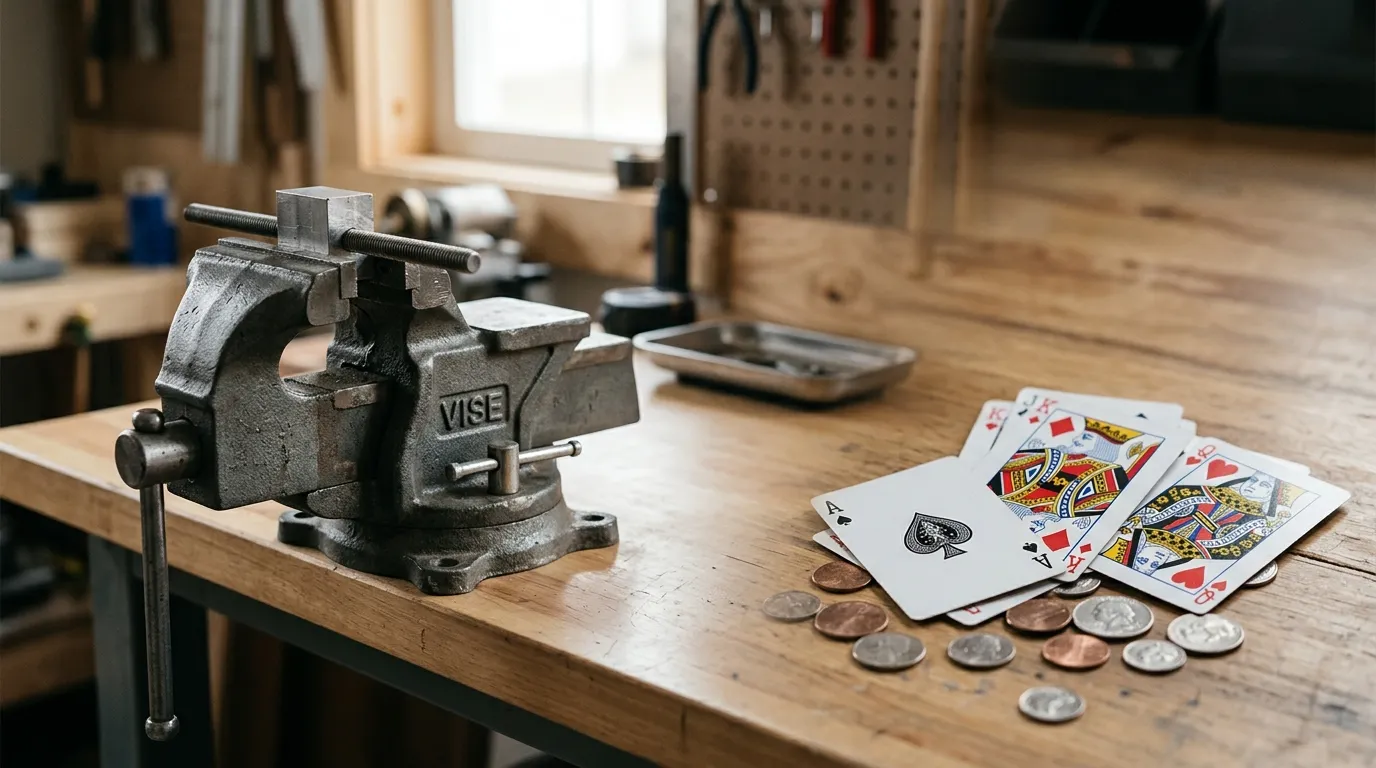
Have you ever wondered If to write vise or vice? Both words are correct, but they have very different meanings. A vise is a tool that holds an object firmly while you work on it. A vice is a bad habit or a weakness, such as lying or greed. The word vice also appears in titles such as vice president.
Choosing between vise or vice can be confusing because the words sound the same in American English. However, their meanings and uses are different.
In this guide, you will learn what each word means, how to use it correctly, and how to avoid common spelling mistakes. You will also see simple examples, a comparison table, and answers to common questions. By the end, you will know which word to use in your writing.
Quick Answer: Vise or Vice?
Use vise when talking about a tool that grips and holds an object in place. Use vice when talking about a bad habit, a personal weakness, or a role such as vice president.
Here is a quick comparison:
| Word | Meaning | Example |
| Vise | A tool that holds an object firmly | The mechanic secured the metal pipe in a vise. |
| Vice | A bad habit or moral weakness | Greed can become a harmful vice. |
| Vice | A title meaning deputy or second-in-command in certain roles | The vice president gave a speech. |
The easiest way to remember the difference is to connect vise with tools and vice with habits, behavior, and titles.
Although the words sound alike in American English, you cannot use them interchangeably. The correct spelling depends on the meaning of your sentence.
What Does Vise Mean?
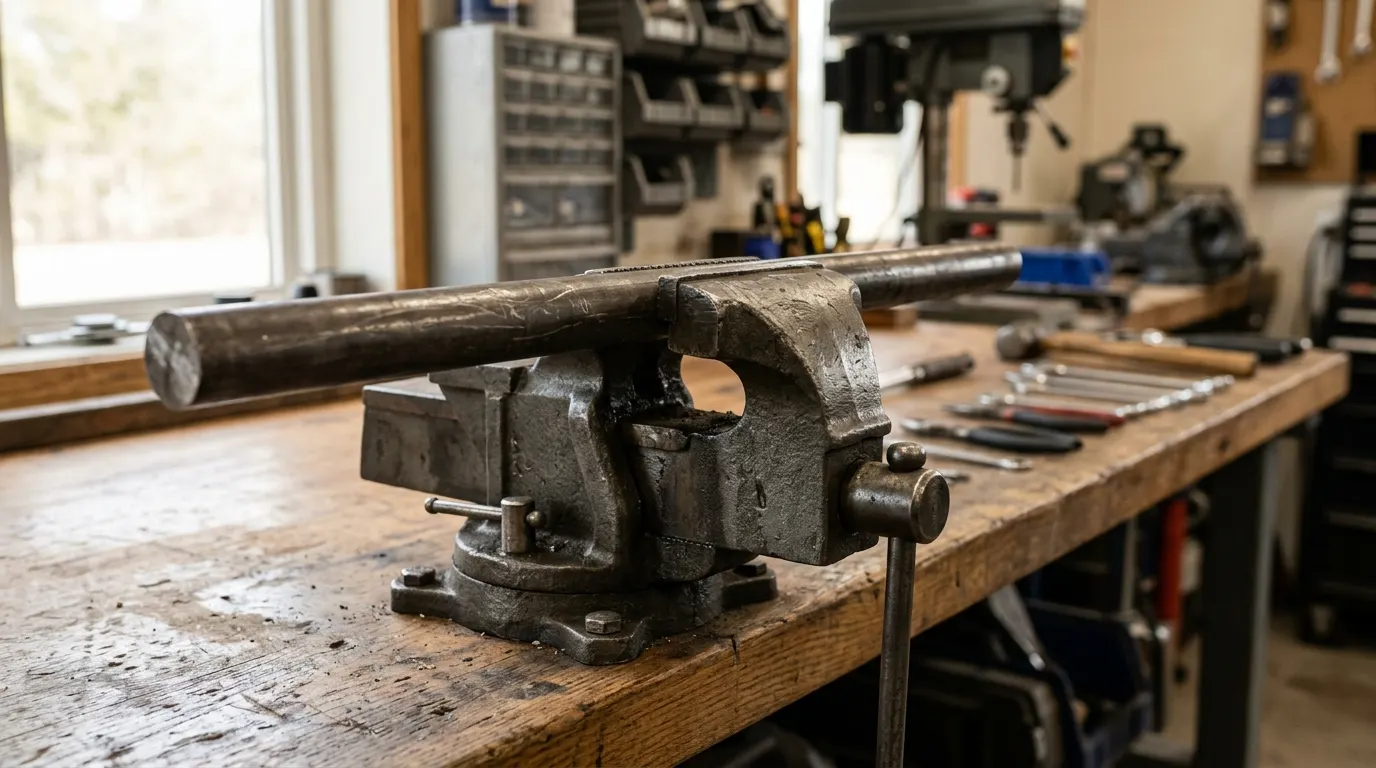
A vise is a mechanical tool used to hold an object firmly in place. It usually has two jaws that move toward each other to grip an item. Once the object is held securely, a person can work on it without needing to hold it by hand.
A vise is common in workshops, garages, factories, and places where people repair or make things. It helps keep objects steady during tasks such as cutting, drilling, filing, sanding, or shaping.
For example, a carpenter may use a vise to hold a piece of wood while cutting it. A mechanic may use one to secure a metal part while repairing it.
Here are some simple examples:
- The worker placed the metal rod in a vise.
- My father used a vise to hold the wooden board.
- The mechanic tightened the vise before starting the repair.
- A bench vise is useful for many workshop tasks.
- The vise kept the small part steady while I worked.
The word vise is mainly used as a noun. It names the tool itself.
One important detail is that different vises are designed for different tasks. A bench vise is often attached to a workbench. A woodworking vise is made to hold wood, while other vises may be designed for metalworking or specific repair jobs.
A vise should be used according to its design. Applying too much pressure can damage the object being held, especially if it is soft or delicate.
If your sentence describes a tool that grips an object, vise is the correct spelling in American English.
What Does Vice Mean?
The word vice has several meanings. Its most common meanings include a bad habit, a moral weakness, or a position that ranks below another position.
One common use refers to behavior that a person considers harmful, dishonest, or morally wrong. For example, lying, greed, and dishonesty may be described as vices.
Consider this sentence: “His biggest vice is spending money without thinking.” Here, vice refers to a habit that can cause problems.
The word also appears in job titles and official positions. A vice president is a person who holds a position below the president in an organization or government. The exact duties depend on the role and the organization.
Here are examples of the different meanings:
- Greed can become a serious vice.
- He tried to overcome his vice of smoking.
- The vice president attended the meeting.
- The company hired a new vice president of sales.
- In the story, the main character struggles with several personal vices.
In these sentences, vice does not describe a tool. It refers to behavior or a position.
The meaning of vice depends on the context. When it describes a personal weakness, it often has a negative meaning. When it appears in a title such as vice president, it is simply part of the official job title.
Remember that a person can have a vice, but a person usually uses a vise as a tool. This distinction will help you choose the correct word in most everyday situations.
Vise or Vice: What Is the Main Difference?
The main difference between vise and vice is their meaning. A vise is a physical tool, while a vice usually refers to a harmful habit, a moral weakness, or a position below another in rank.
Both words are pronounced the same in most American English accents. This makes them homophones: words that sound alike but have different meanings and spellings.
Look at these examples:
- “The carpenter used a vise to hold the wood.” This sentence describes a tool.
- “The carpenter’s biggest vice was drinking too much coffee.” This sentence describes a habit.
- “The vice president visited the workshop.” This sentence uses vice as part of a title.
The words may appear in similar sentences, but their meanings remain different.
| Feature | Vise | Vice |
| Main meaning | A tool used to grip an object | A bad habit, weakness, or lower-ranking role |
| Part of speech | Noun | Noun; also part of compound titles |
| Common setting | Workshop, garage, factory | Personal behavior, business, government |
| Example phrase | Bench vise | Vice president |
| Example sentence | Put the pipe in the vise. | Honesty helps people avoid vice. |
There is also a difference in British and American spelling. In American English, the tool is spelled vise. In British English, it is usually spelled vice. The word for a bad habit and the title element in vice president are spelled vice in both varieties.
This spelling difference is important because the same workshop tool may be called a vise in the United States and a vice in the United Kingdom.
How to Use Vise Correctly in a Sentence
Use vise when the sentence refers to a tool that grips an object. It is especially common in discussions about repairs, woodworking, metalworking, and other hands-on tasks.
For example, “I placed the metal piece in the vise before filing its edge.” The vise holds the metal steady so the worker can use both hands for the task.
Here are several ways to use the word naturally.
When describing workshop work: “The mechanic tightened the vise to secure the part.” This explains how the tool helps keep an object in place.
When talking about woodworking: “She used a woodworking vise to hold the board while sanding it.” The tool prevents the board from moving during the task.
When describing a tool purchase: “I need a stronger vise for my workbench.” This sentence refers to buying a tool for future projects.
When explaining safety: “Make sure the object is secure in the vise before you begin.” This sentence gives a practical instruction.
You can also use vise in sentences that explain how a tool works:
- The vise has two jaws that grip the object.
- A bench vise is attached to a work surface.
- The worker released the vise after finishing the repair.
- The small vise held the part steady.
- We cleaned the vise after using it.
In each example, the word names a physical object.
If you are writing an article about tools, repairs, or workshop equipment for an American audience, use vise. If you are writing for a British audience, vice is the usual spelling for the tool.
How to Use Vice Correctly in a Sentence
Use vice when discussing a bad habit, a moral weakness, or a role that ranks below another position. The surrounding words usually make the meaning clear.
When it refers to behavior, vice often appears with words such as personal, moral, harmful, or bad. For example, “He wanted to overcome his personal vices.” This means he wanted to change habits or behaviors he considered harmful.
Here are examples of vice used to describe habits or weaknesses:
- Lying became his most harmful vice.
- She worked hard to overcome her vice of procrastination.
- Greed is often shown as a vice in stories.
- He recognized that jealousy was becoming a vice.
- The book explores the struggle between virtue and vice.
The word can also be used in a more general way to discuss behavior that a person or society sees as wrong. What counts as a vice may depend on the cultural, social, or moral context.
The second major use appears in titles.
- The vice president led the meeting.
- She became the vice president of marketing.
- The vice principal spoke to the students.
- A vice chair may help lead an organization.
In these titles, vice indicates a role that is subordinate to or supports another position. The exact duties vary by organization.
Do not confuse vice president with vise president. The latter is a spelling error because a person holding that office is not a workshop tool.
When the word describes a personal weakness or appears in a job title, vice is the correct spelling.
Vise or Vice in American and British English
One reason this topic confuses English learners is that American and British English use different spellings for the workshop tool.
In American English, the tool is spelled vise. In British English, it is usually spelled vice. However, the spelling vice for a bad habit or a title such as vice president is standard in both varieties.
This means that the correct spelling depends on both the meaning and the type of English you are writing.
| Meaning | American English | British English |
| Tool that holds an object | Vise | Vice |
| Bad habit or moral weakness | Vice | Vice |
| Deputy or second-in-command title | Vice president | Vice president |
For example, an American mechanic might say, “Put the metal part in the vise.” A British mechanic would usually write, “Put the metal part in the vice.”
Both sentences refer to the same kind of tool.
However, an American and a British writer would both write, “The vice president attended the meeting.” In this case, vice refers to the person’s position, not a tool.
If your website targets readers in the United States, use vise for the tool and vice for habits and titles. If you target British readers, you may use vice for all three meanings, provided the context makes the meaning clear.
Consistency is important. Choose the spelling that matches your audience and use it throughout the article.
What Is a Bench Vise?
A bench vise is a tool that is attached to a workbench. It holds an object firmly while a person works on it. It is often used in woodworking, metalworking, repairs, and home improvement projects.
Most bench vises have two jaws. One jaw stays in place, while the other moves to grip or release the object. A handle allows the user to tighten or loosen the jaws.
For example, a person repairing a metal bracket may place it between the jaws and tighten the handle. Once the bracket is secure, the person can work on it without holding it by hand.
A bench vise can be useful for several tasks:
- Holding a piece of wood while sanding it.
- Securing a metal part while filing it.
- Keeping a small object steady during repairs.
- Supporting certain workshop tasks that require both hands.
- Helping prevent an object from moving during careful work.
However, a bench vise is not suitable for every object. Soft materials may become scratched or crushed if the jaws apply too much pressure. Protective jaw covers can help reduce damage when needed.
The word vise in bench vise is the standard American English spelling. In British English, the same tool is usually called a bench vice.
This example is a useful reminder that spelling can change across varieties of English even when the tool and its purpose remain the same.
What Does Vice Mean in Vice President?
In a title such as vice president, the word vice indicates a position that is below or supports another position. It does not refer to a bad habit.
A vice president may help lead a company, organization, university, or government. The responsibilities depend on the institution and the particular office.
For example, a company might have a vice president of marketing who oversees marketing plans and teams. A university might have a vice president responsible for academic affairs. In government, a vice president may have duties set by the country’s laws.
Here are some examples:
- The vice president of sales presented the annual report.
- Our vice president approved the new plan.
- The vice principal met with the students.
- She was elected vice chair of the committee.
Notice that vice appears before the name of the higher-ranking role. It helps identify a supporting or subordinate position.
A common spelling mistake is writing vise president. That spelling is incorrect because vise refers to the tool in American English.
A simple memory tip is to connect vice president with a person and vise with a piece of equipment. This connection makes the spelling easier to remember.
Common Mistakes When Using Vise or Vice
The most common mistake is choosing the spelling based on sound instead of meaning. Since vise and vice sound alike in American English, it is easy to mix them up when writing quickly.
For example, “The worker placed the pipe in the vice” may be correct in British English, but an American writer would normally use vise for the tool.
Likewise, “The vise president attended the meeting” is incorrect in both American and British English. The correct phrase is vice president.
Here are common mistakes and their corrections.
| Incorrect or audience-dependent usage | Correct usage | Reason |
| The vise president gave a speech. | The vice president gave a speech. | A title uses vice. |
| Greed is a vise. | Greed is a vice. | A harmful habit is a vice. |
| The mechanic used a vice. (American English) | The mechanic used a vise. | American English uses vise for the tool. |
| The mechanic used a vise. (British English) | The mechanic used a vice. | British English usually uses vice for the tool. |
| She secured the board in the vice. (American English) | She secured the board in the vise. | The American spelling for the tool is vise. |
The British examples are not spelling mistakes in British English. This is why it is important to know your audience before correcting a sentence.
Another mistake is assuming that vice always has a negative meaning. It can describe a harmful habit, but in vice president or vice principal, it is a neutral part of a title.
To avoid errors, ask yourself two questions: What does the word mean in this sentence? And which variety of English am I using?
These questions will usually lead you to the correct spelling.
Vise or Vice: Real-Life Examples
Real-life examples can make the difference easier to understand. The following sentences show how each word works in common situations.
Examples using vise in American English:
- The carpenter placed the wooden block in a vise.
- The mechanic tightened the vise before repairing the part.
- I bought a small vise for my home workshop.
- The metal rod slipped because the vise was not tight enough.
- He released the object from the vise after finishing his work.
Each sentence describes a tool that grips an object.
Examples using vice to describe habits:
- He admitted that lying was a harmful vice.
- Her biggest vice was spending too much money.
- The story shows how greed can become a vice.
- She wanted to break the habit that had become her vice.
- The character struggles with both virtue and vice.
Each sentence describes behavior or a personal weakness.
Examples using vice in titles:
- The vice president announced the decision.
- Our vice principal welcomed the new students.
- The vice chair organized the meeting.
- The vice president of finance reviewed the budget.
- He was appointed vice president of the organization.
These sentences refer to roles and positions.
When you compare the examples, the difference becomes clear. A vise holds an object. A vice can describe a harmful habit or form part of a title.
If the sentence is about a tool and your audience uses American English, choose vise. In British English, the tool is usually called a vice. For habits and titles, use vice in both varieties.
Tips for Remembering Vise or Vice
The easiest way to remember vise or vice is to connect each spelling with a familiar example. You do not need to memorize complicated grammar rules.
Think of a vise as a tool. Imagine a mechanic holding a metal pipe in a workshop. If your sentence describes a tool that grips an object and you are writing in American English, use vise.
Think of a vice as a habit or title. For example, greed can be a vice, and a vice president is a person with an official role. These uses take the spelling vice in both American and British English.
You can also remember the difference by learning these short phrases:
- Bench vise: A workshop tool in American English.
- Personal vice: A harmful habit or weakness.
- Vice president: An official position.
- Bench vice: The British English term for the workshop tool.
Try using the words in your own sentences. For example, write one sentence about a mechanic using a vise and another about a person overcoming a vice.
This simple practice helps you connect spelling with meaning. When you write, read the entire sentence and check If the word refers to equipment, behavior, or a job title. If you are writing for a specific country, remember its spelling conventions.
FAQs About Vise or Vice
1. Is it vise or vice in American English?
Both words are correct in American English, but they have different meanings. Vise is a tool that holds an object firmly. Vice refers to a bad habit, moral weakness, or a title such as vice president.
2. Is a bench vise or bench vice correct?
Both are correct, depending on the variety of English. American English uses bench vise, while British English usually uses bench vice. Both terms describe a tool attached to a workbench.
3. Is vice always a bad thing?
No. Vice can mean a bad habit or moral weakness, but it also appears in titles such as vice president and vice principal. In these titles, it does not have a negative meaning.
4. Why do vise and vice sound the same?
They are homophones in American English because they have the same pronunciation but different meanings and spellings. Context helps readers understand which word is intended.
5. Is it vice president or vise president?
The correct spelling is vice president. The word vice identifies a position that supports or ranks below another role. Vise president is incorrect.
6. How can I remember the difference between vise and vice?
Remember that a vise is a tool in American English, while a vice is a bad habit or part of a title. For British English, remember that the tool is usually spelled vice too.
Conclusion: Vise or Vice?
Choosing between vise or vice becomes easy when you focus on the meaning of the sentence. In American English, vise is the correct spelling for a tool that holds an object firmly. Vice refers to a harmful habit or moral weakness, and it also appears in titles such as vice president and vice principal.
Remember that British English usually spells the workshop tool vice, while American English spells it vise. The other meanings of vice keep the same spelling in both varieties.
When you are unsure, check the context before choosing a word. Ask yourself If you are talking about a tool, a habit, or a person’s role. This simple habit can prevent spelling mistakes and make your writing clearer. With these examples and tips, you can use vise and vice correctly in everyday English.

Fazal Abbas
Fazal Abbas is a passionate English grammar writer with over 2 years of experience creating clear, helpful, and easy-to-understand grammar content. He specializes in confusing words, common grammar mistakes, word usage, sentence structure, and practical English tips.
With a simple teaching style, Fazal explains difficult grammar topics in easy English that students, writers, and everyday learners can understand. His goal is to make English grammar less confusing and more useful in real-life communication.
Through GrammarBook, Fazal shares practical examples, clear explanations, and useful tips to help readers improve their English with confidence. He believes that learning grammar should be simple, friendly, and enjoyable.