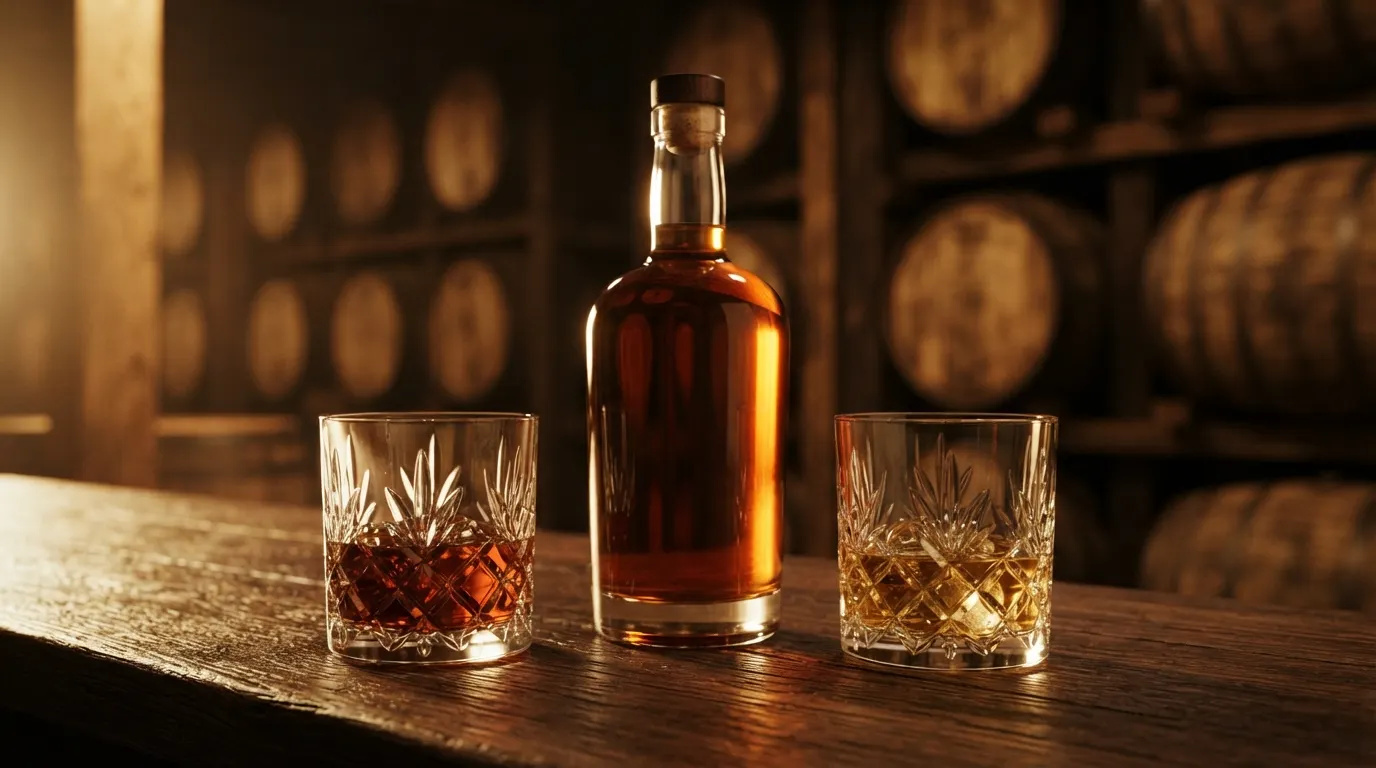
If you have ever stood in a liquor store and wondered about bourbon vs whiskey, you are not alone. Here is the quick answer: all bourbon is whiskey, but not all whiskey is bourbon.
Bourbon is a specific type of whiskey that must be made in the United States, use at least 51% corn, and age in new charred oak barrels. Whiskey, on the other hand, is a much bigger family that includes Scotch, Irish whiskey, rye, and Japanese whiskey too.
This mix-up happens all the time, even among people who drink whiskey often. The names sound similar, and many bottles do not explain the rules clearly on the label.
In this article, you will learn exactly what makes bourbon its own category, how it compares to other whiskeys, where the rules come from, and how to pick the right bottle for your taste. By the end, you will be able to talk about bourbon and whiskey with real confidence.
Quick Answer: Bourbon vs Whiskey
Whiskey is the broad category. Bourbon is one type inside that category. Think of it like the relationship between a square and a rectangle.
Every bourbon is a whiskey, just like every square is a rectangle. But not every whiskey is a bourbon, just like not every rectangle is a square.
For a whiskey to legally be called bourbon in the United States, it must follow strict rules set by the government. These rules cover what it is made from, how it is aged, and even where it comes from. Miss just one rule, and it cannot be called bourbon, no matter how good it tastes.
What Is Whiskey?
Whiskey is a distilled spirit made from fermented grain mash. The grains used can include corn, rye, wheat, or barley. Makers ferment the grains, distill the liquid, and then age it in wooden barrels. That aging step is what turns a clear, harsh liquid into the smooth, golden drink most people picture when they hear the word whiskey.
Whiskey is made all over the world. Scotland, Ireland, the United States, Canada, and Japan all produce their own styles. Each country has its own laws about what can be called whiskey there. This is why a bottle of Scotch tastes so different from a bottle of Kentucky bourbon, even though both are technically whiskey.
The spelling also changes depending on where it is made. American and Irish producers usually spell it “whiskey,” with an e. Scottish, Canadian, and Japanese producers usually spell it “whisky,” without the e. This small spelling detail is a fun fact, but it does not change the actual drink or its rules.
What Is Bourbon?
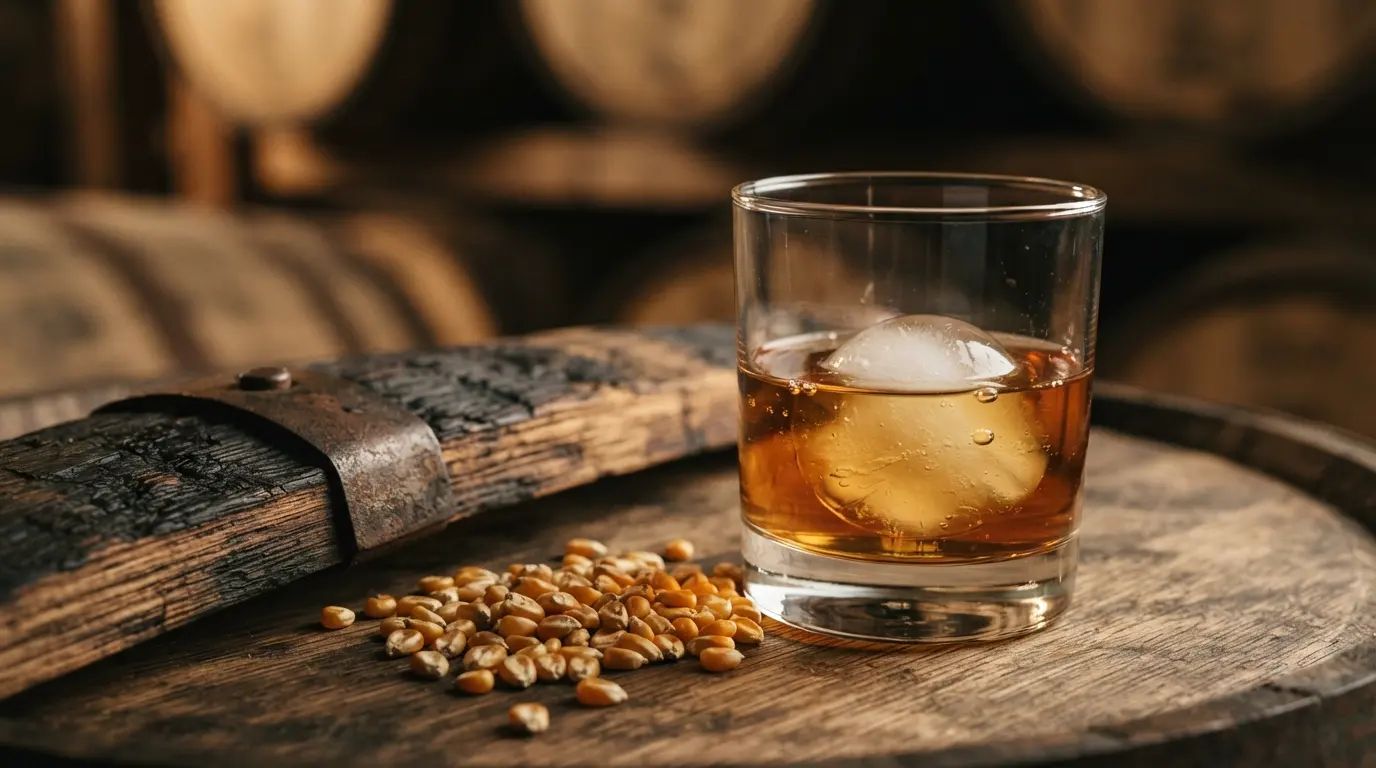
Bourbon is a type of American whiskey with its own strict set of rules. To be called bourbon, a spirit must meet every single one of these requirements:
- It must be made in the United States.
- The grain mixture, called the mash bill, must be at least 51% corn.
- It must be aged in new, charred oak barrels.
- It cannot be distilled at higher than 160 proof.
- It must enter the barrel at no more than 125 proof.
- It cannot contain any added coloring, flavoring, or other spirits.
Notice that there is no rule saying bourbon has to be made in Kentucky. That is a common myth. Bourbon can legally be made in any U.S. state, though Kentucky does produce the vast majority of it and is closely tied to its history and culture.
The corn in the mash bill gives bourbon its naturally sweet taste. The new charred oak barrels add deep flavors like vanilla, caramel, and toasted wood. Because the barrels can only be used once for bourbon, this rule also supports other industries, since used bourbon barrels are often sold to age Scotch, rum, or beer.
How Bourbon and Whiskey Compare
The table below breaks down the main differences in an easy-to-scan format.
| Feature | Bourbon | Whiskey (General) |
| Country of origin | Must be made in the USA | Made in many countries |
| Main grain | At least 51% corn | Varies (corn, rye, wheat, barley) |
| Barrel type | New, charred oak only | New or used barrels, oak or other wood |
| Flavor profile | Sweet, caramel, vanilla | Varies widely by type and region |
| Legal rules | Very strict, set by U.S. law | Rules vary by country |
| Spelling | Whiskey | Whiskey or whisky, depending on country |
This table shows why bourbon stands out. It has some of the strictest production rules of any spirit in the world, while general whiskey rules are much looser and depend heavily on local laws.
Origin and History
Whiskey has a very long history that stretches back hundreds of years to Ireland and Scotland, where monks and farmers first began distilling grain spirits. As people moved from Europe to America, they brought their distilling knowledge with them and adapted it to the crops available, especially corn, which grew well in places like Kentucky.
Bourbon’s exact origin story is debated, and historians do not agree on one single moment or person who “invented” it.
What is well documented is that by the early 1800s, corn-based whiskey aged in charred barrels was already being made and sold in Kentucky. The name “bourbon” is widely believed to come from Bourbon County, Kentucky, though some historians point to Bourbon Street in New Orleans as a possible influence, since much of the whiskey was shipped through that port.
In 1964, the U.S. Congress made an important decision. It declared bourbon a “distinctive product of the United States.” This gave bourbon federal legal protection, similar to how Champagne is protected as a product that must come from a specific region in France. This law is why bourbon cannot legally be made anywhere outside the United States.
Types of Whiskey You Should Know
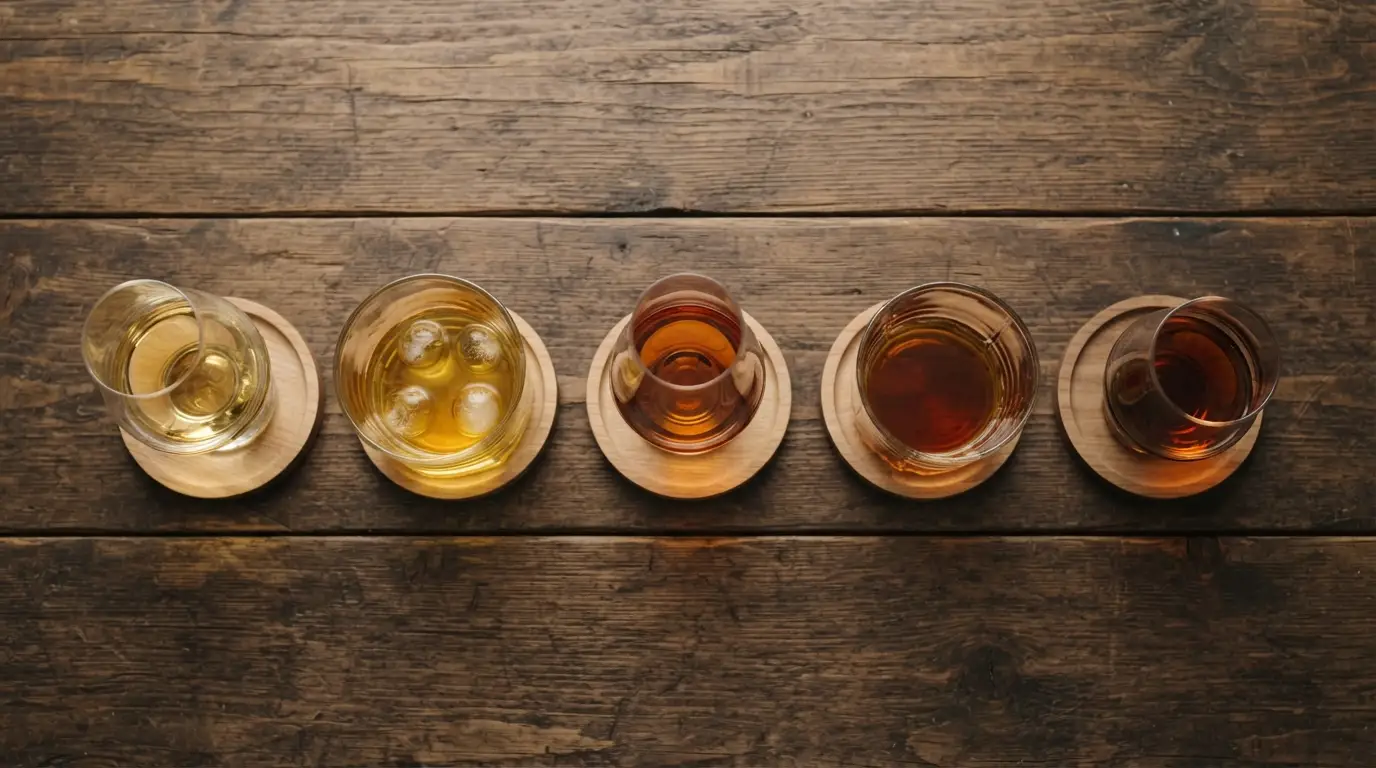
Since whiskey is such a broad category, it helps to know the major styles you will see on store shelves.
| Type of Whiskey | Where It’s Made | Key Feature |
| Bourbon | United States | At least 51% corn, new charred oak barrels |
| Rye Whiskey | United States, Canada | At least 51% rye, spicier flavor |
| Scotch | Scotland | Made from malted barley, aged 3+ years in Scotland |
| Irish Whiskey | Ireland | Usually triple-distilled, smoother taste |
| Tennessee Whiskey | Tennessee, USA | Similar to bourbon, plus a charcoal filtering step |
| Japanese Whisky | Japan | Inspired by Scotch, often more delicate |
Tennessee whiskey deserves a special mention because it causes almost as much confusion as bourbon does. Tennessee whiskey actually meets every requirement to be called bourbon. The extra step, called the Lincoln County Process, filters the spirit through charcoal before aging. Most Tennessee whiskey makers still choose to label their product as Tennessee whiskey instead of bourbon, mainly for tradition and branding reasons, even though it could legally carry the bourbon name.
Common Mistakes People Make
Many people mix up bourbon and whiskey in ways that are easy to fix once you know the facts.
One common mistake is thinking bourbon must be made in Kentucky. As explained earlier, bourbon can be made anywhere in the United States. Kentucky just happens to make the most of it, thanks to its water, climate, and long history with the spirit.
Another mistake is assuming all whiskey tastes the same. Because whiskey covers so many styles, flavors range from sweet and smooth to smoky and peaty. A Scotch and a bourbon can taste almost nothing alike, even though both are technically whiskey.
A third mistake is thinking bourbon is a brand name. Bourbon is a category, not a specific brand. Popular names like Jim Beam, Maker’s Mark, and Buffalo Trace are all brands that make bourbon, but bourbon itself is not owned by any single company.
Real-Life Examples
If you want to try bourbon, look for well-known names like Buffalo Trace, Maker’s Mark, Woodford Reserve, or Wild Turkey. These bottles clearly follow the bourbon rules and offer a good starting point for new drinkers.
If you want to explore other whiskey styles, try a Scotch like Glenlivet for a smoky, malty experience, or an Irish whiskey like Jameson for a smoother, lighter taste.
Comparing a bourbon side by side with a Scotch is one of the best ways to actually taste the difference between the two categories, rather than just reading about it.
Current Usage and Trends
Bourbon has seen major growth in popularity over the past two decades, both in the United States and internationally. Craft distilleries have opened across many states, not just Kentucky, giving drinkers more variety than ever before.
Bourbon-based cocktails, like the Old Fashioned and the Whiskey Sour, have also driven fresh interest among younger drinkers who enjoy mixing spirits rather than drinking them straight.
Whiskey as a whole continues to grow too, with Japanese whisky in particular gaining a strong global following for its careful, precise production style. This growth has made whiskey tasting events, distillery tours, and whiskey clubs more common in many cities.
Tips for Choosing Between Bourbon and Whiskey
Choosing the right bottle depends mostly on your taste preferences and how you plan to drink it.
- If you enjoy sweeter, richer flavors, bourbon is usually a great choice.
- If you like a spicier, bolder taste, look for a rye whiskey.
- If you prefer a smoky, earthy flavor, try a Scotch.
- If you want something smooth and easy to sip, Irish whiskey is a good starting point.
- If you are mixing cocktails, bourbon works well in classic drinks like the Old Fashioned or Manhattan.
- If you are new to whiskey in general, start with smaller bottles or samples before committing to a full-size purchase.
FAQs
Is bourbon stronger than whiskey?
Not necessarily. Strength depends on the proof of the specific bottle, not whether it is bourbon or another type of whiskey. Both categories can range from around 80 proof to well over 100 proof.
Can bourbon be made outside the United States?
No. By U.S. law, bourbon must be made in the United States. A spirit made the exact same way in another country cannot legally be labeled bourbon.
Is Jack Daniel’s a bourbon?
Jack Daniel’s meets the technical requirements for bourbon, but it is labeled as Tennessee whiskey because of the extra charcoal filtering step and long-standing branding choices.
Does bourbon have to be made in Kentucky?
No. This is one of the most common myths. Bourbon can be legally made in any U.S. state, though Kentucky produces the majority of it.
What is the main grain difference between bourbon and rye whiskey?
Bourbon must contain at least 51% corn, while rye whiskey must contain at least 51% rye. This difference is a big reason why rye tends to taste spicier and bourbon tends to taste sweeter.
Which is better for beginners, bourbon or whiskey in general?
Bourbon is often recommended for beginners because its sweeter, smoother flavor is easier to enjoy right away, compared to smokier styles like Scotch.
Conclusion
Understanding bourbon vs whiskey really comes down to one simple idea: bourbon is a specific, tightly regulated type of whiskey made in the United States, while whiskey is the much larger category that includes many different styles from around the world.
Once you know the rules that define bourbon, like the corn content, the new charred oak barrels, and the U.S.-only production requirement, the rest of the whiskey world becomes much easier to understand too.
The best way to really learn the difference is to taste it for yourself. Pick up a bottle of bourbon and a bottle of another whiskey style, pour a small amount of each, and compare them side by side. Your own taste buds will teach you more than any article ever could.

Hi, I’m Iqra, a passionate writer and grammar enthusiast dedicated to making English grammar simple, clear, and easy to understand. Through my work on grammar books and educational content, I help students, writers, and English learners improve their vocabulary, sentence structure, punctuation, and everyday communication skills. My goal is to turn confusing grammar rules into practical, easy-to-follow lessons that readers can confidently use in real life. I believe learning grammar doesn’t have to be difficult—it can be simple, useful, and even enjoyable. Through helpful guides, examples, and carefully explained grammar tips, Iqra aims to make learning English more accessible for everyone.