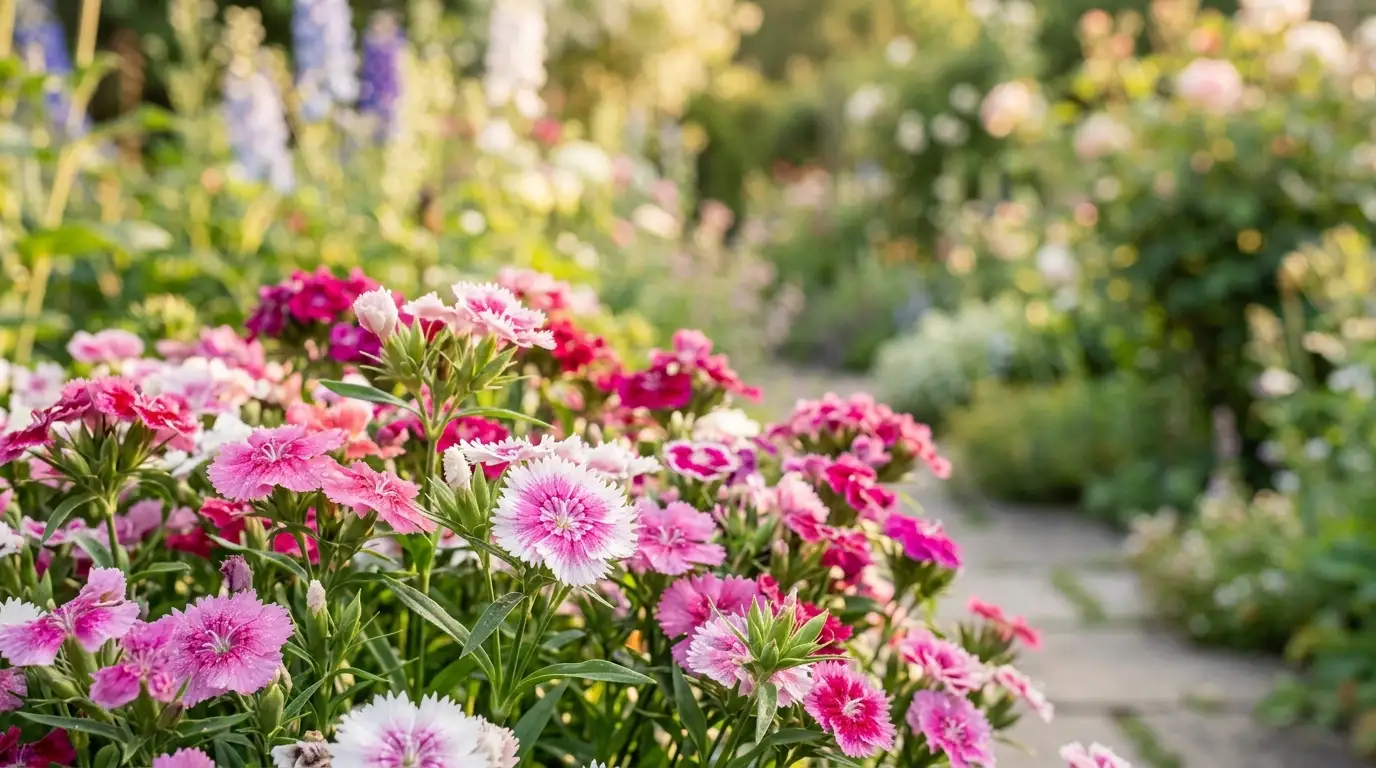
Dianthus is one of the easiest flowers to grow, and that is exactly why so many gardeners search for it. If you want a bright, low-growing border plant or a cottage-garden favorite that comes back year after year, dianthus fits the bill.
In short: some dianthus types are perennial (they return each year), while others are annual (they live for one season). This guide explains the difference, how to plant and care for both types, and how to pick the right one for your garden.
By the end of this article, you will know exactly which dianthus to choose, how to keep it healthy, and how to avoid the most common mistakes new gardeners make.
Quick Answer: Is Dianthus Perennial or Annual?
Dianthus is both. It depends on the species. Popular types like Dianthus barbatus (Sweet William) are often grown as biennials or short-lived perennials.
Dianthus chinensis (China Pink) is usually grown as an annual.
Meanwhile, Dianthus plumarius and Dianthus gratianopolitanus (Cheddar Pink) are true perennials that can live for several years. Always check the plant tag or seed packet, since this tells you exactly which category your dianthus falls into.
What Is Dianthus? A Simple Definition
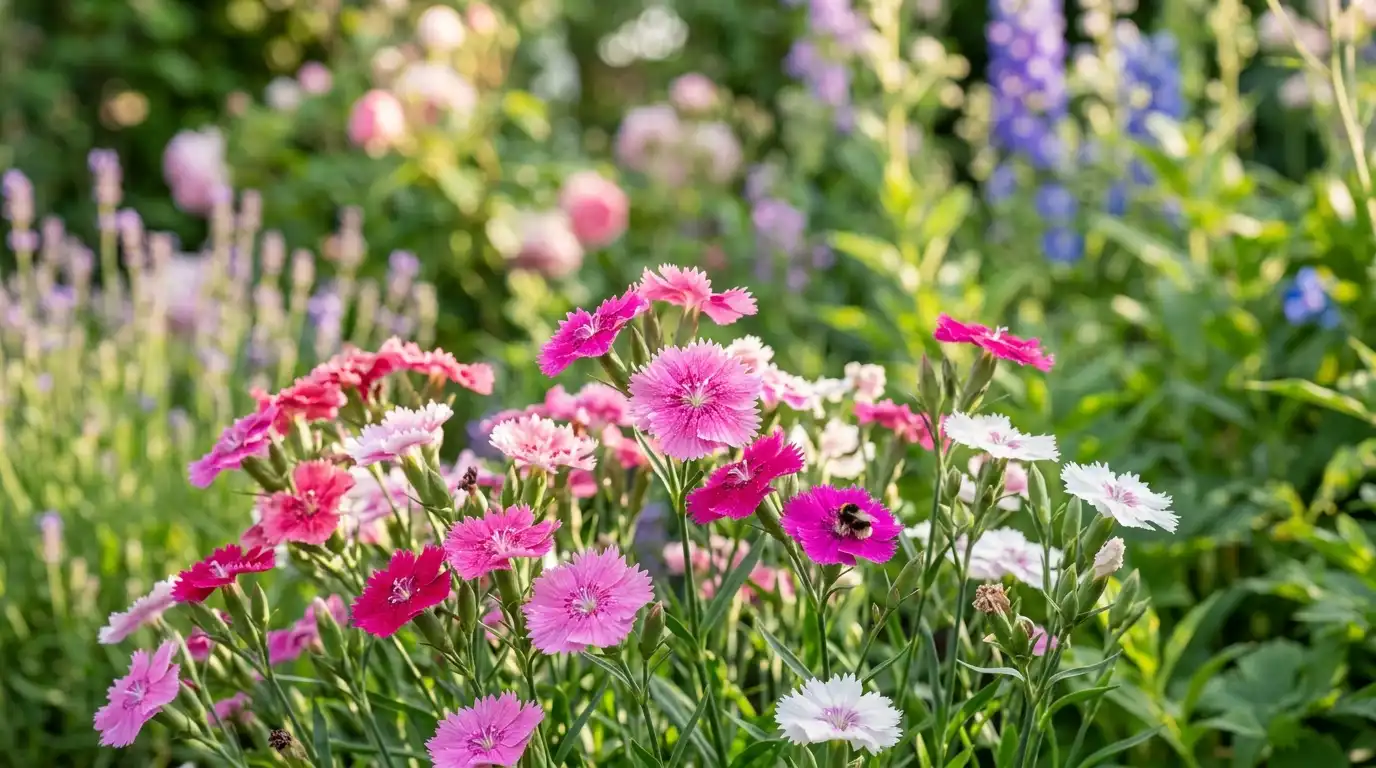
Dianthus is a large group of flowering plants, often called “pinks” because of their fringed petal edges, not just their color. The name comes from Greek words meaning “flower of the gods.” These plants are known for their spicy, clove-like scent, grass-like blue-green leaves, and cheerful blooms in shades of pink, red, white, and purple.
There are more than 300 species of dianthus, but home gardeners usually grow just a handful. Knowing which one you have helps you plan how long it will live and how to care for it properly.
Perennial vs Annual Dianthus: What’s the Difference?
Understanding plant life cycles helps you set the right expectations. A table makes this easy to compare.
| Life Cycle | Meaning | Common Dianthus Examples |
| Annual | Grows, blooms, and dies within one growing season | Dianthus chinensis (China Pink) |
| Biennial | Grows leaves in year one, blooms and dies in year two | Dianthus barbatus (Sweet William) |
| Perennial | Lives for multiple years, blooming each season | Dianthus plumarius, Dianthus gratianopolitanus |
Perennial dianthus varieties tend to form neat, spreading mats of foliage that stay green in mild winters. Annual types grow faster and bloom heavily in their first year, which makes them popular for quick color in flower beds and containers.
How to Choose the Right Dianthus for Your Garden
Picking the correct type depends on your goals. If you want a plant that returns every spring with little effort, choose a perennial variety like Cheddar Pink or Firewitch. If you want fast, showy blooms for a single seasonperhaps for a wedding, a seasonal display, or filling gaps in a new gardenan annual type like China Pink works well.
Climate also matters. Perennial dianthus generally thrives in USDA hardiness zones 3 through 9, though this varies by variety. Gardeners in colder regions should check the specific cold tolerance of the type they are buying, since some perennials struggle in harsh winters without protection.
Planting Dianthus: Step-by-Step Basics
Dianthus is forgiving, but a few basic steps make a big difference in how well it grows.
Start with well-drained soil. Dianthus hates sitting in soggy ground, and wet roots are the number one cause of failure. If your soil holds water, mix in compost or coarse sand to improve drainage.
Choose a sunny spot. Most dianthus varieties need at least six hours of direct sunlight each day. In very hot climates, a little afternoon shade can help protect the blooms from scorching.
Space plants properly. Give each plant 6 to 12 inches of room, depending on the variety, so air can move freely between them. Good airflow reduces the risk of fungal problems like powdery mildew.
Plant at the right depth. Set the crown of the plant level with the soil surface. Planting too deep can cause the stems to rot.
Water after planting. Give new dianthus a deep watering right after you plant, then let the soil dry slightly between waterings going forward.
Caring for Dianthus Through the Seasons
Once established, dianthus needs surprisingly little maintenance, but a bit of seasonal attention keeps it blooming longer.
In spring, apply a light layer of compost or a balanced, slow-release fertilizer to support new growth. Avoid heavy nitrogen fertilizers, which can cause weak, floppy stems and fewer blooms.
In summer, deadhead spent flowers regularly. Removing faded blooms encourages the plant to produce more flowers instead of putting energy into seed production. For many varieties, this simple habit can double the length of the blooming season.
In fall, perennial dianthus benefits from a light trim to remove any damaged foliage. This also helps the plant focus its energy on root development before winter.
In winter, most perennial types are quite cold-hardy, but a layer of mulch around the base helps protect the roots in harsher climates. Avoid piling mulch directly against the crown, since this can trap moisture and cause rot.
Common Mistakes to Avoid
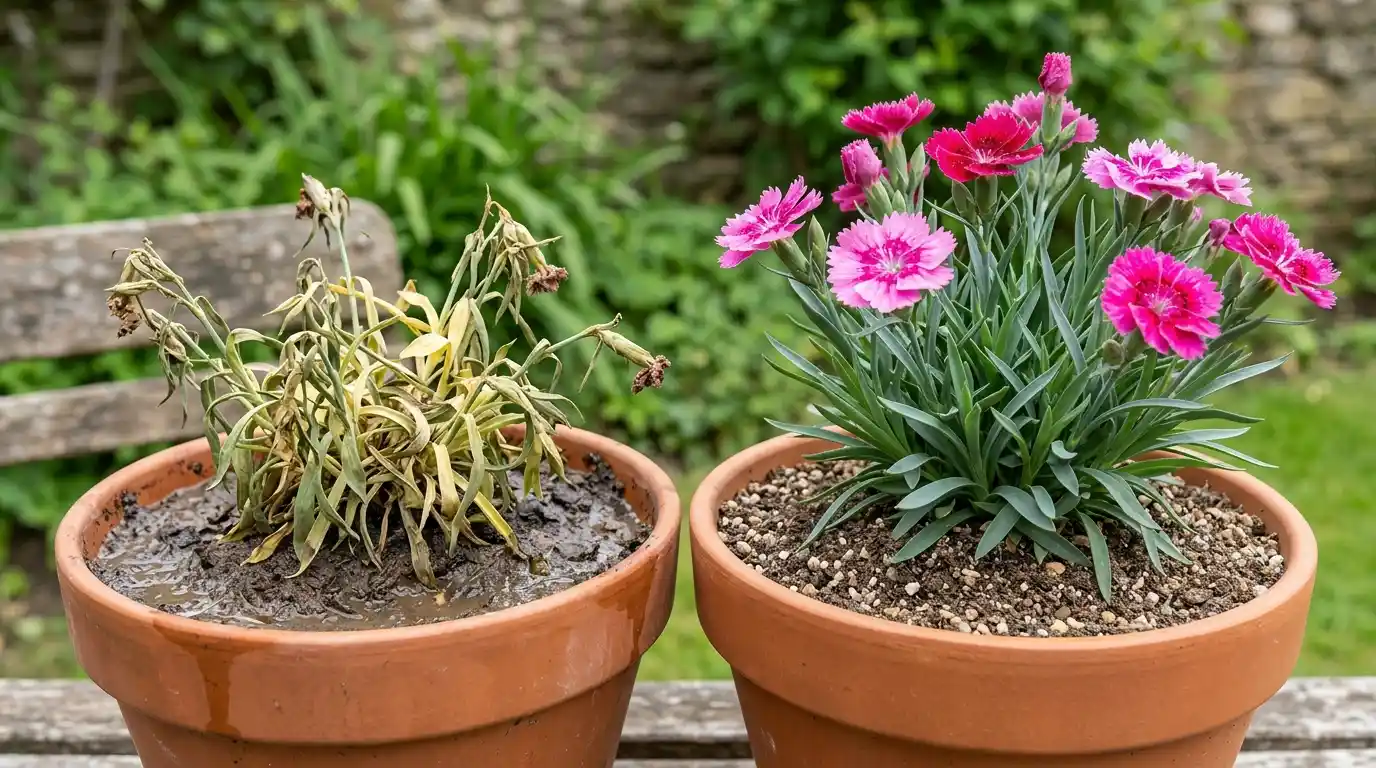
Many new gardeners run into the same handful of problems with dianthus. Overwatering tops the list, since these plants strongly prefer soil that dries out between waterings. Planting in heavy, clay-based soil without improving drainage is another frequent issue, often leading to root rot within the first season.
Ignoring deadheading is a missed opportunity, since it directly limits how many flowers you get to enjoy. Finally, many gardeners assume all dianthus are perennial, plant them expecting years of return blooms, and are disappointed when an annual variety does not come back. Reading the plant tag before buying solves this problem instantly.
Real-Life Examples of Popular Dianthus Varieties
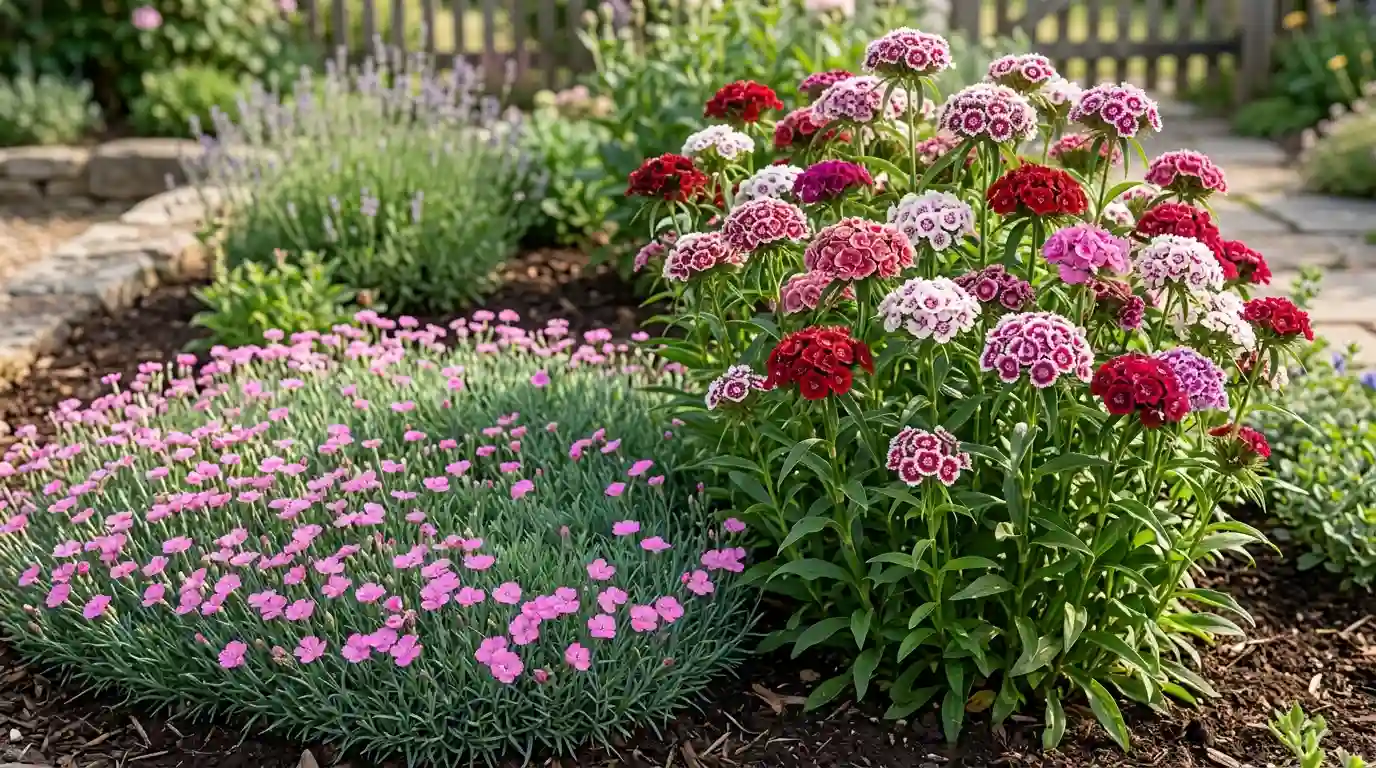
Sweet William (Dianthus barbatus) produces clusters of small, fragrant flowers on tall stems, making it a favorite for cutting gardens and cottage-style borders. It is usually grown as a biennial.
China Pink (Dianthus chinensis) is compact, colorful, and blooms quickly from seed, which is why it is so often sold as a bedding annual in garden centers each spring.
Cheddar Pink (Dianthus gratianopolitanus) forms a low, spreading mat of blue-gray foliage topped with fragrant pink blooms. It is a true perennial and works beautifully along rock gardens or border edges.
Firewitch Dianthus, a popular cultivar of Cheddar Pink, is known for its vivid magenta flowers and drought tolerance once established, making it a reliable perennial choice for sunny, well-drained spots.
Current Trends: Why Dianthus Is Gaining Popularity Again
Dianthus has seen a resurgence in home gardening in recent years, largely thanks to its low water needs and long bloom time. As more gardeners look for drought-tolerant, pollinator-friendly plants, perennial dianthus varieties fit perfectly into xeriscaping and cottage-garden designs alike. Their compact size also makes them ideal for raised beds, containers, and small urban gardens where space is limited.
Tips for Getting the Most Blooms
To maximize flowering, plant dianthus where it gets morning sun and good air circulation. Water at the base of the plant rather than overhead, since wet foliage encourages disease. Divide perennial clumps every two to three years to keep them vigorous, since older clumps can become woody and produce fewer flowers over time. Pairing dianthus with other drought-tolerant companions, like lavender or salvia, also creates an attractive, low-maintenance garden bed.
Dianthus in Containers vs Garden Beds
| Growing Location | Best Practices |
| Containers | Use well-drained potting mix, ensure pots have drainage holes, water when the top inch of soil is dry |
| Garden Beds | Amend heavy soil with compost or sand, space plants for airflow, mulch lightly in winter |
Container growing works especially well for annual varieties, since it allows gardeners to move plants for maximum sun exposure or bring them indoors during unexpected cold snaps.
FAQs
Is dianthus a perennial or an annual plant?
It depends on the species. Some, like China Pink, are grown as annuals, while others, like Cheddar Pink, are true perennials that return for several years.
How long does dianthus live?
Annual types live for one growing season. Perennial types can live three to five years or longer with proper care and occasional division.
Does dianthus come back every year?
Perennial and many biennial varieties do come back, though biennials typically bloom in their second year and then decline. Annual types will not return unless they reseed themselves.
What is the best soil for dianthus?
Well-drained, slightly alkaline soil works best. Heavy, waterlogged soil is the most common cause of dianthus problems.
How much sun does dianthus need?
Most varieties need at least six hours of direct sunlight daily for the best blooming performance.
Can dianthus survive winter outdoors?
Many perennial dianthus varieties are cold-hardy in USDA zones 3 through 9, though a layer of mulch offers extra protection in colder regions.
Conclusion
Dianthus offers something for every type of gardener, If you want a quick burst of annual color or a dependable perennial that returns year after year.
The key is knowing which type you are planting, since annuals, biennials, and true perennials all behave differently.
With well-drained soil, plenty of sunlight, and regular deadheading, dianthus rewards even beginner gardeners with months of fragrant, colorful blooms. Choose the variety that matches your goals, give it the basic care outlined here, and you will enjoy one of the most reliable flowering plants available for gardens, borders, and containers alike.

Hi, I’m Iqra, a passionate writer and grammar enthusiast dedicated to making English grammar simple, clear, and easy to understand. Through my work on grammar books and educational content, I help students, writers, and English learners improve their vocabulary, sentence structure, punctuation, and everyday communication skills. My goal is to turn confusing grammar rules into practical, easy-to-follow lessons that readers can confidently use in real life. I believe learning grammar doesn’t have to be difficult—it can be simple, useful, and even enjoyable. Through helpful guides, examples, and carefully explained grammar tips, Iqra aims to make learning English more accessible for everyone.